
Share this @internewscast.com

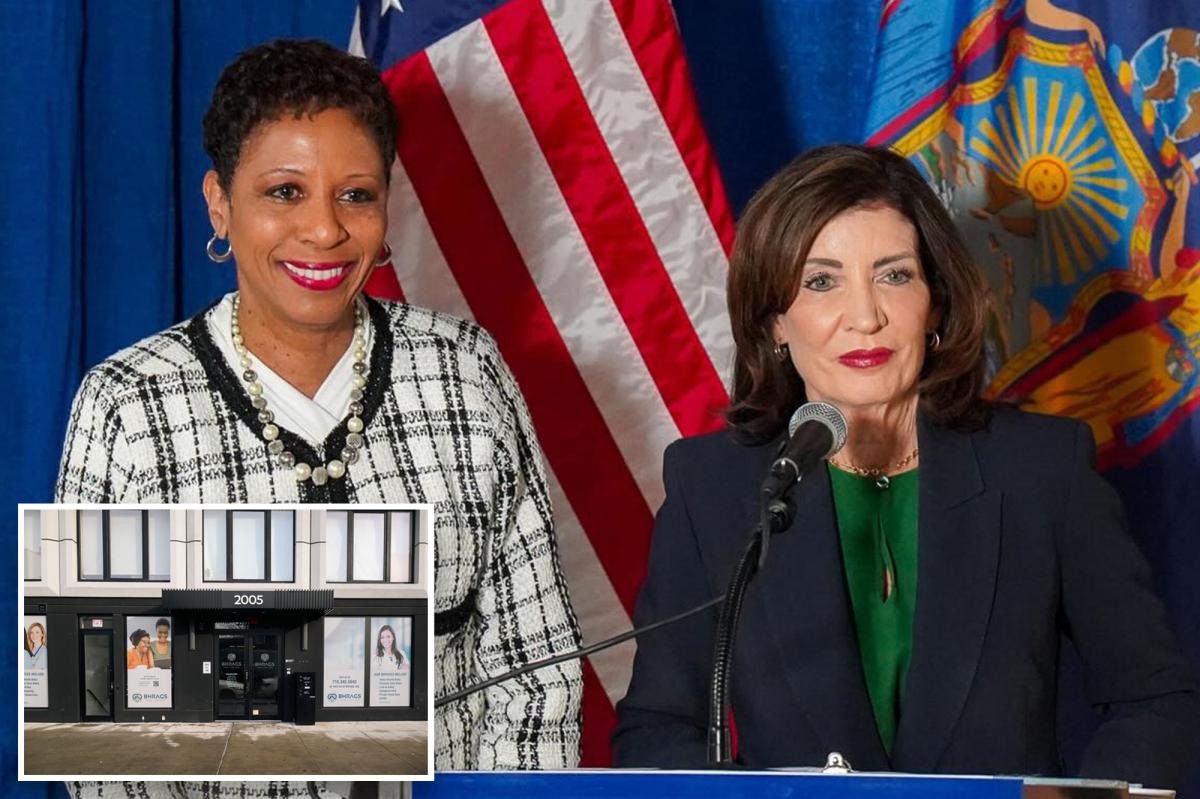
New York Governor Kathy Hochul’s running mate, former New York City Council Speaker Adrienne Adams, allocated $435,000 of taxpayer money to a controversial migrant shelter provider currently under federal investigation for corruption, as reported by The Post.
The Democratic candidate for lieutenant governor directed $375,000 in discretionary funds to Brooklyn-based nonprofit BHRAGS Home Care Inc. This funding, sourced from her speaker’s budget for the years 2022 to 2025, was intended to support the organization’s programs for seniors and after-school initiatives for youth, according to Council records.
Additionally, the Queens politician allocated an extra $60,000 specifically for mental health support services provided by the nonprofit, as detailed in the records.
In total, under her leadership, the City Council awarded $544,900 to BHRAGS since 2021, the records indicate.
Councilwoman Farah Louis contributed an additional $72,000, while other council members collectively provided $37,900 to the organization, as per the documents.
Federal investigators are examining whether Farah Louis; her sister, Deborah Louis, who is Governor Hochul’s assistant secretary for New York City intergovernmental affairs; Edu Hermelyn, the husband of state Assemblywoman and Brooklyn Democratic Party chair Rodneyse Bichotte Hermelyn; and others, might have accepted bribes or kickbacks to promote BHRAGS.
The Flatbush-based nonprofit has received $185.4 million in no-bid city contracts since 2022 to provide emergency shelters for migrants and other homeless people, according to NYC Comptroller’s Office records.
The nonprofit’s executive director, Roberto Samedy, its former board chairman, Jean Ronald Tirelus, and two others connected to BHRAGS were arrested Tuesday as part of the corruption probe for allegedly pocketing more than $1 million in kickbacks linked to city-run migrant shelters.
BHRAGS reps have said it’s “fully cooperating with law enforcement” and that Samedy was placed on administrative leave.
Neither the Louis sisters nor Hermelyn has been charged with any wrongdoing, but Hochul placed Deborah Louis on leave after learning of the investigation.
Adams has not been accused of wrongdoing, but her generosity with taxpayer money to the nonprofit should “raise a million red flags” for the feds to investigate, said former Councilman Robert Holden, a conservative Queens Democrat.
“If you’re going to go after Farrah Lewis, then you’ve got to go after Adrienne Adams,” said Holden, who referred to Adams as “shady” and the “worst speaker in the history of New York.”
“I would say she has a lot more of these red flags than Farah would ever have, because she controlled a lot more money, and [her award-making decisions] were never about merit, it was about whether you align with her politically.”
Republican gubernatorial candidate Bruce Blakeman said Adams has serious questions to answer about her political pork — and called into question Hochul’s judgment for picking the ex-speaker as a running mate.
“Hochul’s running mate has been exposed for funneling even more taxpayer money to the same company at the center of the scandal,” said Blakeman of The Post’s findings. “It’s a corrupt cycle—and New Yorkers deserve answers now.”
Louis — who, along with her sister and Hermelyn were named in search warrants signed March 19 — is no fan of Adams despite their desire to assist BHRAGS.
She recently filed legal papers announcing her intent to file a $10 million lawsuit alleging Adams and some Council staffers discriminated against her because of her Haitian heritage, Politico reported. At least three other Council members are of Haitian descent but have never made such claims.
Former Councilwoman Diana Ayala (D-Bronx), who served as deputy speaker under Adams, came to the defense of her longtime ally, insisting Adams led the Council “with honor and integrity — and any claim otherwise is simply false.”
“Anyone who’s worked with Adrienne Adams knows that her leadership is beyond reproach – she would never approve designating funds to any organization that didn’t pass the council’s rigorous vetting process,” Ayala said.
“At the time that the funding in question was approved, she and our legal team understood this organization to be providing quality services to New Yorkers after clearing that extensive process.”
The Hochul-Adams campaign told The Post Friday the ex-speaker has not been subpoenaed or contacted by federal investigators about the probe.
Campaign spokesperson Sarafina Chitika also swiped back at Blakeman’s remarks, claiming under his watch, “corruption became the name of the game in Nassau County, where literal donors he picked to oversee the county jail and Long Island’s lifeline hospital almost ran both into the ground.”
The U.S. Attorney’s Office in Brooklyn, which is overseeing the probe, declined to comment.