Share this @internewscast.com
A man who ingeniously converted an agricultural barn into a secret residence, attempting to deceive council inspectors by hiding his bed in a cupboard and dismantling his bathroom before their visits, has been ordered to vacate the premises.
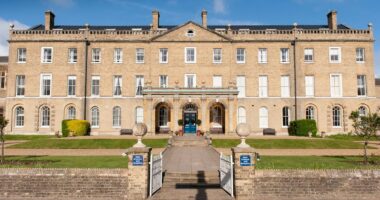
Nicholas Steele, aged 67, transformed a 150-foot hay barn into a fully functional home, which was later discovered by town hall officials tucked away in the rural landscape of the South Downs National Park.
Located near Northchapel, West Sussex, the expansive barn was originally approved for agricultural use only.

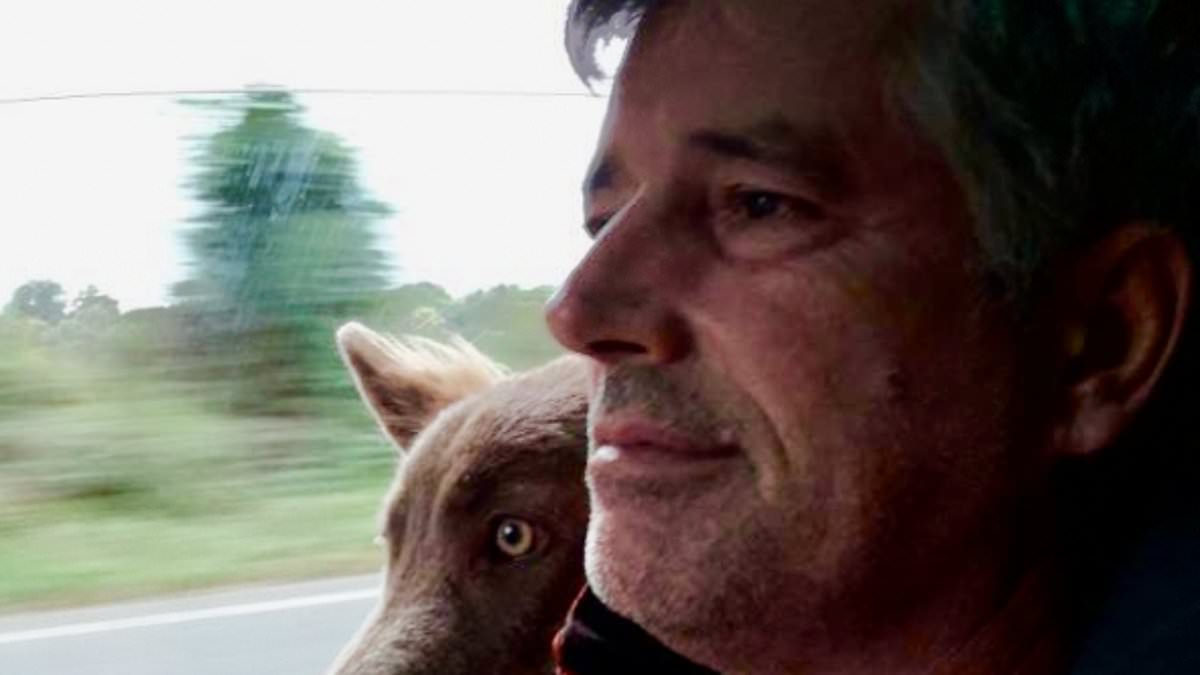
Illegal: Nicholas Steele turned the barn into a fully functioning home and was evicted after the council discovered his deception

Nicholas Steele, 67, converted a 150-foot hay barn into what town hall officials later found to be a fully-functioning residence

Nicholas Steele, 67, has been ordered to leave his converted barn after being found living there with his livestock
Nevertheless, Mr. Steele, a builder by trade, discreetly outfitted the structure with beds, a kitchen, and bathroom facilities, all in pursuit of what he termed an ‘off-grid’ lifestyle.
The independent Planning Inspectorate has now mandated that Mr. Steele vacate his hidden residence and remove the living amenities after learning of his extensive efforts to keep the habitation concealed from authorities.
According to the inspector, Mr. Steele resorted to sleeping on a slide-out bed hidden within a cupboard mainly to prevent council officials from discovering his overnight stays.
Clothes and bedding were stored in metal filing cabinet, while a relative described staying in a ‘hidden living space’ above the west entrance of the barn.
Mr Steele also openly admitted ripping out the toilet and shower after learning inspectors were set to pay an imminent visit.
Inspector Lee Douglas said Mr Steele’s actions exceeded ‘what could reasonably be described as as keeping a low profile’.
He added: ‘His actions amount to positive deception to prevent the regular operation of the council’s planning enforcement function.’

Mr Steele argued he was entitled to stay under the so-called four-year rule, which can make an unauthorised home lawful
Complaints that someone was residing in the agricultural barn at Willow Spring Farm first surfaced in 2013.
However, it was not until 2022 when officials uncovered the living set-up – discovering a fully-fitted kitchen with a range cooker, sleeping areas, a utility room with washing machines and a shower room with a toilet.
Parish councillors also raised concerns, questioning how the building ‘could be considered habitable without mains electricity’ and noting there had been no council tax or utility bills for the address.
Mr Steele argued he was entitled to stay under the so-called four-year rule, which can make an unauthorised home lawful if it has been used continuously without enforcement action.
But the law places the burden firmly on the homeowner to prove such – and Mr Steele was forced to accept he had deliberately concealed his living arrangements.
His appeal was thrown out after the Planning Inspectorate found there was no reliable timeline showing when key facilities were first installed, removed and reinstated.
Records show Mr Steele was registered for council tax and on the electoral roll at another property between 2019 and 2021. Mr Steele said his ex-partner listed him living at another address ‘due to not wanting to draw attention to the fact I was living at Willow Spring Farm’.
Crucially, inspector Lee Douglas added that even if Mr Steele had managed to prove four years of continuous occupation, he would have ‘profited directly from his deception’.
Mr Douglas said: ‘It is possible that the council’s inspections were not thorough enough, especially in light of the continued reports of someone living at the site, but the site visit notes and photographs show evidence was not found to encourage further investigation.

When the Daily Mail visited the site, Mr Steele showed only the mezzanine sleeping area above the west entrance
‘It is therefore unsurprising that these acts of deception resulted in the council closing investigations and not undertaking additional inspections.’
The enforcement notice now gives Mr Steele six months to stop using the building as a home and remove beds, soft furnishings, kitchen units and the shower room – effectively returning the structure to agricultural use.
When the Daily Mail visited the site, Mr Steele showed only the mezzanine sleeping area above the west entrance.
He explained that in winter he sleeps alongside his pigs, housed at the opposite end of the building, and heats the vast structure solely with a log burner fuelled by wood he cuts from land he says he owns.
A portable toilet stood on the drive and his green Land Rover Defender was parked inside the barn.
A builder by trade, Mr Steele said he had carried out all the work himself over 14 years but refused to say how much he had spent and declined requests to show the kitchen, bathrooms or additional accommodation.
He insisted that he believed he had acted within the law.
‘As far as I was concerned, I thought that if you lived in a place for more than four years and no one complained, then that was permitted,’ Mr Steele said. ‘I’m not harming anyone, I have no immediate neighbours and I am getting on with my life.’
Mr Steele, who butchers his own pigs and sheep and makes his own pork pies, said he chose to live this kind of life because it was one that suited him best and prefers living close to the land.
Though a devout Catholic, his living arrangement is not part of a religious mission.
Neighbour Laurence Reed, 96, who lives a short distance away, said he had repeatedly reported concerns to the South Downs National Park authority.
‘I’ve never met him. The only thing that I know of him is that he lived with a woman who worked in the local shop. He had a child by her.’
Mr Steele, a builder by trade, admitted to removing the toilet in a panic ahead of a visit by a planning officer, adding how he didn’t want to be unfairly ruled against.
In his final conclusions, the inspector said there was ‘a wealth of undetailed evidence’ suggesting Mr Steele spent much of his time on the land – but not enough reliable proof that the barn functioned as a residence for four continuous years.
Instead, he found a ‘pattern of ongoing and continued deception’ that prevented the council from acting sooner.
The appeal was dismissed in full and the national park’s enforcement notice upheld.
Mr Steele told the Daily Mail he was in a ‘limbo’ period since being ordered to return the barn to its original state.
The four-year rule was later amended.
Under current rules, homeowners are only immune from enforcement action on an extension or development if there have been no complaints within a 10-year period.