
Share this @internewscast.com
Homeowners in a southern state are encountering mounting challenges as they grapple with mortgage payments in an increasingly bleak property market.
Louisiana emerges as the epicenter of the nation’s mortgage-equity crisis, with the highest proportion of ‘seriously underwater’ mortgages, where the debt surpasses the home’s value.
In the third quarter of 2025, a staggering 11.9 percent of Louisiana homes were reported to have seriously underwater mortgages, a rise from 10.5 percent in the previous year, as indicated by data from property analytics firm ATTOM.
Comparatively, only 2.8 percent of mortgages across the United States were classified as seriously underwater during the same period.
A property is considered seriously underwater when its loan-to-value ratio reaches 125 percent or higher, meaning the homeowner owes at least 25 percent more than the home’s current market value.
“The combination of declining home prices, reduced buyer interest, and lower income levels has led to a higher concentration of underwater mortgages in the South compared to other areas,” explained Hannah Jones, a senior economic research analyst at Realtor.com.
‘As prices and demand weaken, homeowners have a harder time selling and may find themselves struggling to keep up with mortgage payments.’
In Louisiana specifically, insurance and utility costs linked to natural disasters have created an unprecedented affordability crisis, explained Andreanecia M. Morris, executive director of the nonprofit HousingNOLA, which develops strategies for improving housing policies across the state.

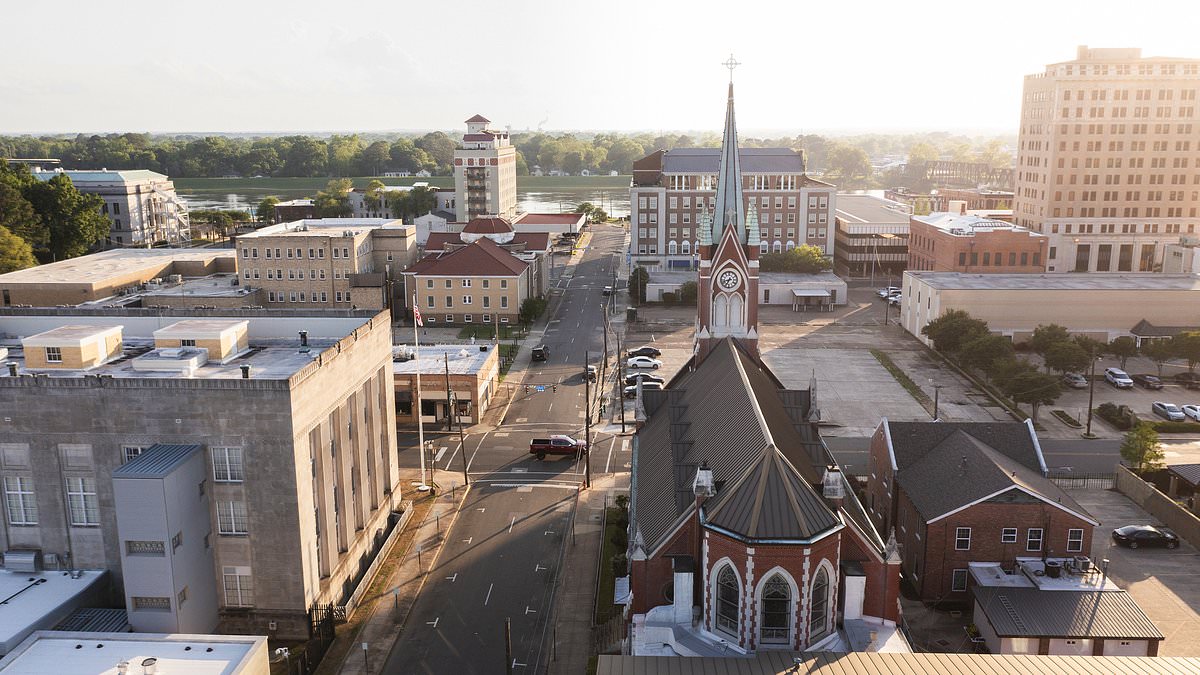
A whopping 11.9 percent of homes in Louisiana had seriously underwater mortgages in the third quarter of 2025 (pictured: Baton Rouge

In all, the Bayou State accounted for 14 of the 50 counties with the highest share of seriously underwater homes (pictured: Monroe)

An assessment that determined Louisiana had the most underwater mortgages comes at a time when the national median home price reached a record of $375,000 (pictured: Lake Charles)
‘Louisiana is ground zero for the disasters that climate change has wrought across the country,’ she told the Daily Mail.
‘For the last 20 years, Louisiana homeowners and renters have been battered not just by hurricanes, but extreme weather events that have weakened the housing stock.

Hannah Jones, senior economic research analyst at Realtor.com
‘This, combined with systemic failures to prioritize housing investments and ensure an equitable recovery, have created another perfect storm and a mass displacement event that is costing us thousands of residents and citizens and residents going under.’
Morris added that severe weather is preventing property owners from making home improvements that safeguard them in the long run.
Nationwide, the share of seriously underwater mortgages is less dramatic but nonetheless concerning.
The national rate of 2.8 in the third quarter is up from 2.4 percent in 2024, according to ATTOM.
In several other states — mostly across the South and Midwest — the share of homeowners owing far more than their properties’ worth remains stubbornly high.
Illinois, Pennsylvania and Arkansas also stood out for their rate of seriously underwater mortgages, and the problem can be traced to specific counties that are particularly in trouble.

Louisiana had five counties where 13 percent or more of homes were defined as seriously underwater (pictured: Monroe)

In struggling states like Louisiana, a mortgage that far exceeds the property’s current value can leave borrowers frozen (pictured: Alexandria)

Lake Charles, Louisiana
For instance, Louisiana had five counties where 13 percent or more of homes were defined as seriously underwater.
The included Calcasieu Parish, home to Lake Charles; Rapides Parish, home to Alexandria; Ouachita Parish, home to Monroe; and East Baton Rouge Parish.
In all, the Bayou State accounted for 14 of the 50 counties with the highest share of seriously underwater homes.
In struggling states like Louisiana, a mortgage that far exceeds the property’s current value can leave borrowers frozen.
They are unable to sell without taking a loss, and they face a tough decision about whether to keep paying a loan worth more than the home itself. And if they don’t pay, they can default and be foreclosed on.
Across the US, the majority of homeowners still enjoy positive equity, and national metrics suggest the housing market remains more stable than it was during the depths of the 2008 financial crisis.
But ATTOM reports that the deep regional disparities in mortgage equity, with some communities still bearing the brunt, suggest anyone refinancing, selling, or contemplating moving should be particularly cautious.
For instance, California was named the riskiest market in the US to buy, with ATTOM using factors such as affordability, the share of seriously underwater mortgages, foreclosure activity, and county-level unemployment rates to determine its status.
As for least risky, Wisconsin leads the nation, with Tennessee Montana, New Hampshire, and Virginia following, according to the report.