Share this @internewscast.com
Teddi Mellencamp’s father has shared a concerning update about his daughter’s ongoing battle with stage four cancer in a recent interview.
Singer John Mellencamp appeared on the Joe Rogan Experience where he opened up about his ‘really sick’ daughter – more than three months after she revealed her cancer had become ‘undetectable.’
John Mellencamp, 74, expressed his distress, saying, “I have a daughter who’s really sick. It’s not fun at all. She has cancer in the brain and she’s going through a tough time right now.”
The Daily Mail has reached out to representatives for both Teddi and her father, John, for further comments.
The 44-year-old reality star was initially diagnosed with melanoma in 2022. By April 2025, she disclosed that her cancer had advanced to stage four, spreading to her lungs and brain.
Over the years, Teddi underwent the removal of 17 melanomas from her back. Despite these medical interventions, doctors were initially unaware of how extensively the cancer had spread to her internal organs.

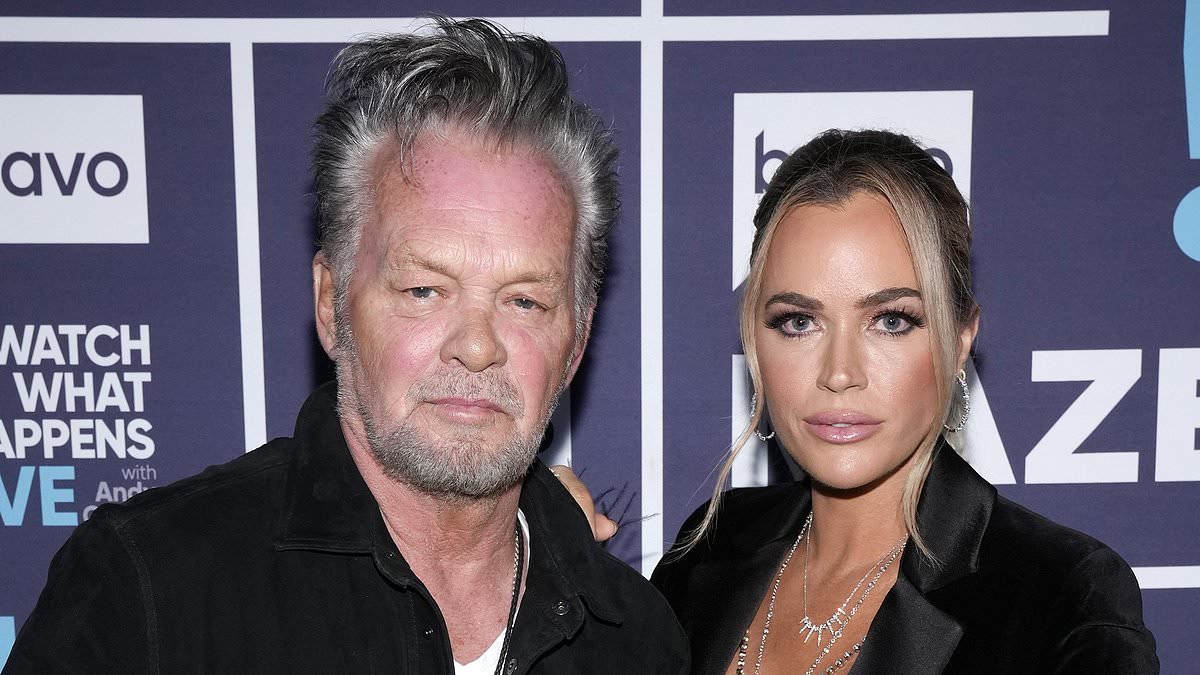
Teddi Mellencamp’s father has shed light on her heartbreaking battle with stage four cancer in a new interview

The star has been bravely been enduring a battle with cancer
This update follows three months after Teddi, who had been given a 50/50 chance of survival, shared in an emotional video that her cancer had become “undetectable.”
She said on her iHeartRadio podcast, Two T’s in a Pod, back in October: ‘Just to give a little life update to you guys, I had my immunotherapy yesterday and they did my scans and at this point there is no detectable cancer.’
‘I still need to be on immunotherapy for another year and I’m not considered in remission or anything like that.
‘When they told me, I was in such shock, I was numb. So I’m still going to be having days when I’m feeling sick and stuff because I still am in immunotherapy, so I’m still fighting because you have to be,’ she said.
‘The way they [doctors] said it works, it’s like one year, then two years, then at three years you’re allowed to be considered … in remission. So, but that was huge news yesterday.’
‘You did it girl, you did it, you didn’t give up for one day. You’ve fought harder than anybody I know,’ Dolores Catania, who was filling in for Teddi’s usual co-host Tamra Judge for the episode, said.
‘All the tumors continued to shrink and everything. It’s been good. It’s a good day,’ Teddi continued.
The star underwent emergency surgery in February 2025 to remove large tumors in her brain.
She later began radiation and immunotherapy to fight the tumors, which were a result of her 2022 melanoma metastasizing.

Mellencamp made the heart-wrenching statement during an appearance on the Joe Rogan Experience

‘She’s got cancer in the brain and she’s suffering right now,’ he said

More than three months ago Mellencamp revealed her cancer was now ‘undetectable’

The Bravo alum has had a total of 17 melanomas removed from her back

In April 2025, the Real Housewives of Beverly Hills alum attended a cancer benefit where she went without a wig, boldly baring her head scars from her recent procedures

The reality star had four brain tumors removed last year. She has also undergone radiation and immunotherapy treatments
The effects of the growing tumors were present for six months before Teddi finally sought medical attention.
She’d been suffering from migraines but ignored the pain and kept moving forward as she faced other issues in her life, Teddi said in March 2025 on her Two Ts in a Pod podcast with Tamra Judge.
The former reality television star has been documenting each step of her treatment and recovery with fans online.
In April 2025, the Real Housewives of Beverly Hills alum attended a cancer benefit where she went without a wig, boldly baring her head scars from her recent procedures.
She later candidly revealed how her emotions tend to dictate whether or not she wears a wig for the day, as she urged followers to get their ‘yearly checks’ in honor of Melanoma Awareness Month.
‘The day to day decision of wig versus no wig. Crying days I tend to pick the wig,’ she wrote on Instagram, alongside a selfie in which she wore a luscious blonde mane.
‘The highs and lows of treatment for stage 4 brain and lung tumors are pretty extreme. Please go get your yearly checks,’ she urged fans.
The star reminded readers: ‘It’s melanoma awareness month. No better time than now to book and remind a friend or loved one.’