
Share this @internewscast.com
Toyota’s hydrogen-powered electric vehicle, the Mirai, is experiencing a sharp decline in sales as frustrated owners report significant challenges in refueling the car.
Introduced as a groundbreaking sedan, the Mirai promised to emit only harmless water vapor, avoiding the common drawbacks associated with conventional battery-electric vehicles.
However, recent sales figures tell a different story. In 2024, Toyota sold 499 Mirai models, but this number plummeted to just 210 in 2025, marking a staggering 57 percent decrease.
Marketed as a quick-charging, long-range alternative to standard EVs, the Mirai faces criticism from users who point to a severe lack of refueling infrastructure, rendering the vehicle nearly impractical to use.
In response, several owners have initiated a class-action lawsuit against Toyota, alleging that the company misrepresented various aspects of the model.
Additionally, many of these owners have been advised to withhold payment on the $50,000 vehicle until the legal proceedings reach a conclusion.
Multiple Mirai owners now allege Toyota referred them to debt collectors, despite written promises otherwise, according to attorney Jason Ingber, who represents many plaintiffs on another class action suit.
Toyota was granted an extension to reply to the factual allegations in the class action lawsuit on January 7, only extending his client’s alleged woes.

A Toyota Mirai is pictured at the Brussels Expo on January 13, 2023. Alleged misrepresentations about this sedan has led more than 140 people who bought the car to sign onto a class action lawsuit

Lawyer Jason Ingber, who is representing plaintiffs, alleges that his clients were advised to pause repayments pending the lawsuit only to be referred to debt collectors
Anthony Escobedo told KTLA that after Toyota reported him for non-payment, his 814 credit score took a 100-point hit.
This meant he couldn’t secure an interest-free loan to pay for his wife’s medical care, forcing him to put it all on credit cards and carry a interest-bearing balance.
Julie Doumit told the outlet a similar story, saying she paid her car loan on time for 46 months straight. But after she stopped paying, allegedly at Toyota’s guidance, she too was sent to collections. This resulted in a 70-point drop in her credit score.
Meanwhile the class action lawsuit of more than 140 plaintiffs is working its way through the US District Court in the Central District of California.
On January 7, a judge granted Toyota its fifth straight extension to reply to the factual allegations made in the suit since the complaint was amended in April 2025.
The lawsuit argues that Toyota misrepresented nearly every aspect of the Mirai, including its range, how long it takes to fill up and how easy it would be to transition to hydrogen fuel from gasoline.
The Mirai is only sold in California because virtually all hydrogen fueling stations are in the state, with most of them concentrated around Los Angeles and San Francisco.
These stations frequently have multi-week outages or don’t have any fuel to sell because of supply-chain bottlenecks, which makes the Mirai an impractical daily driver, per the lawsuit.
Join the debate
Should carmakers be held responsible when their new technologies leave buyers stranded and in debt?

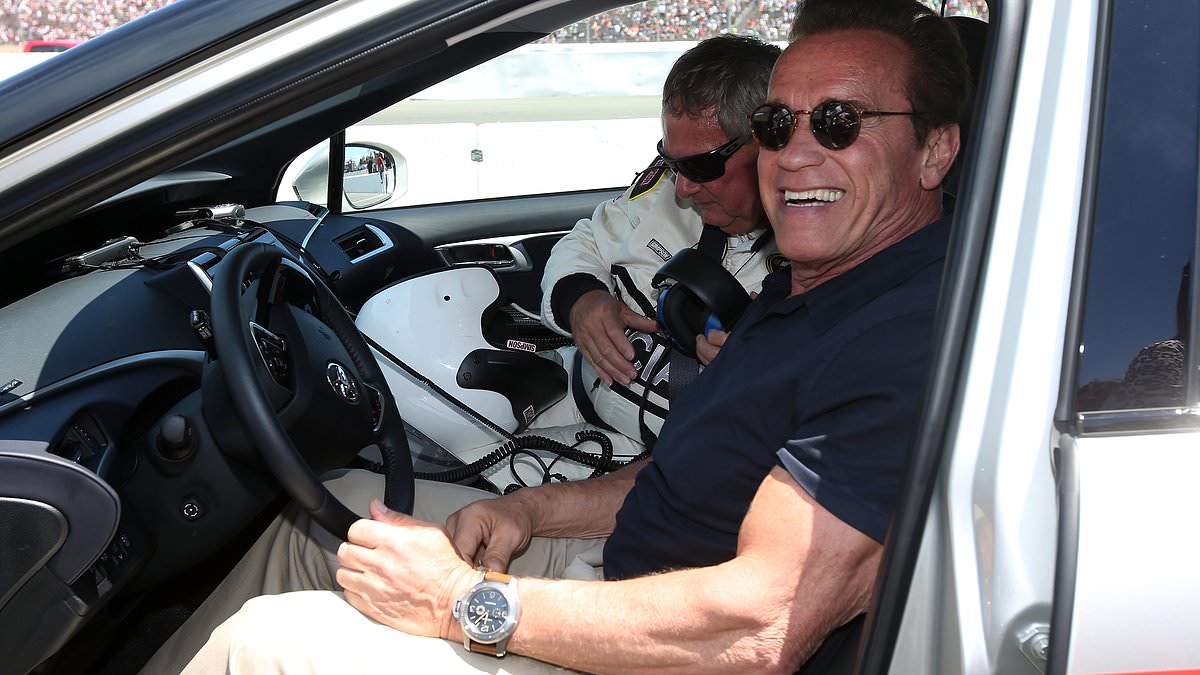
Actor and former governor of California Arnold Schwarzenegger poses for a photo before driving the 2016 Toyota Mirai pace car
Of the 57 hydrogen stations in California, eight of them are ‘temporarily non-operational’, according to a quarterly dashboard maintained by the California Energy Commission.
‘Toyota sells the Mirai while assuring consumers that hydrogen refueling is available, seamless and comparable to refueling with gasoline, but that is not the case,’ according to the lawsuit.
The plaintiffs say they have been forced to travel long distances to fuel their vehicle or have been put in situations where they have had to tow the car multiple times because it ran out of fuel with no reliable options to fill up.
The scarcity of fuel makes the Mirai, ‘unsafe, unreliable and inoperable’, according to the lawsuit.
When they do manage to make it to a station, some claimed that the ‘hydrogen fuel pumps freeze up and lock onto the Mirai’, per the lawsuit. The type of hydrogen gas these types of cars take is usually kept at around -423 degrees Fahrenheit.
In some cases, drivers allegedly had to wait over 30 minutes before the pump warmed up and could be removed from the car.
Drivers have also had to deal with the price of hydrogen fuel nearly tripling over a period of about four years due to supply chain disruptions.
It went for around $13 per kilogram in 2021 but as of 2024, it was about $32 per kilogram, according to the lawsuit. Prices have continued to hover around the $30-$35 range.
These dynamics have the plaintiffs arguing that the $15,000 allowance for fuel Toyota offers Mirai buyers is not as valuable as it once was. Owners of the car can either spend that $15,000 or get free fill-ups for six years.
The lawsuit alleges that this allowance no longer lasts anywhere near six years and is merely a marketing tool Toyota deploys to intentionally conceal ‘the true cost of’ owning the Mirai.
The lawsuit further claims that Toyota knew prior to selling the Mirai to hundreds of consumers that these vehicles’ tanks can allegedly never be 100 percent full.
‘The typical full fill on an empty tank for a Mirai vehicle was approximately 4.0 kg of hydrogen, significantly below the advertised capacity of 5.6 kg of hydrogen,’ the complaint stated. ‘Defendants have known about this problem for years.’
This, according to the plaintiffs, directly translates to the cars having far less mileage than expected.
Rather than getting 402 miles per tank, the advertised maximum for the newest model, customers reported getting up to 250 miles per tank, per the lawsuit.
A YouTuber claimed in February 2023 that his 2022 Mirai XLE got around 280 to 300 miles on a full tank. At that time, filling up costed him $130 each time, he said.

Pictured: The hydrogen fuel cell that powers the Toyota Mirai
Based on these February 2023 numbers, a Mirai owner could theoretically drive a little more than 34,500 miles for free with the $15,000 fuel credit Toyota offers.
The average Californian drives about 12,500 miles per year, meaning that at best, the Mirai would be free to fuel for less than three years.
Based on more current prices, a typical Mirai owner can only expect free fuel for about two years, after which they’d be paying well over $100 per tank.
The Daily Mail approached Toyota for comment. The company now must submit a response to the lawsuit against it by April 3, 2026.