
Share this @internewscast.com
Trader Joe’s has significantly widened its recall of popular frozen dinners due to the discovery of small, hard glass pieces found in the products, as identified by health regulators.
The initial recall, which began in February, involved Ajinomoto Foods North America’s Trader Joe’s branded frozen fried rice. Originally, 3.4 million pounds were affected, but this number soared to an additional 33.6 million pounds by March 3.
Further expanding on March 20, the FDA included another 9.9 million pounds of vegetable fried rice and Japanese-Style Fried Rice with Edamame, Tofu, and Hijiki Seaweed. This brings the total recall to approximately 47 million pounds.
The company received at least four customer complaints about finding small glass fragments in their meals. Investigations pointed to frozen carrots as the probable source of the contamination.
Although no injuries have been reported from consuming these products, the USDA’s Food Safety and Inspection Service has raised concerns that many of these class II recalled items might still be stored in freezers nationwide.
In a statement, Trader Joe’s urged, “If you have packages of the products listed above, please do not use them. Discard the product or return it to any Trader Joe’s for a full refund.”
A class II designation, the second-most severe FDA/FSIS classification for recalls, is defined as ‘a situation in which use of, or exposure to, a violative product may cause temporary or medically reversible adverse health consequences or where the probability of serious adverse health consequences is remote.’
The items pulled from shelves were distributed to stores across 43 states coast-to-coast.

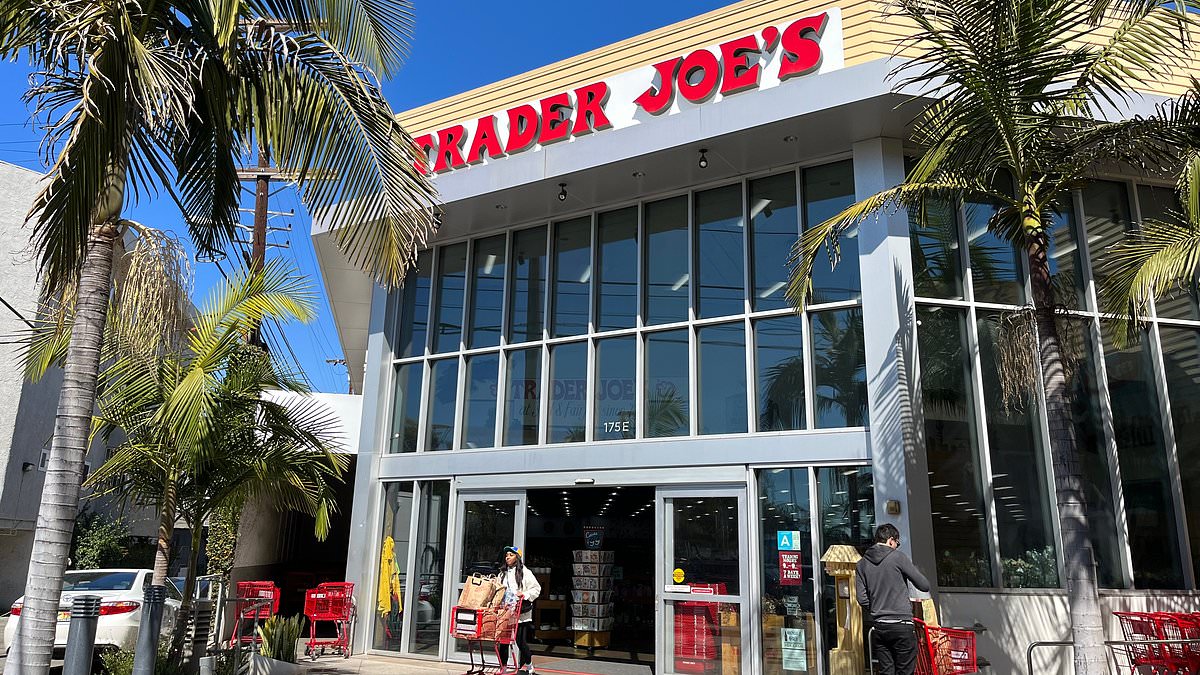
On March 20, the FDA announced that a sweeping recall of Trader Joe’s fried rice had been expanded to include another 9.9 million products, totaling 47 million products (stock)
To identify the products, look for item number 5650233 on the packaging, according to an FDA notice to stores and consumers. The barcode on the individual bag is 00521482.
The products are marked with establishment number P-18356, P-18356B or P-47971 inside the USDA mark of inspection on the package.
The USDA website has a full list of the specific lot codes of the products involved. Some were also available in Canada and Mexico.
Neither the first nor the expanded second recall notices from the FDA and FSIS explained how glass got into the carrots in the first place.
Right now, millions of Americans may have these products sitting in their freezers, unaware that they’re putting themselves at risk of choking — or worse, internal injuries and bleeding.
Swallowing glass fragments poses a serious health risk that can be life-threatening. Glass is sharp, rigid, and won’t dissolve in the stomach.
Depending on their size and shape, these fragments can slice through soft tissue as they move through the digestive tract.

The recalled products are marked with item number 5650233 on the packaging, according to an FDA notice to stores and consumers. The barcode on the individual bag is 00521482


The investigation traced the source to contaminated carrots, an ingredient used across multiple products
Larger or sharper pieces can become lodged, tearing the stomach lining or puncturing the intestinal wall.
This can lead to peritonitis, a dangerous abdominal infection that requires emergency surgery. In rare cases, glass can also cut blood vessels, causing severe internal bleeding.
The glass shards found in the packages ranged in size from one centimeter, about the length of a standard aspirin tablet or a small bean, and three centimeters, about the length of a standard paperclip or the width of a adult thumb.
The products were sent to stores in Alaska, Alabama, Arkansas, Arizona, California, Colorado, Connecticut, Delaware, Florida, Georgia, Idaho, Illinois, Indiana, Kansas, Kentucky, Louisiana, Massachusetts, Maryland, Michigan, Minnesota, Missouri, Mississippi, Montana, North Carolina, North Dakota, Nebraska, New Hampshire, New Jersey, Nevada, New York, Ohio, Oklahoma, Oregon, Pennsylvania, Rhode Island, South Carolina, Tennessee, Texas, Utah, Virginia, Washington, Wisconsin and Wyoming.