
Key Points
  • Jerry Greenfield co-founded the company with his partner Ben Cohen in 1978.
  • The brand has a history of supporting progressive causes.
  • Unilever expressed disagreement with Greenfield’s reasons for leaving.
Jerry Greenfield, who co-founded the well-loved American ice cream maker Ben and Jerry’s, has stepped down after a disagreement and public clash with its parent company, Unilever, regarding issues in Gaza.
In a public letter shared by his partner, Ben Cohen, on social media platforms, Greenfield mentioned that recently, the socially active Vermont-based brand has been “silenced” by Unilever. This comes as Unilever is currently in the process of spinning off its Magnum subsidiary, which includes Ben and Jerry’s.
Greenfield and Cohen, childhood friends, established the company in 1978, and it was bought by Unilever in 2000.
“With a heavy heart, I’ve realized I can’t, in good faith, stay with Ben & Jerry’s after 47 years of service,” stated Greenfield, now 74, who had been working as a salaried brand ambassador.
“Upholding values such as justice, equity, and humanity is more crucial than ever, yet Ben & Jerry’s voice has been stifled, not to rock the boat among those in charge.”

Greenfield noted that this occurred amidst an environment where the current US government is “targeting civil rights, voting rights, immigrants, women, and the LGBTQ community”.

Ben and Jerry’s has in recent months been a lonely voice among well-known brands speaking out on issues like Gaza and US President Donald Trump’s immigration stance, while other US companies back away from diversity pledges, and their executives largely refrain from commenting on the White House’s policies.
Ben and Jerry’s independent social mission board, which Greenfield and Cohen do not sit on, has led the activism.

The acquisition of Ben and Jerry’s by Unilever in 2000 allowed the brand to retain its board with control over social missions, but not over business operations.

Two men holding a tub of ice-cream that has Kamala Harris' face on it. They're standing in front of a light blue van.

Ben Cohen (left) and Jerry Greenfield at an event during the 2024 election campaign in support of Kamala Harris. Source: Getty / Lisa Lake

In Greenfield’s statement, he said it was “profoundly disappointing to come to the conclusion that that independence, the very basis of our sale to Unilever, is gone”.

A spokesperson for Unilever and its Magnum Ice Cream Co said that it “disagrees with Greenfield’s perspective and has sought to engage both co-founders in a constructive conversation on how to strengthen Ben & Jerry’s powerful values-based position in the world”.
Ben and Jerry’s has long combined selling ice cream and activism, launching one ice cream in 2019 to build awareness about racial justice, and renaming a flavour in 2009 in support of gay marriage.
But the relationship between Unilever and Ben and Jerry’s has eroded since 2021, when the ice cream maker said it would stop sales in the Israeli-occupied West Bank as it would run counter to their values — a move that led some investors to divest from the London-based parent.
At the time, Greenfield and Cohen wrote in the New York Times that they supported the move.

However, Ben and Jerry’s was unable to prevent Unilever from selling its ice cream in West Bank settlements. This happened after Unilever sold its Israeli business to a local licensee, prompting a lawsuit from Ben and Jerry’s, which was eventually resolved.
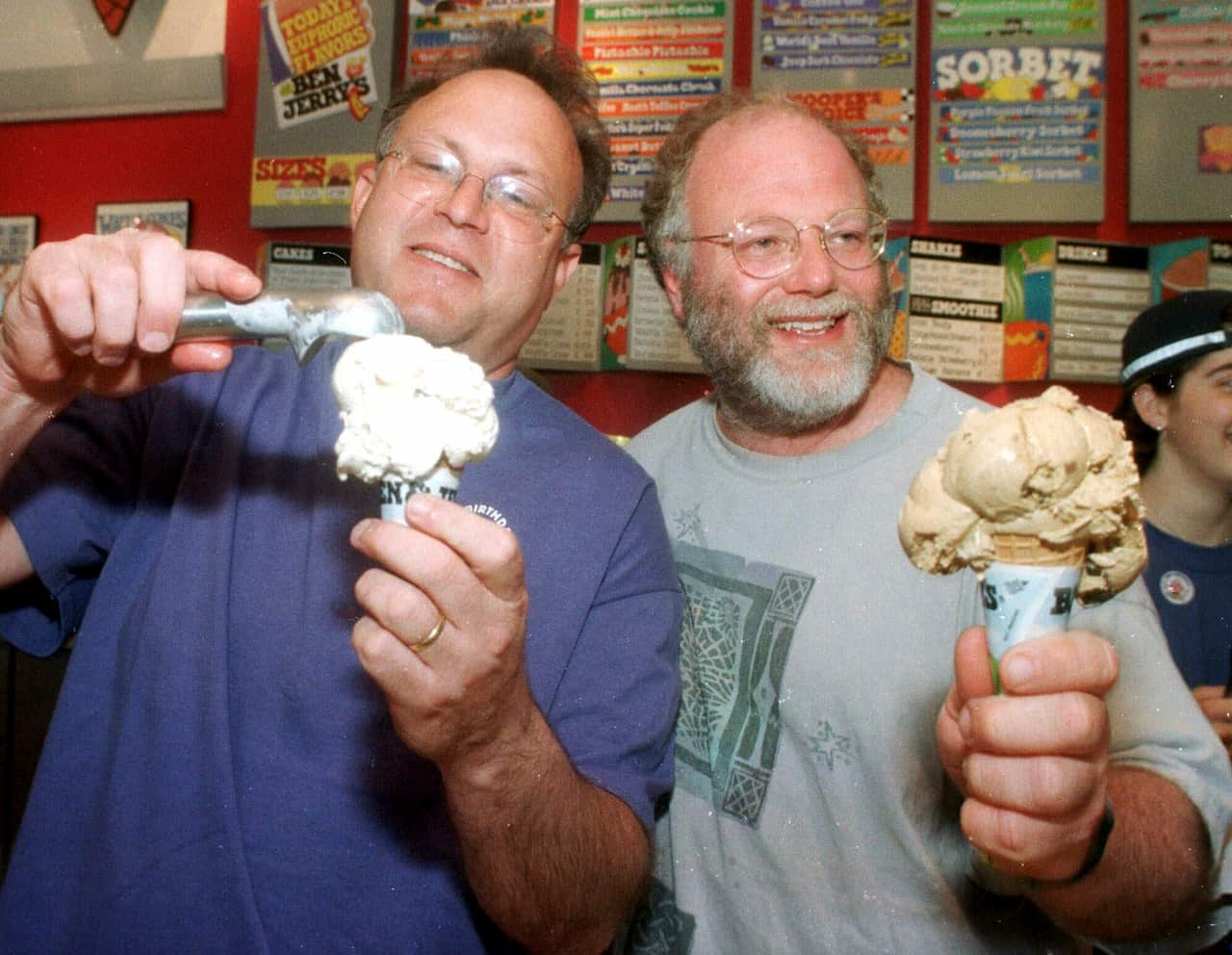
Two men holding ice cream cones in their hands.

Jerry Greenfield (left) started Ben and Jerry’s with Ben Cohen in 1978. The company was acquired by the British multinational Unilever in 2000. Source: AAP / AP / Toby Talbot

The brand has sued Unilever a second time over alleged efforts to muzzle it and dismantle the social mission board.


In March, the company said in a court filing that Unilever had unlawfully removed CEO Dave Stever due to his support of the brand’s progressive social activism.
Greenfield’s departure comes as the Ben and Jerry’s founders have been calling for its own spin-off, ahead of a planned listing of Magnum Ice Cream in November.
Last week, Cohen held a protest in London as the new Magnum Ice Cream Company presented its growth plans, demanding Unilever “free Ben and Jerry’s” to protect its social values.
That was rebuffed by new Magnum CEO Peter ter Kulve.

You May Also Like

Community Comes Together to Celebrate the Life of Kumanjayi Little Baby

WARNING: Aboriginal and Torres Strait Islander readers are advised that this article…

Australia’s Soaring Welfare Bill Predicted to Surpass New Zealand’s Entire Economy by 2027

Australia is on the brink of a welfare expenditure surge so significant…

New York Court Publishes Jeffrey Epstein’s Final Note

The note was found by a cellmate of Epstein and turned in…

Noel Pearson Criticizes Neil Mitchell’s ‘Radio Cube’ Perspective, Warns of Grim Future if Voice Referendum Fails

Noel Pearson, a prominent advocate for the Yes campaign, has delivered a…

Peter Van Onselen Acknowledges Anthony Albanese’s Success in Recent Decision

Anthony Albanese may not have suddenly transformed into an outstanding prime minister…

ISIS Brides Facing Historic Charges: Crimes Against Humanity and Terror Allegations Unveiled

Two women with alleged connections to ISIS are facing charges related to…

Albanese Launches Ambitious $10 Billion Plan to Boost Fuel Reserves with Massive Government Stockpile

in brief A government-owned fuel reserve will be set up, as well…

Shocking Revelations: Court Unveils Alleged Suicide Note by Jeffrey Epstein

In Brief The handwritten note was said to have been discovered by…

Heightened Security as ISIS Brides Prepare for Imminent Return: Police on Alert

This morning on Today, a lively debate unfolded between Nationals Senator Bridget…

Rising Temperatures Could Lead to Thousands of Heatwave-Related Deaths in Australia by 2100

According to a recent study, the impact of climate change on Australia…

Government Unveils Gas Export Reservation Plan: Balancing Act Sparks Debate

In Brief The policy will begin in July 2027 and bar gas…

Australia Secures Energy Future: New Rule Mandates 20% Gas Supply Reservation for Domestic Use

In a strategic initiative aimed at enhancing domestic gas availability and curbing…