
Share this @internewscast.com
In a bold statement issued early Saturday morning, former President Donald Trump declared that Iran is no longer the dominant power in the Middle East, labeling the nation as the region’s “loser.”
This proclamation comes amid a week marked by escalating tensions following a combined military offensive by the United States and Israel against Iran.
The operation resulted in the death of Iran’s Supreme Leader, Ayatollah Ali Khamenei. In response, Iran launched attacks targeting U.S. military bases within the Gulf Cooperation Council.
President Trump has since pledged to intensify military actions against Iran, asserting, “Today, Iran will face severe repercussions!”
He further elaborated that areas and groups previously not considered for military action are now under serious threat due to what he described as Iran’s “bad behavior.”
Trump went on to claim that Iran had been dealt a significant blow and was compelled to issue apologies to GCC nations for its retaliatory actions.
‘They [Iran] were looking to take over and rule the Middle East. It is the first time that Iran has ever lost, in thousands of years, to surrounding Middle Eastern Countries,’ the president continued.
Trump also said he had been thanked for initiating the strikes. It’s unclear who the president was referring to.

Military strikes in the Middle East have been ongoing for the last week. Pictured above is the aftermath of an explosion in Tehran, Iran, on Saturday

Trump announced in a Truth Social post that Iran is no longer the ‘bully’ of the Middle East and will be ‘hit very hard’ on Saturday morning

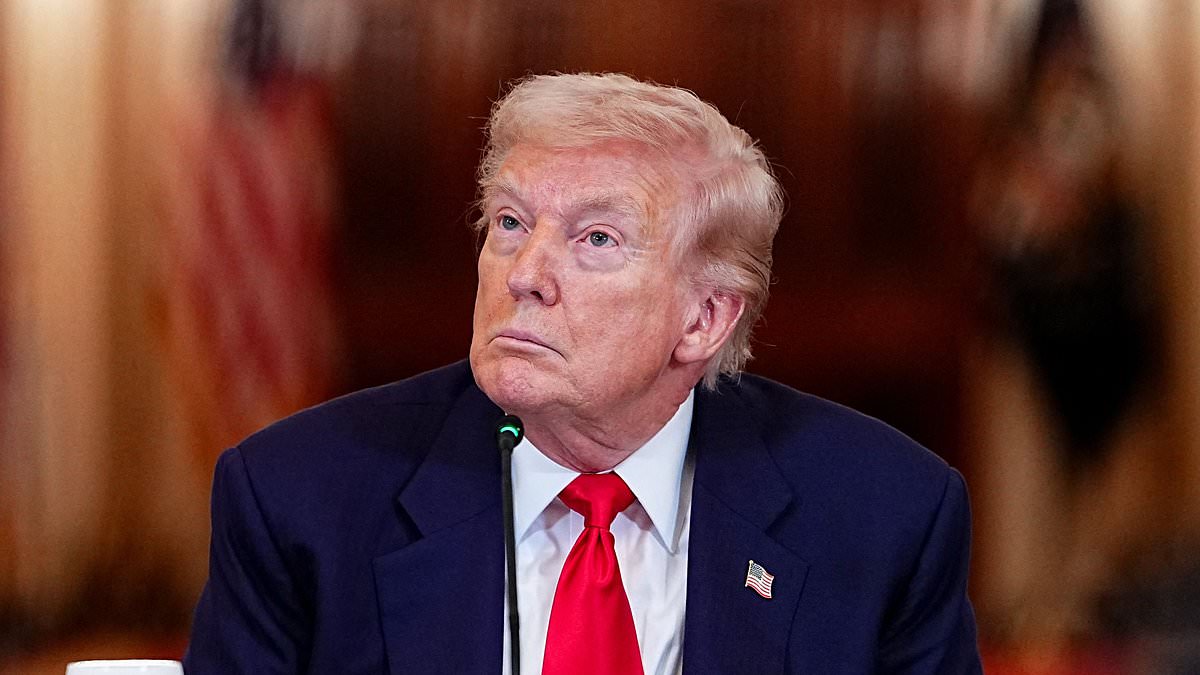
The president promised to continue striking Iran as tensions escalate in the region. He’s pictured above at a roundtable discussion on Friday at the White House
Countries in the GCC, including the United Arab Emirates, Qatar, Kuwait and Jordan were hit with a barrage of missiles this past week.
Iranian leadership has said the strikes were intended for US military bases, and citizens of GCC countries were not the target of the operation.
Iran’s President Masoud Pezeshkian apologized to GCC countries in a video message on Saturday for the deadly drone and missile strikes.
‘I should apologize to the neighboring countries that were attacked by Iran, on my own behalf,’ he said.
‘From now on, they should not attack neighboring countries or fire missiles at them, unless we are attacked by those countries. I think we should solve this through diplomacy.’
Pezeshkian delivered the message next to a picture of Khamenei, but did not directly address the Supreme Leader’s slaying.
Despite the apology, the video was in no way a surrender, as the Iranian president vowed that the country’s enemies ‘must take their wish for the unconditional surrender of the Iranian people to their graves.’
‘Our commanders, leaders and loved ones lost their lives due to the brutal aggression that took place, and our armed forces are heroes who gave their lives to defend our territorial integrity,’ Pezeshkian added.

Iranian President Masoud Pezeshkian apologized to Gulf neighbors for military strikes targeting their countries, as Trump has promised ‘complete destruction’ of Iran. Pictured above is smoke from an explosion in Tehran on Saturday

GCC countries have been targeted in retaliatory strikes from Iran this past week. Pictured above is the aftermath of an Israeli airstrike in Beirut’s suburbs on Saturday
However, a statement issued by the Iranian Revolutionary Guards (IRGC) just hours after the video message claimed to have targeted bases in the UAE and Kuwait.
‘Should the previous hostile actions continue, all military bases and interests of criminal America and the fake Zionist regime on land, at sea, and in the air across the region will be considered primary targets and will come under the powerful and crushing strikes of the mighty armed forces of the Islamic Republic of Iran,’ the IRGC threatened.
Qatar also confirmed it had intercepted an Iranian missile and issued a ‘heightened’ security alert to citizens.
As Trump and Pezeshkian issue defiant messages, hope for an end to military activity in the area has dwindled.
Warfare has continued in the area over the last week, as Israel led a fleet of 80 fighter jets in the early hours of Saturday morning against Tehran’s Mehrabad International Airport, one of two that serve the capital.
Israel’s broad military operations did not end there. The Israel Defense Forces have intensified attacks in Lebanon against the Iran-backed Hezbollah.
Israeli military forces launched a raid in eastern Lebanon, which resulted in at least 41 deaths, the New York Times reported, citing Lebanese officials and state media.
Iran also hit back on Saturday, with air raid alerts and explosions heard above Jerusalem as well as Gulf cities Dubai, Manama and near Riyadh – where Saudi Arabia intercepted a ballistic missile fired at an air base housing US military personnel.

The US and Israel have remained defiant in the pursuit of destroying Iranian nuclear capabilities. Pictured above is Israeli Prime Minister Benjamin Netanyahu and Trump at a news conference last December


Video footage has revealed an explosion near Dubai International Airport. The ongoing military conflict in the Middle East has severely impacted international travel
Video footage in Dubai revealed a potential drone strike near Dubai International Airport, a major hub for international travel.
The ongoing air strikes temporarily closed airspace over the Middle East. Airports have gradually resumed flight operations, but travel remains a headache for international passengers. The State Department is continuing to coordinate travel for Americans abroad.
Iran’s Revolutionary Guards also said they had targeted the oil tanker Prima in the Gulf as it attempted to cross the narrow Strait of Hormuz, a key chokepoint for global shipping that Iran has effectively closed.
It has been reported that at least 1,230 people have been killed in Iran, more than 200 in Lebanon and 11 in Israel. Six US troops have also been killed.