
Share this @internewscast.com
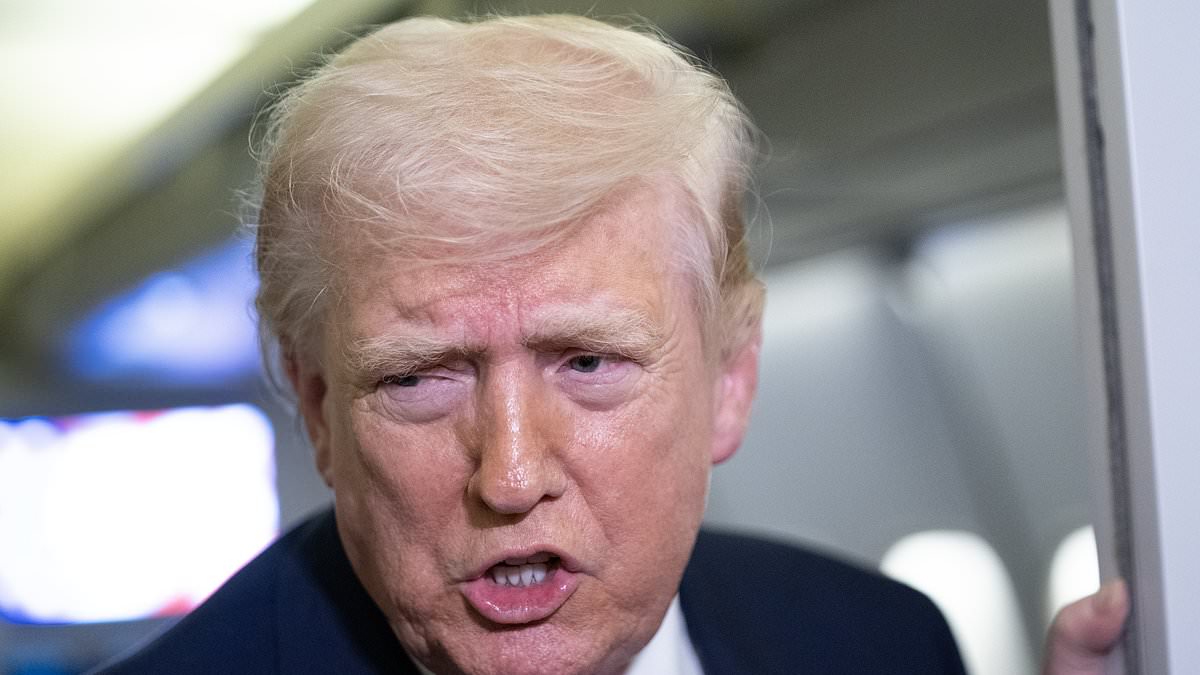
Donald Trump issued a stark warning to Iran, threatening significant damage to the nation’s water and power infrastructure unless the Islamic regime promptly reopens the Strait of Hormuz. This comes as Tehran signals its intention to abandon its nuclear agreement.
In a post on Truth Social early Monday, Trump stated that failure by Iran to finalize a peace accord would prompt the United States to conclude the conflict by targeting and devastating Iran’s electricity facilities and oil sites.
Trump mentioned ongoing “serious discussions” with what he described as a “new, more reasonable regime” to bring an end to the hostilities, posting this update just before the stock market opened, and noted that “significant progress” was already underway.
Shortly afterward, however, he escalated his rhetoric, insisting that if an agreement to reopen the Strait of Hormuz couldn’t be reached, the U.S. would proceed to attack Iran’s power stations, oil fields, and Kharg Island, potentially including all desalination facilities.
Desalination plants are crucial for Iran, as they transform seawater into potable water, supporting the country’s over 90 million residents. This infrastructure is essential for maintaining the population’s access to fresh water.
It’s important to note that the Geneva Convention expressly forbids any attacks on water resources and infrastructure critical to civilian survival.
It comes as Iran’s parliament weighs exiting the Nuclear Non-Proliferation Treaty, long cited by the Islamic regime as proof it is not pursuing a nuclear weapon. However, US intelligence and Western officials have for years warned that Tehran’s enrichment activities could position it to develop one.
‘What is the benefit of joining a treaty in which bullying parties at the international level not only do not allow us to benefit from its rights but also attack our nuclear facilities?’ said an Iranian foreign ministry spokesperson.

Trump threatened to ‘blow up’ Iran ’s water supply and electric grid if the Islamic regime did not immediately reopen the Strait of Hormuz

It comes as Iran’s parliament weighs exiting the Nuclear Non-Proliferation Treaty, long cited by the Islamic regime as proof it is not pursuing a nuclear weapon

Striking or destroying water supplies and infrastructure necessary to the survival of the civilian population is strictly prohibited by the Geneva Convention

Trump’s mixed signals on the conflict have repeatedly come just before markets open, as he touts progress toward a resolution while also threatening to seize Kharg Island, which handles roughly 90 percent of Tehran’s oil exports.
Retired US Army General and former NATO Supreme Allied Commander Europe, Wesley Clark, said during an interview last week that Trump should not bomb Iran’s civilian infrastructure because such an attack could be considered a ‘war crime.’
‘A lot of people will say it’s a war crime because mostly these power plants are probably there for the civilian population,’ said Clark in a NewsNation interview. ‘You cannot destroy civilian assets in an effort to put harm on the population.’
As the US sends thousands of military personnel to the region for a possible ground invasion, Iran has responded by laying traps and moving additional assets to fortify the island.
Trump, meanwhile, told the Financial Times during an interview on Sunday that he could ‘take the oil in Iran’ by seizing Kharg island.
As the war enters its fifth week, the President said he favors capturing Iran’s vast oil reserves, drawing a comparison to Venezuela, where he claimed the US secured control of the country’s fossil fuel industry following the removal of dictator Nicolás Maduro.
Trump said that his ‘favorite thing is to take the oil in Iran but some stupid people back in the US say, “Why are you doing that?” But they’re stupid people.’
‘Maybe we take Kharg Island, maybe we don’t. We have a lot of options,’ Trump said. ‘It would also mean we had to be there [in Kharg Island] for a while.’
As the Strait of Hormuz remains closed since the star of the war, the price of oil surged to $101 per barrel on Monday morning.

Trump said he favors capturing Iran’s vast oil reserves

As the Strait of Hormuz remains closed since the star of the war, the price of oil surged to $101 per barrel on Monday morning

Iran has responded to US-Israeli strikes by launching suicide drone and ballistic missile assaults against oil infrastructure and civilian areas in the Middle East
Iran has responded to US-Israeli strikes by launching suicide drone and ballistic missile assaults against oil infrastructure and civilian areas in the Middle East.
Israel and Gulf nations hosting US military bases have faced the brunt of Iran’s retaliatory attacks in recent weeks.
A new barrage of Iranian strikes were launched at the UAE on Monday as authorities in Dubai said reports of explosions across parts of the city were the result of ‘successful air defense operations.’
As the Gulf state continues to censor photos and information about Iranian attacks to maintain a façade of safety, people quickly turned to social media to thank the Emirati defense system.
One person wrote on X: ‘It was a huge sound… everyone is terrified here. We thought it’s a missile sound but thanks Allah it was interception.’