
Share this @internewscast.com
In a significant legal setback for Donald Trump, Alina Habba, his chosen U.S. Attorney for New Jersey, has been disqualified by an appeals court. This decision marks another blow in the former president’s ongoing legal challenges.
The 3rd U.S. Circuit Court of Appeals, based in Philadelphia, unanimously ruled against Habba, upholding a previous decision by a lower court. The panel of judges delivered their verdict after considering oral arguments presented by Habba on October 20.
Known for her close ties to Trump, Habba has been a staunch defender in his high-profile legal battles, including the notable New York civil fraud trial and the E. Jean Carroll defamation case. Her position as U.S. Attorney had been extended beyond the expiration of her interim appointment, bypassing Senate confirmation.
The Trump administration had employed legal tactics to maintain her role as ‘acting’ attorney, despite attempts by district court judges to replace her with her deputy. These maneuvers involved exploiting vacancies to keep her in office.
At the time of the ruling, Habba was conducting an investigation into New Jersey’s Democratic Governor Phil Murphy regarding his directive for state police to avoid cooperating with ICE agents.
However, the decision rendered by Judges Luis Restrepo, an Obama appointee, and David Smith and David Fisher, both appointed by George W. Bush, concluded that Habba’s position was unlawfully held, further complicating Trump’s legal standing.
Habba is not the first Trump prosecutor whose appointment has been challenged.
Last week, a federal judge dismissed criminal cases against former FBI Director James Comey and New York Attorney General Letitia James after concluding that the hastily installed prosecutor who filed the charges, Lindsey Halligan, was unlawfully appointed to the position of interim US attorney for the Eastern District of Virginia.

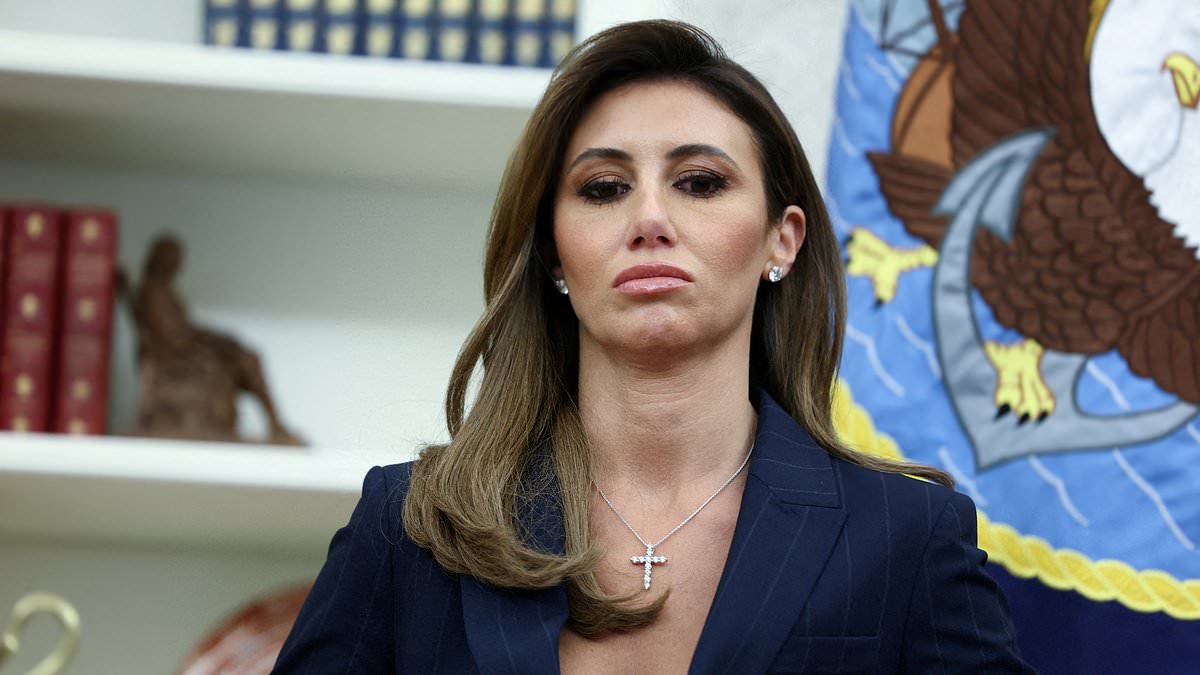
Alina Habba attends her swearing-in ceremony as interim U.S. Attorney for the District of New Jersey, in the Oval Office at the White House in Washington, March 28
The Justice Department has said it intends to appeal the rulings.
A lower court judge said in August Habba’s appointment was done with a ‘novel series of legal and personnel moves’.
That order said her actions since July could be invalidated, but he stayed the order pending appeal.
The government argued Habba is validly serving in the role under a federal statute allowing the first assistant attorney, a post she was appointed to by the Trump administration.
A similar dynamic is playing out in Nevada, where a federal judge disqualified the Trump administration’s pick to be US attorney there.
The Habba case comes after several people charged with federal crimes in New Jersey challenged the legality of Habba’s tenure.
They sought to block the charges, arguing she didn’t have the authority to prosecute their cases after her 120-day term as interim US attorney expired.
Habba served as a White House adviser briefly before Trump named her as a federal prosecutor in March.

Lindsey Halligan, special assistant to the president, speaks with a reporter outside of the White House, August
Shortly after her appointment, she said in an interview that she hoped to help ‘turn New Jersey red,’ a rare overt political expression from a prosecutor.
She then brought a trespassing charge, eventually dropped, against Democratic Newark Mayor Ras Baraka stemming from his visit to a federal immigration detention center.
Habba later charged Democratic US Rep. LaMonica McIver with assault stemming from the same incident, a rare federal criminal case against a sitting member of Congress other than for corruption. McIver denied the charges and pleaded not guilty. The case is pending.
Questions about whether Habba would continue in the job arose in July when her temporary appointment was ending and it became clear New Jersey’s two Democratic US senators, Cory Booker and Andy Kim, would not back her appointment.
Earlier this year as her appointment was expiring, federal judges in New Jersey exercised their power under the law to replace Habba with a career prosecutor who had served as her second-in-command.
Bondi then fired the prosecutor installed by the judges and renamed Habba as acting US attorney.
The Justice Department said the judges acted prematurely and said Trump had the authority to appoint his preferred candidate to enforce federal laws in the state.
Brann’s ruling said the president’s appointments are still subject to the time limits and power-sharing rules laid out in federal law.