
Share this @internewscast.com
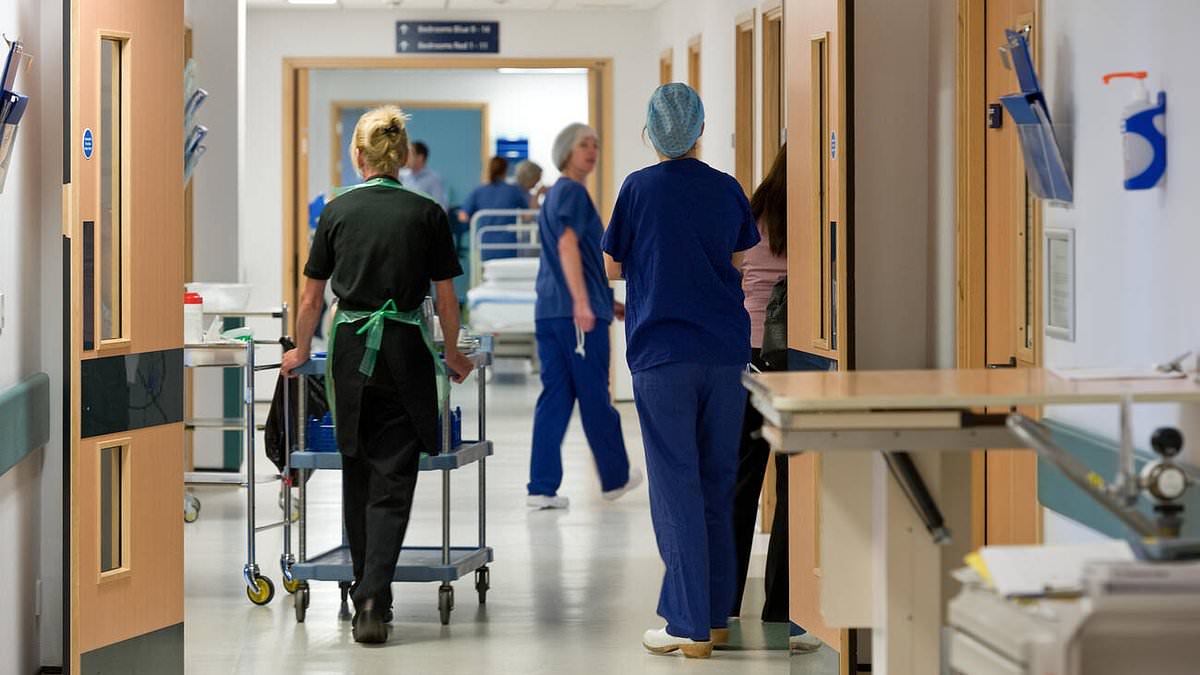
According to a recent report, the United Kingdom has a foreign medical staff proportion that is double the Western average.
Data from the Organisation for Economic Co-operation and Development (OECD) reveals that in 2023, 38.3% of the UK’s medical professionals hailed from outside Britain.
The General Medical Council (GMC) suggests this percentage, specifically concerning doctors, has now increased to 42%.
On average, about 19.6% of medical professionals across 28 developed and developing nations are foreign-born.
In Western countries, the reliance on domestically trained doctors and nurses is generally greater, with significantly fewer foreign professionals.
For instance, foreign medical professionals make up 15% of Germany’s workforce, 11% in France, and just 1% in Italy. However, in Norway, approximately 44% of doctors are from abroad.
In most western countries the proportion of foreign nurses is lower than that of doctors, and stood at 23 per cent in the UK in 2023.
Britain’s Chief Medical Officer Prof Chris Whitty recently co-authored a report that raised problems with the current system for training doctors and highlighted the need to get the ‘right balance’ between British and foreign staff.

Some 38.3 per cent of the UK’s medical workforce were not from Britain in 2023, new data from the Organisation for Economic Co-operation and Development (OECD) shows
The authors concluded: ‘Getting the right balance between domestically trained graduates, international graduates with experience in the UK and new international graduates is an important issue of policy, and the recent major changes to these ratios have contributed to some of the bottlenecks in training.
‘We cannot shy away from addressing this issue, while supporting the excellent international graduates in the NHS providing patient care.’
It was revealed earlier this year that one in five NHS staff have a nationality other than British, or approximately 311,000 employees out of a workforce of 1.5 million.
Many health professionals cite foreign doctors and nurses as playing an essential role in properly staffing the NHS and ensuring safe care.
But there has been trouble brewing in recent months over their role in the health service after UK medical graduates and resident doctors face shortages of specialist training places.
Launching five days of strike action last week, resident doctors – previously known as junior doctors – cited a lack of training places alongside pay issues as the cause.
The places, which enable young doctors to train to become consultants, are capped by the government and ceased prioritisation of British graduates under Boris Johnson’s government in 2019.
There are typically four junior doctors applying for every specialist training post available, and they are open to competition from abroad.
NHS trusts were legally required to put British graduates first for the roles until 2019, but doctors were then added to the UK’s occupation shortlist, meaning trusts could now recruit for the roles directly from abroad.
Stuart Andrew, the Conservative shadow health secretary, told The Telegraph that the ‘growing reliance on foreign-trained healthcare professionals is a wake-up call’.
‘As we bring in more from abroad, UK-trained doctors are left fighting for fewer spots,’ he said. ‘To secure the future of our NHS, we must reform the system to not only recruit internationally but also invest in and prioritise domestic talent.’
Gareth Lyon, head of health and social care at the Policy Exchange think tank, added: ‘The UK needs to train more doctors and to establish more medical schools to train them.’