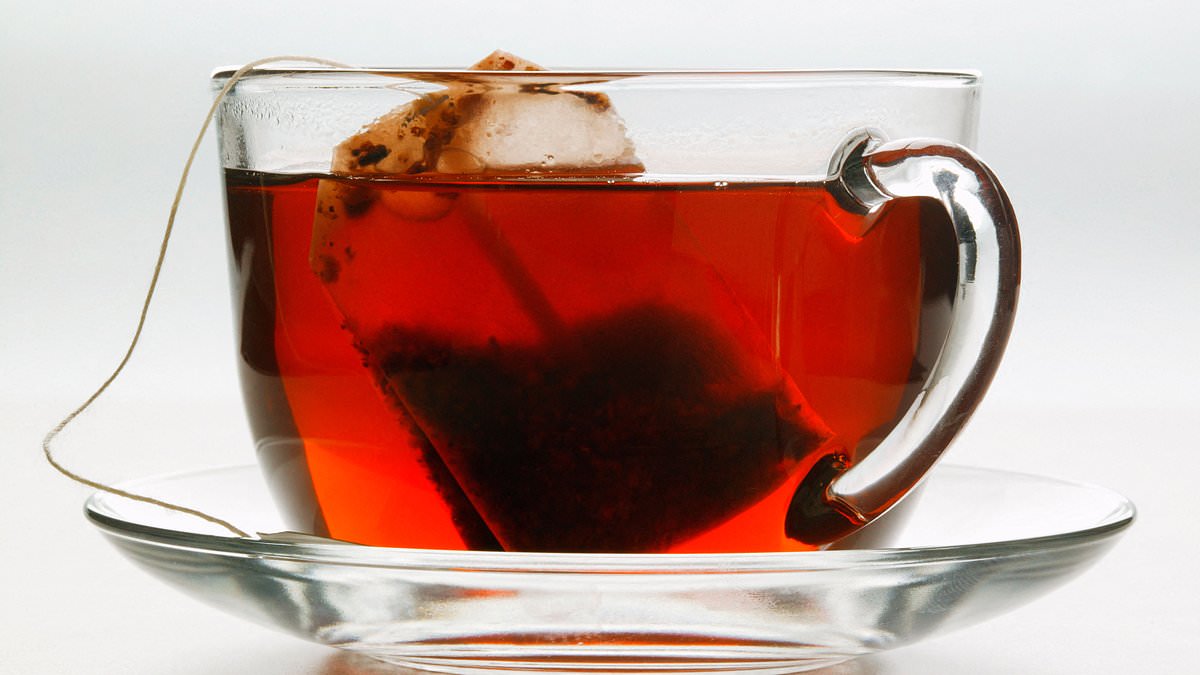

Every cup of tea might be infused with billions of plastic particles, raising concerns about potential health implications.
Researchers caution that these tiny particles, identified as microplastics and nanoplastics, can linger in the body after ingestion.
Though the long-term effects are not yet fully understood, there is some evidence suggesting these particles could be linked to cancer, as they may become embedded in the body’s tissues.
Recent studies have pointed to a surprising source: the common tea bag.
A collaborative analysis by scientists from Iran and the UK examined 19 studies and revealed that a single dry tea bag can harbor approximately 1.3 billion plastic particles. This number jumps to around 14.7 billion when the tea bag is steeped in hot water, which causes the particles to break down further.
Particularly high levels of plastic particles were released from tea bags made of nylon and PET (polyethylene terephthalate) when exposed to near-boiling water.
Experts say the particles either come from the bag itself or contamination during production.
Other drinks are also affected. Bottled tea can pick up plastics from the water, bottle and cap, while bubble tea may be contaminated by cups, lids, straws and added ingredients.

Tea bags release microplastics and nanoplastics into hot water, even those made from plant-based fibers
There are, however, simple ways to cut exposure.
Experts say the most effective step is to switch to loose-leaf tea, which avoids the bag altogether. Choosing paper tea bags rather than plastic mesh can also help.
Some studies suggest rinsing tea bags before use can reduce the number of particles released – though this is less effective for nylon varieties.
Avoiding microwaving tea and using filtered water may further limit contamination.
While it is impossible to eliminate microplastics entirely, researchers say small changes like these can significantly reduce how much ends up in a daily cup.
Microplastics are now widespread in food, water and even human tissues, with researchers racing to understand what that means for long-term health.
Around 84 percent of Britons and 34 percent of Americans drink tea every day, many using tea bags for iced, herbal or regular cups.
In analysis published in the journal Food Chemistry, researchers concluded all types of tea-based drinks contain microplastics and nanoplastics, but tea bags release the most by far.
Join the discussion
Would you ditch tea bags after this?

Research from the Universitat Autònoma de Barcelona warns that one tea bag can shed billions of microplastics and most of them are taken up by mucus-producing cells in the gut
Plastic tea bags were the most contaminated.
Microplastics are tiny plastic particles visible under a basic microscope. They are small specks or fibers about the width of a human hair or smaller.
Nanoplastics are thousands of times smaller. They are so tiny that they cannot be seen with a regular microscope.
They are small enough to pass directly through cell walls and into your bloodstream, tissues and organs.
In addition to one study reporting that one plastic teabag releases 2.3million microplastics and 14.7billion nanoplastics into a cup of hot tea, other researchers estimated 100,000 to 1million nanoplastics per liter from polypropylene and nylon bags.
Microwaving increases the release, while another study found non-woven bags release many particles, but woven nylon bags release few.
Even teabags labeled ‘biodegradable’ or ‘compostable’ may not be as safe as they seem – with studies suggesting they can still shed billions of microscopic plastic particles into a single cup.
In some tests, researchers detected relatively low numbers – around 50 to 80 particles per bag – but warned this may be a vast underestimate, as their methods only captured larger fragments above about 30 micrometers.

The graphic shows the four different types of tea-based drinks and all the possible places where microplastics and nanoplastics (MNPs) can enter each one
The particles come in a range of shapes, including fibers and shards, and have been found to contain plastics not typically associated with food packaging, such as ABS, EVA, polycarbonate, Teflon and PVC.
Scientists are increasingly concerned because these particles have now been detected in human blood, lungs, liver and even tumor tissue.
Laboratory studies suggest they may harm cells in several ways. One key mechanism is oxidative stress – where particles trigger the production of unstable molecules that can damage DNA, proteins and cell membranes.
Over time, this type of DNA damage is linked to mutations that can drive cancer development.
Researchers have also reported higher levels of microplastics and nanoplastics in colorectal cancer tissue compared with healthy tissue, raising concerns about a possible link to cancers of the digestive system.
There are further fears because the particles can act like sponges – absorbing and carrying other potentially harmful chemicals, including phthalates and heavy metals, deep into the body’s cells.
Many of these chemicals have been linked to hormone disruption – and cancers including breast, prostate and ovarian.
A separate major review found microplastics have been detected in human tissue across multiple cancer types – including lung, stomach, blood, brain, liver, pancreatic, cervical and testicular cancers.
The latest analysis also found that chemicals such as phthalates and bisphenol A can leach into tea during brewing – though it remains unclear whether they come directly from the bag or from plastic particles that break off.
The researchers warned contamination is widespread across all tea drinks.
‘Clearly, all tea-based drinks, including bottled products and hot beverages involving tea leaves and teabags, are contaminated by MNPs [microplastics and nanoplastics] arising from multiple sources, including packaging, water and tea leaves themselves,’ they said.
‘Overall, however, teabags, including those made wholly or partly of plastic and those marketed as biodegradable, appear to be the greatest contributors of MNPs to hot tea when the bag and string are exposed to the physical, chemical and thermal stress of steeping.’


