
Share this @internewscast.com
In our daily lives, many of us encounter bouts of stress, yet recent research has identified seven distinct forms of ‘hyperarousal’.
The study suggests that the sensation of tension can be broken down into specific categories.
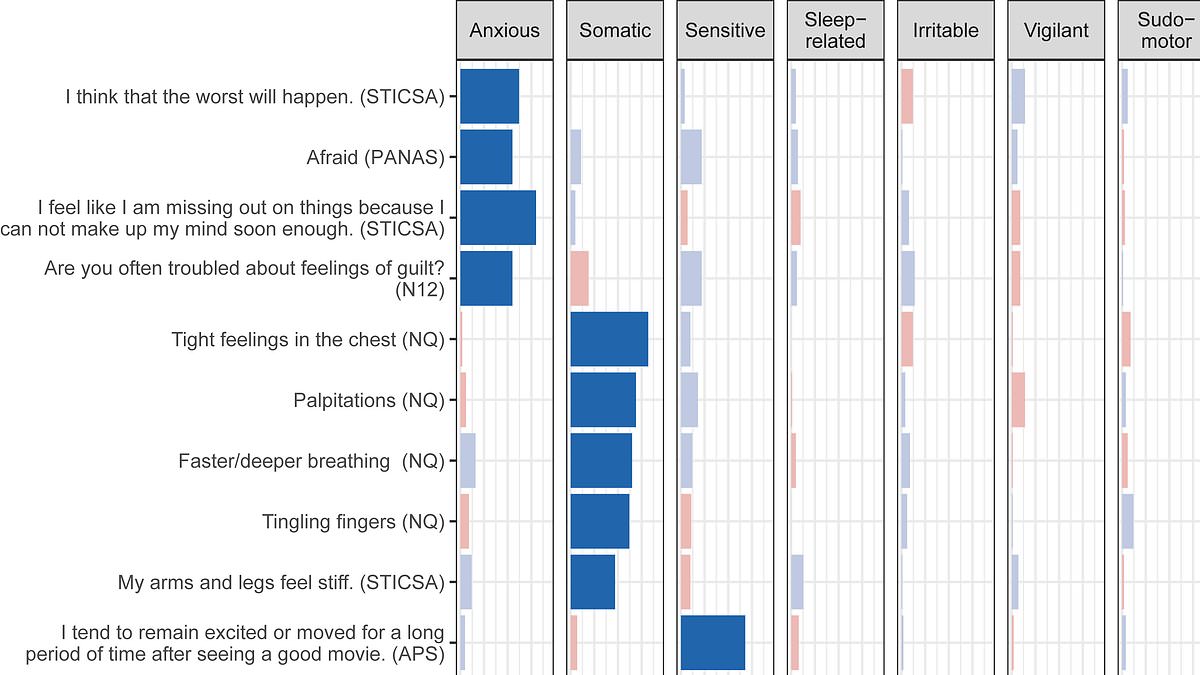
These categories include anxious, somatic, sensitive, sleep-related, irritable, vigilant, and sudomotor, each with its own unique characteristics.
Arguably the most familiar, ‘anxious’ hyperarousal is characterized by worries about potential future problems. It can also encompass feelings of guilt or anxiety over missing out.
‘Sensitive hyperarousal’ suggests a heightened emotional sensitivity, leaving individuals prone to being easily startled, as noted by the researchers.
Another prevalent form is ‘sleep-related’ hyperarousal, marked by difficulties in falling asleep or staying asleep, which can subsequently affect one’s mental alertness.
‘No previous study has addressed the unresolved question of whether hyperarousal may be one common…construct or rather has multiple dimensions,’ the team, from the Netherlands Institute for Neuroscience, wrote in the journal EClinicalMedicine.
‘This study discovered seven different dimensions of hyperarousal and provides a concise instrument to assess them.’

The experts revealed there are seven types of ‘hyperarousal’ – and they all have different symptoms, as seen from this chart
For their study, the team collected data on 467 adults who all completed questionnaires about their everyday hyperarousal symptoms.
Another type of tension, revealed by their analysis, is called ‘somatic’ – also known as the ‘fight or flight response’.
This can be characterised by tight feelings in the chest, palpitations, faster breathing or tingling fingers.
The fifth type is ‘irritable hyperarousal’, more commonly known as being prickly, agitated and hostile towards others.
The sixth, ‘vigilant’, is defined as having heightened awareness in public spaces.
People who feel this type of tension are likely to agree with the sentence ‘When I am in public, I feel overwhelmed because I cannot keep track of everything going on around me.’
And finally, the last is ‘sudomotor’, also known as experiencing hot or cold sweats.
People experiencing this may also say their face feels hot or have clammy hands.

The researchers said certain types of tension are more likely to appear within particular psychiatric diagnoses. For example, people with insomnia (ID) are likely to have sleep–related hyperarousal, while those with ADHD are more likely to be irritable and anxious
The participants in the study all had received some type of psychiatric diagnosis, such as insomnia, depression, PTSD or ADHD.
Since hyperarousal plays an important role in all of these mental disorders, understanding it could lead to better understanding and treatment of the conditions, the team explained.
‘Within sleep research, we already know a great deal about the role of hyperarousal in insomnia,’ said first author Tom Bresser.
‘But hyperarousal also plays a major role in many other mental disorders.
‘If we better understand what hyperarousal really is, we can also better understand insomnia, anxiety and depression.’
The researchers said they now want to investigate which brain regions are involved in which type of hyperarousal.
Although periods of tension and stress are common, experts have warned that too much can be unhealthy.
Last year, a leading psychologist said the trauma of daily ‘micro stresses’ such as being stuck in traffic can have detrimental effects on your brain.
Dr Becky Spelman, a UK licensed psychologist, explained that human brains ‘aren’t wired for constant low–level friction’ such as losing your keys and being in a rush.
‘Repeated minor stressors can lead to the same physiological and emotional exhaustion as a single major stressor,’ she said.
A study from beverage company Trip has also found that Brits experience an average of eight microstresses per day, increasing their blood pressure for up to two hours.
Around 90 per cent of Brits experience these stressors – which include having an untidy house or not being able to find a parking space.
‘When the small stresses pile up with no opportunity to decompress, they create an emotional static that affects concentration, patience, and even physical health,’ Dr Spelman said.