
Share this @internewscast.com
The arrest of Ben Roberts-Smith, a decorated war hero who faces allegations of war crimes, doesn’t immediately settle the controversies surrounding him.
However, it does shift the focus to where it arguably belongs: a criminal court, rather than a civil one.
For years, this case has lingered in a legal gray area. Roberts-Smith lost a high-profile defamation lawsuit in 2023 when Justice Anthony Besanko ruled that crucial allegations of murder during his military service in Afghanistan were, on the balance of probabilities, true.
His bid to overturn this decision failed when the Full Federal Court dismissed his appeal last May, and the High Court subsequently denied special leave in September.
Roberts-Smith now faces arrest and is anticipated to be charged with five counts of war crime murders related to incidents in Afghanistan from 2009 to 2012.
While the civil court’s findings severely damaged his reputation, they did not amount to criminal convictions.
The legal threshold that sank him in the civil court was not proof ‘beyond reasonable doubt’. It was the much lower civil standard of ‘on the balance of probabilities’.
That is to say, a slightly higher probability than a coin toss.

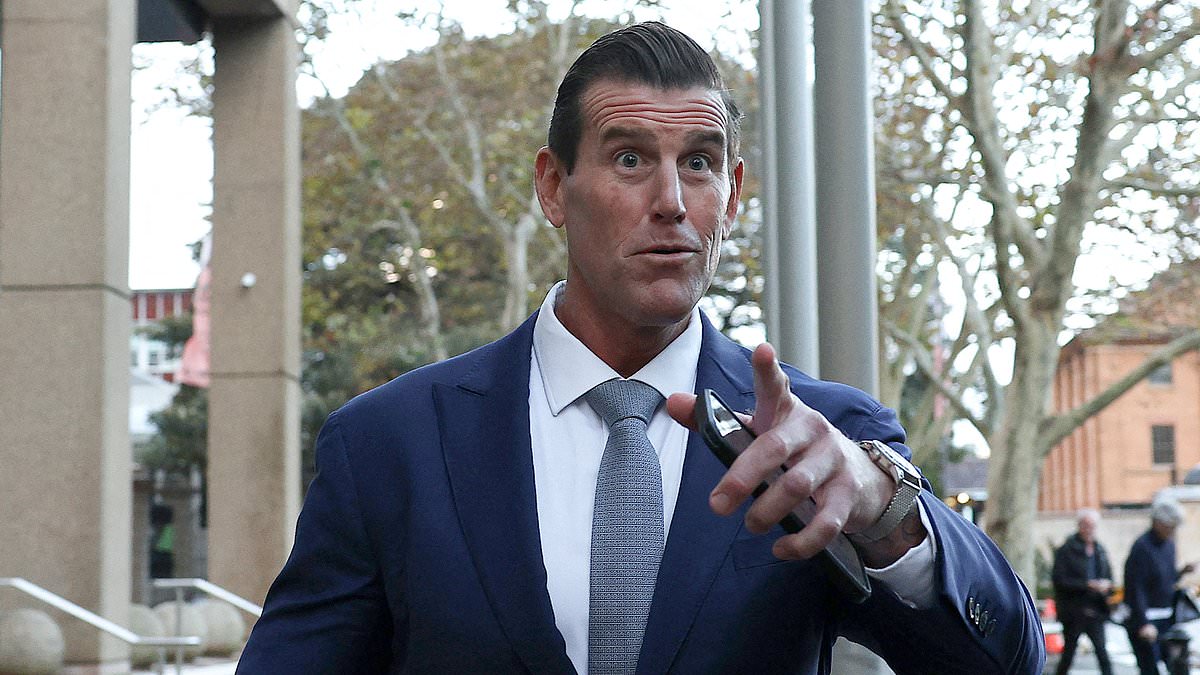
Ben Roberts-Smith has been arrested over multiple alleged war crimes
Think about that for a moment before you jump to judgment in this case, or extrapolate any other civil finding for that matter.
Yet in the court of public opinion, and often in media coverage too, Roberts-Smith has effectively been treated as though the criminal question has already been settled. It hasn’t, but it will be now.
If Roberts-Smith is telling the truth when he says he’s innocent, he should welcome today’s development, grim as it plainly will be.
A criminal prosecution is not something anyone sensibly celebrates. The ordeal ahead will be immense. For the nation too, given that Roberts-Smith is a Victoria Cross recipient.
But if he didn’t do what has long been alleged, then this is the process that gives him the only outcome that can truly change the narrative around him.
If the prosecution can’t prove its case beyond reasonable doubt, and Roberts-Smith is found not guilty, then he remains an innocent man, the presumption having been properly tested. That’s how the system works.
But if he’s convicted, then the civil case was a precursor to justice, not an extrapolated finding that prematurely cast a shadow over an innocent man.
A not guilty verdict after a full criminal trial would supersede the current balance-of-probabilities narrative that has hung around Roberts-Smith’s neck ever since his defamation loss.

Australian Federal Police Commissioner Krissy Barrett (left), and OSI Director Investigations Ross Barnett spoke to media following his arrest
It wouldn’t mean that the allegations were never made, of course, or that the civil proceedings never happened.
But it would mean that the state, once required to prove the allegations to the criminal standard, failed to do so.
This is not a minor procedural matter, especially in a world where allegations are too readily treated as fact.
Conversely, the reverse is true – and just as critical. If Roberts-Smith did commit these horrendous crimes, and if that’s proven beyond reasonable doubt in a criminal court, then the ambiguity ends there too.
Roberts-Smith becomes a verifiable war criminal, end of debate, assuming the appeals system doesn’t overturn such a finding.
At that point the criminal law would have caught up with what the civil findings had already indicated on a lower threshold. But that hasn’t happened yet, and might not.
If it does, the public language around Roberts-Smith would harden – because it should. Those who have lent too heavily into his guilt, based on the civil finding, would have their assumptions justified post fact.
A criminal conviction would legitimise, fully and properly, the bluntest possible description of what Roberts-Smith is.

Pictured, then-Australian Prime Minister Malcolm Turnbull with Ben Roberts-Smith VC during the Australian of The Year Awards 2016
Today’s arrest is step one in moving this matter from inference, probability and reputational collapse into the only forum that can conclusively answer the question Roberts-Smith has spent years contesting, one way or the other.
He has always said he’s innocent. That claim will now be properly tested.
This is the high-profile stage the country needed, though it may descend into theatricality before judgement day.
For Roberts-Smith, it offers the possibility of an exoneration that the civil process never could.
For the public, it offers something the long years of reporting, litigation and arguments have never been able to properly test.
And when allegations as grave as these are made, the accused deserves the presumption of innocence, and a beyond reasonable doubt test. Because that’s precisely what all of us would want if we were ever required to stand trial.