
Share this @internewscast.com
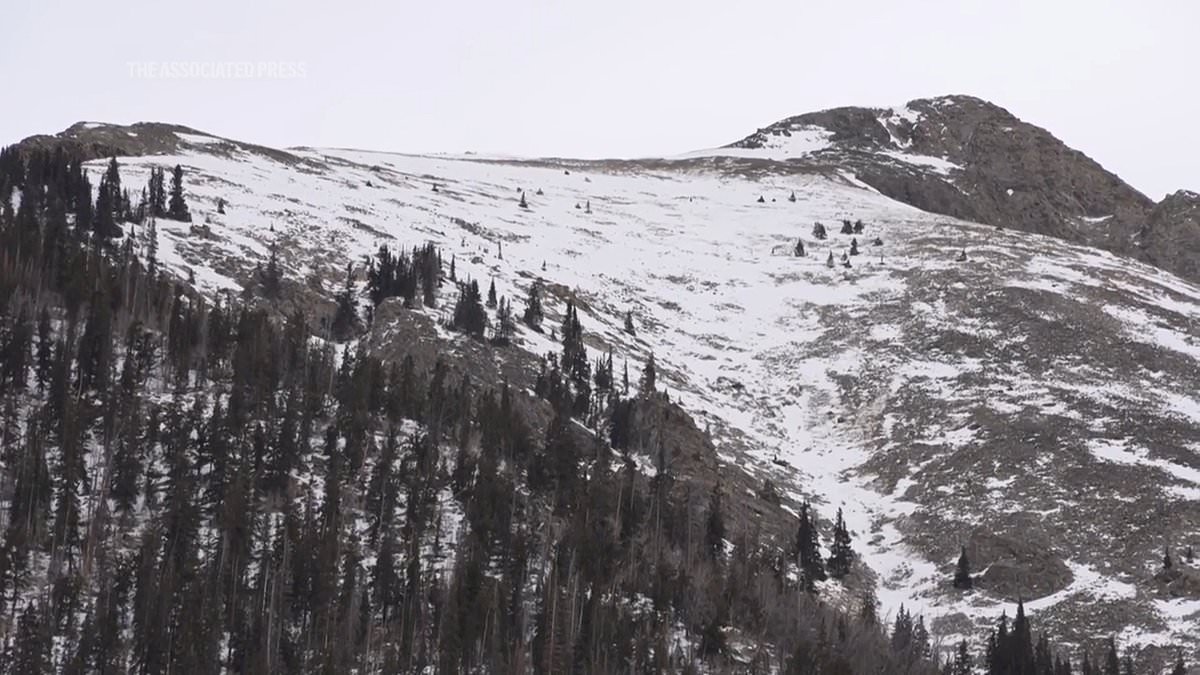
The unseasonably warm weather sweeping across the United States is taking a toll on ski resorts, leaving them with a scarcity of both snow and visitors. This unexpected climate shift is particularly affecting the premier ski hubs in the western part of the country, where the typically snow-laden landscapes are now surprisingly bare.
In these popular western ski destinations, the unusually high temperatures have drastically reduced the snow cover that attracts tourists annually. Kevin Cooper, president of the Kirkwood Ski Education Foundation located in Lake Tahoe, expressed to the Associated Press how challenging the conditions have been, stating, “Mother Nature has been dealing a really hard deck.”
At Lake Tahoe, straddling the California-Nevada border, ski resorts are grappling with the consequences of this weather anomaly. The above-average temperatures have left them with diminished snow, forcing them to operate only a limited number of ski lifts.
Colorado, another beloved winter destination, is also feeling the heat—both literally and metaphorically. The lack of snow has compelled businesses to adapt. Nicole Godley, who owns Bearcat Stables near Vail, explained the impact on her operations: “We’ve got three big sleighs that can hold up to 12 people each. Now, without any snow, we’ve had to switch those sleighs to wagons.”
The persistent warmth is a stark reminder of nature’s unpredictability, altering traditional winter activities and challenging the resilience of businesses reliant on the snowy allure of winter.
‘We’ve got three big sleighs that can hold up to 12 people each on them,’ Nicole Godley, the owner of Bearcat Stables near Vail, said. ‘Now, we don’t have any snow, so we just switched those sleighs to wagons.
‘December is when we make most of our money. If there’s not a good December, then we kind of have to start thinking ahead of what can we do for the community, our customers, to make them more intrigued to come here.’
However, as half the US experiences a ‘very deep snow drought’, skiers have flocked to the Midwest and Northeast, which have been peppered by record snow this month.

Ski resorts in the Western US have been hard hit by a lack of snow, which is pulling tourists towards the east coast

A sleigh used by Bearcat Stables rests by a stable, unable to be utilized due to the minimal snow cover in Edwards, Colorado
Unseasonably cold conditions in the Northeast have brought snow instead of rain.
Vermont’s Killington Resort and Pico Mountain had about 100 trails open as a result.
‘By far the best conditions I have ever seen for this time of year,’ Josh Reed, a resort spokesman who has lived in Killington for a decade, said.
Another Vermont skier said she had cross-country skied more this fall than in the last two years.
‘I don’t take a good New England winter for granted with our warming climate,’ Elena Veatch said.
Meanwhile in Utah, temperatures around the Salt Lake City area have been 7-10 degrees higher than normal in recent weeks, per the National Weather Service.
Oregon, Idaho and western Colorado also saw their warmest Novembers on record, with temperatures 6-8.5 degrees warmer than the norm, according to the National Oceanic and Atmospheric Administration.
‘Precipitation has been near normal for most places across the west, but warmer temperatures are driving that precipitation to fall as rain rather than snow,’ Jason Gerlich, a drought information coordinator at National Oceanic and Atmospheric Administration (NOAA), said.

Kevin Cooper, the president of the Kirkwood Ski Education Foundation at Lake Tahoe, said that ‘Mother Nature has been dealing a really hard deck’. Pictured: Skiers in Kirkwood, California enjoying better conditions in 2022

Vermont’s Killington Resort and Pico Mountain had about 100 trails open due to the unseasonably cold conditions in the Northeast
That meant that ski resorts in locations typically crowded with snow were unable to fully open, although Gerlich pointed out that a single storm could ‘turn things around rather quickly’.
He noted that the lack of snow was already ‘manifesting itself’ through the flooding seen in the Pacific Northwest, Gerlich said.
In Washington, thousands were placed under a life-threatening flash flood warning on Monday after a dam failed south of Seattle.
The levee failure happened after days of heavy rainfall. The National Weather Service said more than 46,000 people, along with two schools and one hospital, could be impacted.
California is expected to be hit with intense rain, as well as potential floods and landslides due to a powerful atmospheric river.
An atmospheric river is a long, narrow tract of the atmosphere that gathers moisture from the tropics and sweeps it toward the poles.
The National Weather Service has issued a flood watch for parts of Northern California from 4pm Saturday until 4pm Monday.
Heavy precipitation was expected to be accompanied by high-elevation snow for Sierra Nevada, according to the NWS.

Nicole Godley, the owner of Bearcat Stables near Vail, said her business makes most of its money in December. Without snow, she was thinking of how else to attract customers
This will vitally help snowpack water storage but also increase the risk from heavy snow loads, the weather service warned.
Snow is also essential for farmers and ranchers, who rely on snowpack water in their everyday lives.
‘That snowpack is one of our largest reservoirs for water supply across the West,’ Gerlich said.