
Share this @internewscast.com
Venezuelan leader Nicolás Maduro is scheduled to appear in a New York court to answer drug-related charges, and new footage has surfaced showing a covert U.S. drone deployed during efforts to apprehend him.
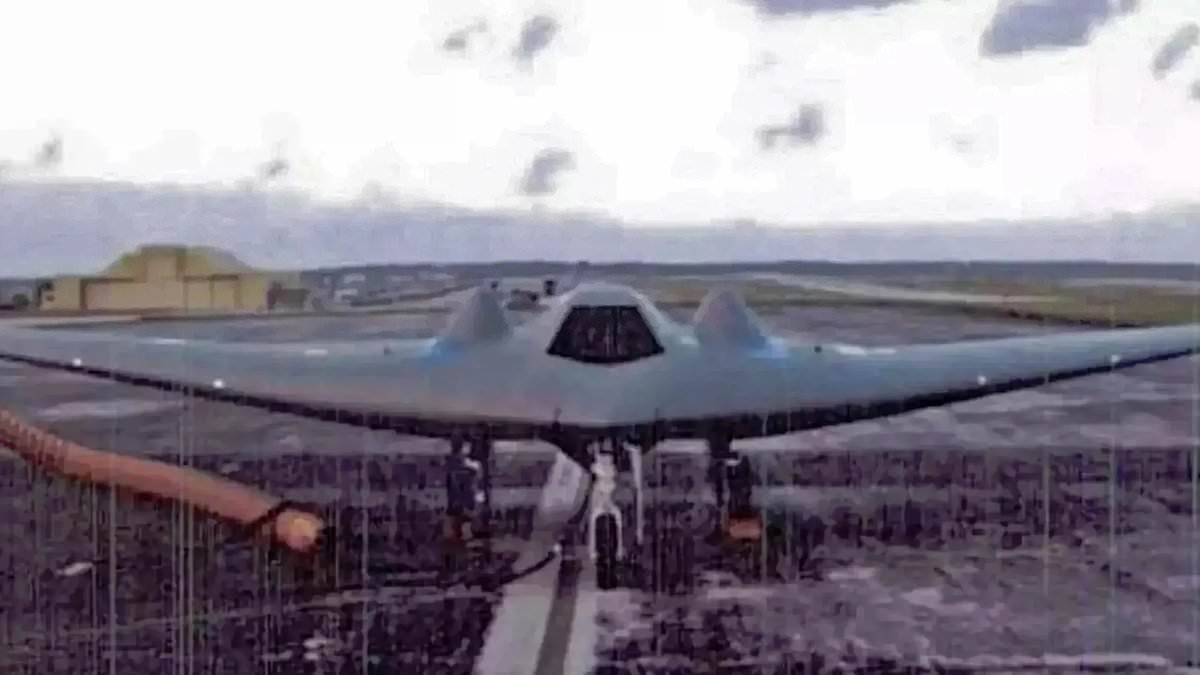
Recently shared videos reveal a U.S. Air Force RQ-170 Sentinel drone making an early morning landing at a base in Puerto Rico, following a raid on January 3.
Sources indicate that at least one RQ-170 Sentinel was involved in the nighttime mission aimed at capturing Maduro and his spouse. The U.S. government does not acknowledge Maduro as the legitimate president of Venezuela.
Although RQ-170 Sentinels have reportedly been operational for two decades, the U.S. Air Force officially recognized their existence in December 2009, highlighting their role in Afghanistan operations.
During the mission, drones were active in Venezuelan airspace, particularly over Caracas. However, due to their classified status, specific flight paths remain undisclosed.
According to reports from the New York Times, unnamed government sources revealed that the CIA had discreetly employed stealth drones over Venezuela for several months. This surveillance was intended to meticulously monitor Maduro’s activities and routine, paving the way for the recent operation.
While the location of the footage is unconfirmed, the airfield could be Roosevelt Roads Naval Air Station in Puerto Rico, which shuttered in 2004.
Images posted online by Air Force Southern appeared to show unit patches worn by military personnel, indicating the RQ-170 Sentinel may have been operating in Latin America since December.

The RQ-170 Sentinel was spotted landing in Puerto Rico on January 3 after the raid to arrest Venezuelan dictator Nicolas Maduro

The RQ-170 Sentinel has been in service in the US Air Force since around 2007, and it is believed to have been flying over Caracas during the strike on Venezuela
Military analysts suggested the RQ-170’s likely contribution was long-term, covert monitoring of Maduro’s compound.
They compared it to the weeks of silent intelligence collection that preceded the 2011 operation against Osama bin Laden, when US forces depended on continuous surveillance of a single, high-value location.
The clips captured the growl of the jet engines and blinking lights on the rear fuselage as the drone soared over the US territory.
Along with the RQ-170 Sentinels, over 150 aircraft took part in Maduro’s arrest, launching from multiple bases in the region.
The drone was designed by Lockheed Martin’s Skunk Works division exactly for this type of mission, providing surveillance of high-value targets inside hostile territory and support for special operations teams like Delta Force, who captured Maduro.
According to The War Zone, there are only about 20 to 30 RQ-170 drones in service, operating from bases like Creech Air Force Base in Nevada.
The 432nd Wing, headquartered at Creech AFB, is the Air Force’s primary wing for remotely piloted drones and is believed to be the main operator of the RQ-170.
Creech is also less than 100 miles from the Area 51 base in Nevada, which has become notorious for its development and testing of top-secret aircraft for decades.
The unmanned aircraft is believed to have advanced sensors for mapping and tracking moving targets, infrared cameras to provide nighttime video, and high-tech intelligence tools for intercepting enemy communications.
Join the debate
Should the US use secret military force in foreign countries to capture controversial leaders?

US forces struck Fuerte Tiuna on Saturday, capturing Nicolas Maduro and his wife without suffering casualties

About 20 to 30 RQ-170 Sentinels are believed to be in use by the Air Force, providing surveillance and tracking targets during military operations
At the same time, military technology experts believe US cyberwarfare units also played a role in the attack, sending the entire target area into a blackout as the raid began.
Part of the strike appeared to have included a massive power outage around Fuerte Tiuna, Venezuela’s largest military complex in Caracas.
DigitalWarfare.com’s James Knight told the Daily Mail before the military operation that US cyber forces had been mapping out targets to strike digitally in Venezuela and other hostile nations for years.
That process included meticulously making sure civilian facilities, such as hospitals, did not lose power if American forces hacked into the country’s electrical grid.
As Knight assessed in December, the US appeared to focus its efforts on Venezuela’s military C2 networks – the communication systems for the country’s troops.
US Air Force Gen. Dan ‘Razin’ Caine, the Chairman of the Joint Chiefs of Staff, said: ‘As the force began to approach Caracas, the Joint Air Component began dismantling and disabling the air defense systems in Venezuela, employing weapons to ensure the safe passage of the helicopters into the target area.’
‘The goal of our air component is, was, and always will be to protect the helicopters and the ground force and get them to the target and get them home.’
President Trump appeared to confirm that US cyber units blacked out the area during Operation Absolute Resolve, saying: ‘It was dark, the lights of Caracas were largely turned off due to a certain expertise that we have, it was dark, and it was deadly.’