
Share this @internewscast.com
At 82 years old, Norwegian traveler Bredo Morstoel found himself driving through the Rocky Mountains of Colorado, when a remarkable thought struck him.
Upon passing the historic Stanley Hotel, famously known as the muse for Stephen King’s 1977 novel, The Shining, Morstoel confidently declared to his grandson, “I will return here one day.”
Fast forward 43 years, and Morstoel’s prophecy came true. He made his way back to The Stanley. Remarkably, 36 years posthumously, he remains there.
Morstoel, a distinguished landscape architect who spent his life in Baerum, a suburb of Oslo, was cryogenically preserved after succumbing to a heart attack in 1989. He became the first individual from northern Europe to undergo this futuristic preservation, a process that holds hope for future revival through scientific advancements.
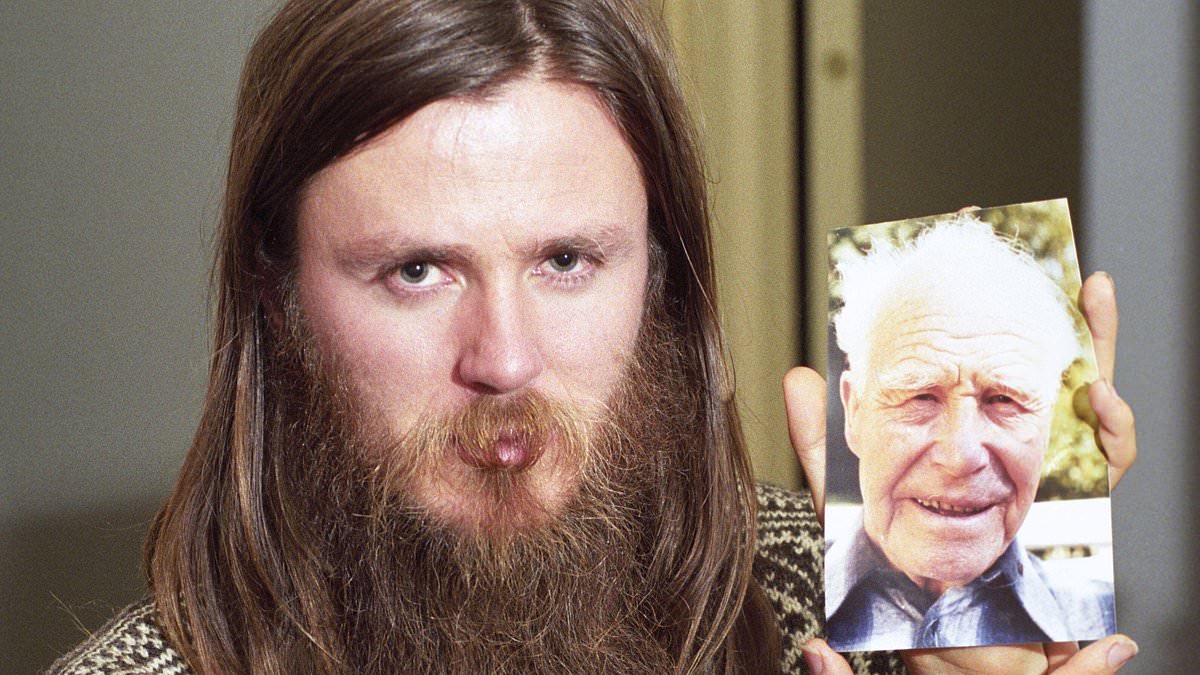
His grandson, Trygve Bauge, who shared his interest in cryonics, orchestrated his transfer to the United States on dry ice. Bauge, having moved to the U.S. in 1980, initially placed “Grandpa Bredo,” as he is affectionately referred to, in a Californian cryonics facility. Later, he relocated him to a specially prepared site in Colorado, maintaining the body in a frozen state.
By August 2023, Morstoel was relocated to The Stanley, now a part of their newly opened cryonics museum, thus fulfilling his own foresight.
It’s a scarcely believable tale. But that’s not even half of it.
Last weekend, the stories came flooding back with the arrival of the annual ‘Frozen Dead Guy’ festival, celebrating The Stanley’s most unusual non-living resident, now over 125 years old.

Bredo Morstoel was cryogenically frozen after dying from a heart attack in 1989 – the first northern European to undergo the procedure, which ‘freezes’ a person’s body in the hope that future science will bring them back to life

The annual ‘Frozen Dead Guy’ festival celebrates The Stanley’s most unusual non-living resident, now over 125 years old

Frozen Dead Guy Days is held every March in Estes Park, Colorado
The festival began in 2002 in the tiny Colorado town of Nederland, where Bauge had lived, and where his dead grandfather was in repose. The local chamber of commerce, brainstorming ways to attract tourists in the shoulder season, held the festival in March.
‘In the first few years there were a couple of hundred people, and the idea was to have the events at all the bars,’ said Amanda Macdonald, one of the early organizers.
Macdonald, 54, told the Daily Mail she bought the rights to run the festival in 2012 and watched it surge in popularity.
‘We had a Grandpa Bredo lookalike contest, and a frozen t-shirt contest and some kind of eating contest. Then we added music and beers, and the hearse parade and coffin race – teams of people in fancy dress carrying their homemade “coffin” over an obstacle course. It got huge – some years there would be 20,000 people there across the weekend, which for a town of 1,800 is a lot.’
In 2023, Macdonald realized the festival had outgrown Nederland and sold the concept to the nearby city of Estes Park, where The Stanley Hotel is located.
And that, Bauge explained, sparked the decision to move his grandfather.
‘They realized that the Frozen Dead Guy days without the actual frozen dead guy isn’t the same,’ said Bauge, now 67. ‘So they approached me wanting me to move my grandfather to Estes Park. And I realized that in the long run I needed to find someone else to take over the care.’
That’s because Bauge’s own situation was decidedly unusual.
Born on the outskirts of Oslo, Bauge was an adventurous, unconventional child, he explained.
His father, a lawyer, and his mother, a pharmaceutical executive, gave Bauge and his sister a free-roaming childhood, which saw them spend significant chunks of time with both sets of grandparents.
His maternal grandfather, Bredo, had a particularly lasting impact on him.
‘He was open and friendly and kind, and I have only positive memories from him,’ said Bauge. ‘He liked parties and people. He was very active and loved his garden, and I think that gave him a long life, too. I spent a lot of time with him and his wife, my grandmother, because my parents were both working.
‘I was born in 1957 and Bredo retired when I was ten, so I went on vacations with my grandparents, driving all over the southern part of Norway. We drove to the western fjords, where he was born. He designed a cabin that he built up in the high country, and we went on lots and lots of ski trips all over the place.’

Morstoel’s grandson, Trygve Bauge, with whom he shared a fascination for cryonics, arranged for him to be shipped on dry ice to the United States

As he passed The Stanley Hotel, which served as inspiration for Stephen King’s 1977 classic The Shining, Morstoel told his grandson: ‘I’m going to come back here’

The annual festival to celebrate Morstoel began in 2002 in the tiny Colorado town of Nederland

Some years it would draw tens of thousands of people, many dressed in themed costumes
By the end of the 1970s, Bauge was growing increasingly alarmed at the state of the world: in 1978, he travelled to Switzerland to decide whether to live there, seeking refuge from mounting nuclear war fears. The Swiss mountains, he concluded, were too close to global hotspots, so he returned to Norway and weighed up a move to Australia, or New Zealand, or the United States.
In 1980, he settled on the US, having travelled extensively through the country in prior years to visit Norwegian relatives.
Bauge journeyed to the US with his mother, Aud Reidun Morstoel, who had separated from his father several years before, and his Grandpa Bredo, who was alive at the time and recently widowed from his wife.
They travelled throughout the Rocky Mountains and Bauge concluded that the Continental Divide, in the middle of the well-fortified United States, was about the safest place to weather Armageddon.
His mother and grandfather returned to Norway after their month-long visit, but Bauge stayed in Boulder, earning a living by building house foundations and studying how to construct the perfect war-proof, forest fire-proof home in the rural Rockies.
He introduced locals to the popular Norwegian concept of ice bathing – swimming in frozen waters – and soon became something of a local celebrity, teaching yoga classes, founding the Boulder Polar Bear Club for ice swimming and creating the Rocky Mountain Daredevils, which saw him lead groups into abandoned gold mines to ‘take shelter against radiation and wars.’
Back in Norway, Grandpa Bredo died in November 1989 in his sleep at home in the Oslo suburbs, while taking a mid-afternoon nap.
‘He had had some heart issues when he retired, but he did a lot of work to get strong again and healthy. And he really was very healthy – so many people in our family live into their 90s. But what killed him in the long run, though, was that after some time he was not sticking to his diet. You know, he liked cream. And would eat a little bit of cream once a week, or at the weekend. But after a while it was cream every day.’
His daughter, Bauge’s mother, found him, called her son in Colorado and immediately agreed to Bauge’s suggestion that he be frozen.
Morstoel had never signed documentation requesting he be cryonically frozen – an essential requirement nowadays – but Bauge insists that they discussed it often, and his grandfather was interested in the idea and keen to be frozen himself.
Bauge arranged for that to happen in Norway and then travelled from Colorado to meet the coffin on arrival at the Oakland, California, cryonics facility.
In 1991, Bauge bought land outside of Boulder, in the tiny town of Nederland and began constructing his dream bunker-come-home.
His mother moved that same year to live with her son in Colorado, having visited Bauge several times.
And while he was building his house, he dreamed up the idea of creating a cryonics facility to store his grandfather’s body.
How on Earth does one even begin building a cryonics lab? Are the chemicals easily obtainable? And isn’t it breaking all sorts of laws?
‘If you visit the existing cryonic facilities, you will see that they have almost like a thermos: basically, two layers of metal with a vacuum in between, and that keeps the thing that is inside it either hot or cold,’ said Bauge. ‘So you have the liquid nitrogen that then stays liquid, because there is a vacuum between the inner and the outer wall.
‘It’s better than using electricity for freezing, because with liquid nitrogen, it doesn’t evaporate immediately, so you have more time to fix problems. Dry ice isn’t really cold enough.’

Bauge created a cryonics facility to store his grandfather’s body in the tiny town of Nederland

Morstoel was kept in the shed, seen here in 1994, until his permanent mausoleum was ready

He is now in the cryonics museum at The Stanley Hotel
While Bauge was constructing his specialized shed – it was originally the garage of his house – he kept Morstoel on dry ice, which he figured was not ideal but the best alternative to liquid nitrogen.
Obtaining the liquid nitrogen, he said, would not have been a problem – it’s frequently in use and taken in tankers across the US.
The legal situation, however, was more of a grey area. Some locals in Nederland were alarmed, so a new local law was passed banning the keeping of corpses and carcasses in their town. But Morstoel was, well, ‘grandfathered’ in and allowed to stay – although newcomers would not be permitted.
And Bauge carried on building his home, with Morstoel kept in the shed until his permanent mausoleum was ready.
‘I designed the home, and I built the living quarters, with the concrete walls and the roof,’ said Bauge. ‘We had a space that we could have put in the door, but we never got to do that, because then I was kicked out of the United States.’
In November 1994, immigration officials caught up with Bauge and his mother and the pair were deported.
Bauge has not been back to the US since, although his mother did return several times – most notably as guest of honor at the Frozen Dead Guy festival in 2005, where local legend has it that she flew into a rage at the image of her father on t-shirts, and smacked the chamber of commerce chief in the face.
She died in 2021, aged 90, having signed documents securing her spot at a cryonics facility in Michigan, where she now resides.
In the years after Bauge’s deportation, he hired a series of caretakers to keep Grandpa Bredo sufficiently stocked with dry ice.
The first ‘Ice Man’, Bo Shaffer, spent 20 years carting dry ice every two or three weeks from Denver to Nederland, eventually resigning in 2012.
He told NBC News at the time that he was being paid $800 a month to maintain Morstoel’s body, with half of the cash being spent on dry ice. Rising gas costs and a hot summer cut his profits, said Shaffer, and he had an acrimonious split from Bauge.
Bauge hired a string of replacement caretakers, culminating in ‘Brad the Ice Man’, Brad Wickham, who ultimately oversaw Morstoel’s transfer from Nederland to Estes Park.

Bo Shaffer (left) spent 20 years carting dry ice every two or three weeks from Denver to Nederland for Morstoel’s body, eventually resigning in 2012

Bauge hired a string of replacement caretakers, culminating in ‘Brad the Ice Man,’ Brad Wickham, who ultimately oversaw Morstoel’s transfer from Nederland to Estes Park

Eventually, Morstoel’s body was transported to The Stanley Hotel, with prominent placement in the inn’s new cryonics museum

Bauge has not been back to the US since, although his mother did return several times – most notably as guest of honor at the Frozen Dead Guy festival in 2005, where local legend has it that she flew into a rage at the image of her father on t-shirts
That’s when James Arrowood, CEO of Phoenix-based cryonics company Alcor, entered the picture.
Arrowood’s non-profit company is one of the oldest cryonics firms in the world – storing as many as 1,500 bodies, some have been there for 50 years.
Funded largely by donations, with membership dues accounting for the rest, a young person could sign up today and begin paying around $300 a year, while an older person would need to pay a one-off fee of around $240,000. Alcor, unlike for-profit companies, has a strong scientific and educational side, spending significant sums on research.
Arrowood told the Daily Mail he was contacted by the owner of The Stanley, who told him he wanted to transport Morstoel’s body to the hotel, with prominent placement in the inn’s new cryonics museum.
‘He called us and said: “Hey, I heard you guys are the best in the world at moving frozen bodies. I have this frozen body. Can you move it?”‘ said Arrowood. “And I told him no. I said I didn’t want anything to do with it, because I felt like it was too much, almost exploitive. Ethically, I didn’t feel like we wanted to be involved in something if it was going to be this kind of carnival thing.’
The hotel owner explained the concept, though, and Arrowood realized that it was both a way to rescue Morstoel from a rather precarious situation and advance science.
‘Scientists wanted to know what the body would look like after 30 years on dry ice, because we would never do it that way,’ said Arrowood. ‘It’s really valuable information. He hadn’t been perfused – meaning the usual protective agent or anti-freeze was not put through his body, because they didn’t have access to the chemicals at the time of his death in Norway. You need to perfuse the body within six to 12 hours of death, before your circulatory system collapses.’
‘And we would transfer the bodies immediately to a dewar, essentially a giant thermos for the body, and that of course hadn’t happened. If there’s a bunch of thawing, freezing, and thawing, then you can really end up with some bad results.’
Arrowood’s specialized team of body movers travelled to Nederland to open the tomb.
‘We didn’t know what to expect, but they actually did a remarkable job, considering all that was involved,’ said Arrowood.
With the Norwegian flag draped over him, Bredo was taken from the shed and transferred to Alcor’s van, where he was put once more on dry ice.
Then he was driven the 40 miles to Estes Park, where he was submerged head-first in liquid nitrogen. He remains there, encased in a solid metal tube and the subject of the annual outlandish celebration, which last weekend, included coffin races, a drone show and bar crawls.

Grandpa Bredo was driven the 40 miles to Estes Park, where he was submerged head-first in liquid nitrogen. He remains there, encased in a solid metal tube and the subject of the annual outlandish celebration

This year marked the 24th annual celebration in Colorado

The annual outlandish celebration involved coffin racing, which saw people carrying one of their teammates in a makeshift ‘coffin’

In addition to the coffin race, there are also bar crawls and other activities
Morstoel’s life, and adventures after death, are undeniably bizarre.
Will the final chapter be his rising from the dead?
‘I’m the president and CEO of a cryonics firm, and I tell people we don’t know if it’s going to work,’ said Arrowood. ‘We know that in the animal and plant kingdom creatures can freeze and come back to life. So nature has the answer. We’re just trying to find it, and tailor it for human use.’
Bauge said he, his mother and grandfather were all believers. His sister is yet to sign up, but she’s not against the idea, he said.
‘Many issues will have to be solved before we get that far,’ said Bauge. But he is optimistic.
‘If you want something, and have a strong will to do it, you get that resonance between your desire, your will and your action,’ he said. ‘And then you feel happy. People say that they don’t know anyone that is as happy as I am.
‘Whatever happens, I find a way to get out of problems. I find a way to look further into the future, and outgrow the obstacles that are here and now.’