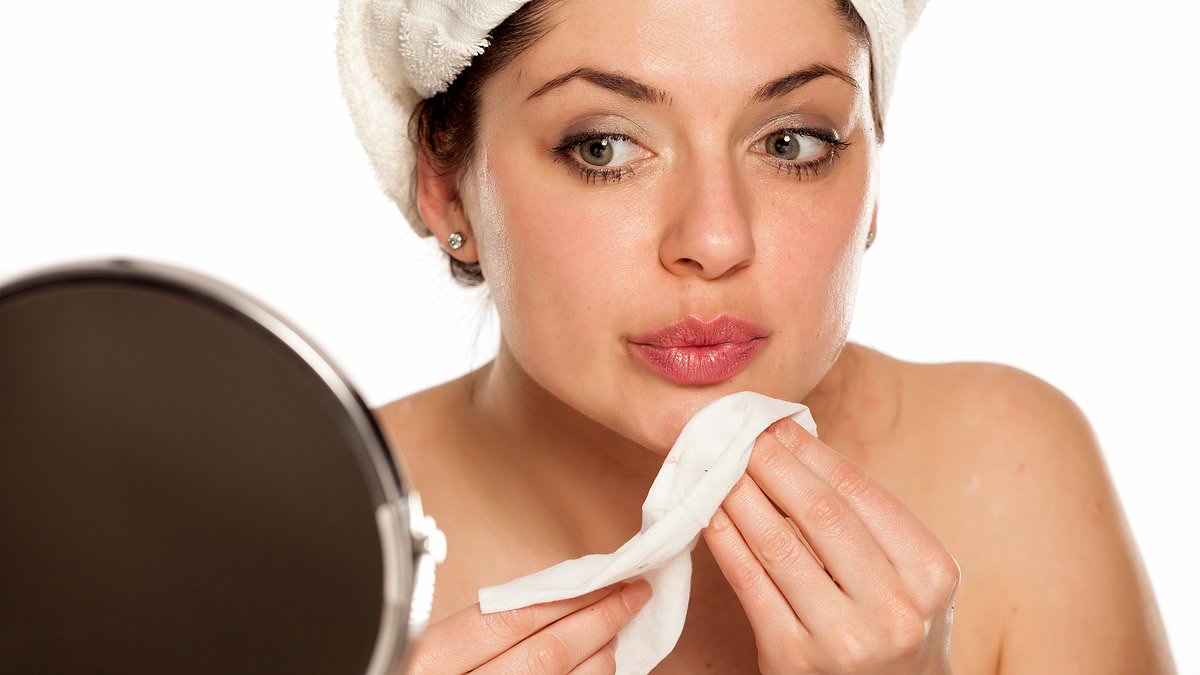

Public health experts are alerting consumers about a surprising hazard lurking in a widely-used personal care item, which has now become a breeding ground for potentially deadly bacteria.
Neutrogena has initiated a recall of thousands of its well-known makeup remover wipes distributed in states like South Carolina, Georgia, Florida, and Texas. This action follows the discovery of Pluralibacter gergoviae during product tests, a bacterium that poses a risk of causing sepsis.
Dr. Samuel Golpanian, a board-certified plastic surgeon based in Los Angeles, emphasized to the Daily Mail the gravity of this microscopic threat. Testing was confined to just 1,300 wipes, raising concerns that additional contaminated items might still be in circulation.
He explained, “While someone in good health might only experience mild skin irritation or a rash, individuals with weakened immune systems, including pregnant women, could face more severe reactions. This infection could lead to respiratory issues or, in extreme cases, a severe blood infection.”
P. gergoviae has become a significant concern in cosmetic safety due to its resistance to many standard preservatives and its ability to cause infections, especially in those with weakened immune defenses.
The bacteria from these tainted wipes can enter the body through facial openings such as the eyes or cuts, potentially causing respiratory difficulties and widespread inflammation. If untreated, this inflammation can progress to sepsis, which has an alarmingly high mortality rate of 80 percent due to organ failure.
The preservatives in moist makeup-removing wipes are ineffective against certain durable bacteria that thrive in such environments, allowing them to survive and multiply in contaminated products.
The risks in face wipes go far beyond bacteria. Many contain parabens, preservatives linked to skin irritation and allergic reactions. More alarmingly, they are endocrine disruptors that mimic estrogen, prompting bans in the European Union.

Bacteria from contaminated wipes can enter through facial cuts, eyes, or nasal membranes, triggering respiratory distress and systemic inflammation that may progress to sepsis (stock)
Dr Dara Spearman, a board-certified dermatologist based in Indiana, told the Daily Mail that anyone who has the associated lot numbers should absolutely send them back.
‘And if you’re not sure, then I would still go ahead and send them back to be on the safe side,’ she said.
‘Especially if you are immunocompromised, I honestly would be very careful with patients using those at baseline; if their skin barrier is not intact or if their immune system is compromised in any way.’
Still, she added that she does not expect the contamination in Neutrogena’s products to cause a widespread increase in skin rashes and blood infections.
The FDA upgraded the recall to Class II earlier this month, indicating that the contaminated product could cause ‘temporary or medically reversible adverse health consequences or where the probability of serious adverse health consequences is remote.’
Dr Spearman added: ‘But certainly with them having some [product samples] test positive, I would expect some more to test positive.’
The wipes’ high moisture content is essential for microbes to grow, while residues from makeup, skin cells and oils in the wipe serve as food for the bacteria.
Dr Shari Lipner, a board-certified dermatologist at Weill Cornell Medicine, told the Daily Mail: ‘The face is particularly vulnerable to infection due to thinner skin compared to other parts of the body, its abundant blood supply, likelihood of having abrasions, and mucous membranes that can serve as entry points for the bacteria.’

The recall was issued by Kenvue, the parent company of Neutrogena, after internal testing revealed traces of pluralibacter gergoviae, a bacterium that can lead to various infections, in certain batches of its makeup remover towelettes
Research has suggested that all cosmetics and skincare products, including makeup-removing wipes, pose a risk of contamination with P. gergoviae because the bacteria can evade preservatives that would otherwise kill them, such as parabens, sodium benzoate and isothiazolinones.
Dr Lipner added: ‘For preservatives, there has to be a careful balance between being antibacterial and avoiding irritation of the skin and mucous membranes.
‘Because of this, preservatives tend to be less effective against bacteria P. gergoviae that thrive in moisture-rich environments.’
Parabens can help prevent bacterial growth on cleansing wipes, but they also pose health risks.
The primary health concern with parabens is their well-documented role as endocrine disruptors. Their chemical structure is similar to that of estrogen, allowing them to bind weakly to estrogen receptors in the body.
This mimicking action can interfere with the normal function of the endocrine system, which regulates growth, metabolism and reproduction.
By disrupting delicate hormonal balances, parabens are suspected of harming fertility in both men and women. Studies have associated them with reduced sperm quality, altered ovarian function, and complications during pregnancy that can affect birth outcomes.
Because of their estrogen-mimicking nature, there is ongoing scientific research into whether paraben exposure is tied to an increased risk of hormone-related cancers, such as breast and prostate cancer.
The theory is that chronic, low-grade estrogenic activity could potentially stimulate the growth of hormone-sensitive cancer cells.
Many popular brands use preservatives known as ‘formaldehyde-releasers.’ These are ingredients that slowly release the chemical over time.
While effective at preventing microbial growth, its release is influenced by factors including temperature and storage time.
Due to health concerns, formaldehyde, a group 1 carcinogen in humans, and its releasing agents, are banned in cosmetics in Japan and strictly regulated elsewhere. Common formaldehyde-releasing preservatives include ingredients like DMDM hydantoin, imidazolidinyl urea, and quaternium-15.
The cancer risk is primarily associated with inhalation, not skin contact. For most people, the more immediate and common problem with these ingredients is that they are well-known skin sensitizers and allergens, which can cause contact dermatitis.
The FDA allows the use of formaldehyde releasers at very low concentrations, typically below 0.2 percent, deemed safe for consumer use.