
Share this @internewscast.com

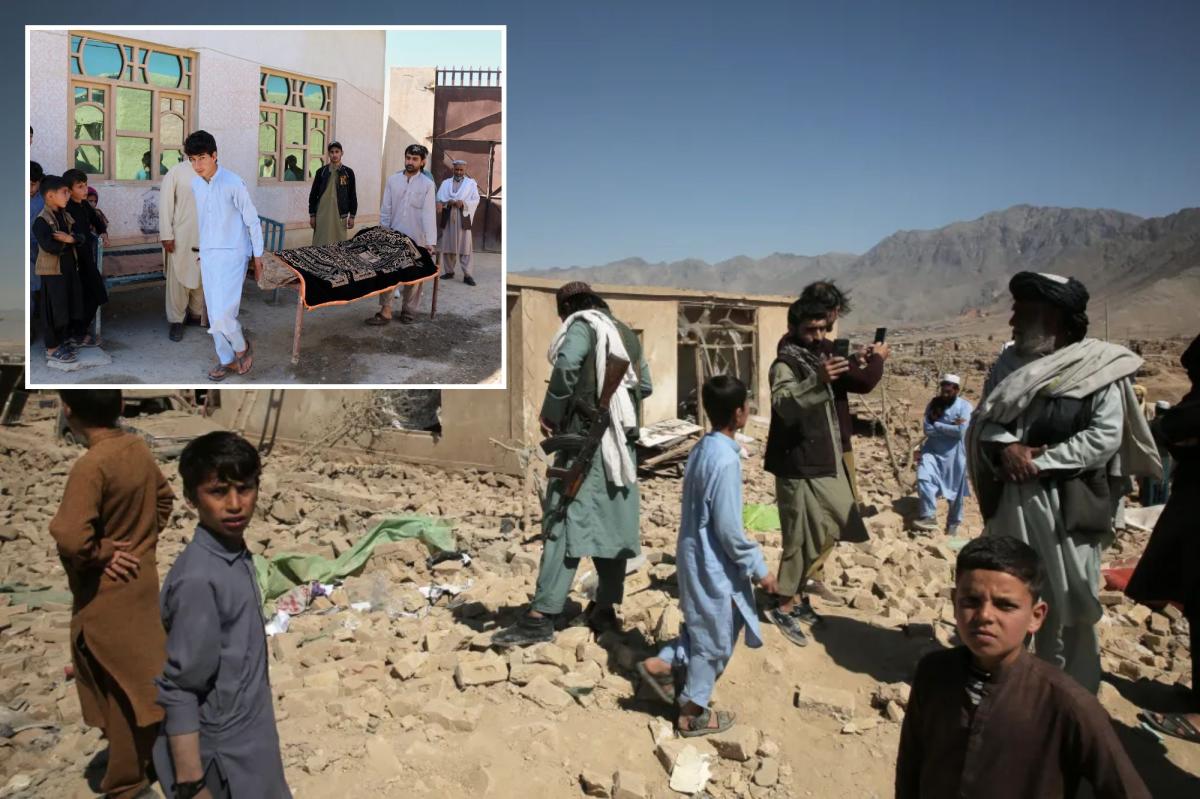
The Taliban administration in Afghanistan has accused Pakistan’s military of launching airstrikes on residential areas in Kabul and other regions, leading to the deaths of at least six civilians and injuring over a dozen others. These allegations come as the conflict between the two neighboring countries stretches into its third week.
Zabihullah Mujahid, the spokesperson for the Afghan government, shared on X that Pakistani jets also targeted fuel storage sites owned by Kam Air, a private airline, near Kandahar’s airport in the south. He noted, “This company provides fuel for both civilian flights and United Nations aircraft.”
In contrast, Pakistan’s state broadcaster announced that its military executed “successful airstrikes within Afghanistan,” claiming to have targeted four suspected militant hideouts along with their supporting infrastructure as part of an ongoing military campaign.
This escalation marks a significant rise in tensions between Pakistan and Afghanistan, with Pakistan describing the situation as an “open war.” These developments contribute to regional instability, especially amidst the ongoing U.S.-Israeli conflict with Iran, which continues to sow uncertainty.
The conflict stems from Pakistan’s accusations that Afghanistan’s Taliban government is sheltering militant factions that launch attacks against it, while also allegedly aligning with India, Pakistan’s long-standing adversary. The Taliban has denied these accusations.
Tensions erupted in late February
Since late February, there have been mutual military attacks, with both nations targeting each other’s defense facilities. Afghanistan claimed to have struck Pakistani positions in retaliation to border assaults, while Pakistan’s military stated that its operations focused on dismantling the Pakistani Taliban and associated networks along the border.
Both sides have claimed to inflict heavy losses in what has become their deadliest fighting in years.
In Kabul, the Defense Ministry said Afghanistan’s air force responded to Pakistan’s attacks by targeting Pakistani military installations in the Kohat district, causing heavy losses.
Pakistan’s Ministry of Information rejected the Afghan Defense Ministry’s claims as baseless. In a statement, it said the Pakistani Taliban attempted to deploy three rudimentary drones in Kohat, but Pakistani forces shot them down. Two civilians were injured by falling debris, it said.
In his posts on X, The Afghan government spokesman, Mujahid, alleged that Pakistani strikes hit multiple civilian sites and uninhabited locations in Afghanistan’s Paktia and Paktika provinces, as well as other areas. He said the attacks “will not go unanswered.”
Kabul police spokesman Khalid Zadran said at least four civilians, including children, were killed in the city and 15 others were injured.
Additionally, Afghanistan’s Department of Information and Culture in Nangarhar province said a Pakistani mortar shell killed a woman and a child there.
The total number of casualties around Afghanistan was unclear.
Diplomatic efforts have failed to stop the attacks
The latest Pakistani strikes came a day after China’s special envoy, Yue Xiaoyong, arrived in Islamabad and met with his Pakistani counterpart, Mohammad Sadiq, following a visit to Kabul.
Sadiq, Pakistan’s special envoy for Afghanistan, said he and Yue “discussed threats posed by terrorist groups” and agreed on the need for collective efforts to ensure lasting peace and stability.
Repeated calls from the international community for restraint have had little effect. Pakistan has previously said its strikes along the border and inside Afghanistan are aimed solely at Khawarij, a phrase Islamabad uses for the outlawed Pakistani Taliban, also known as Tehrik-e-Taliban Pakistan, or TTP.
On Friday, a roadside bomb targeting a police vehicle killed six officers in Lakki Marwat, a district in northwest Pakistan, police official Sajjad Khan said. No one claimed responsibility but suspicion is likely to fall on TTP which often claim such attacks.
Since the Afghan Taliban returned to power in 2021, the TTP has intensified attacks inside Pakistan and along the border. Islamabad says its military operations will continue until Kabul takes verifiable steps to curb the TTP and other militants operating from its territory.
A Qatari-mediated ceasefire ended the intense fighting in October, but several rounds of peace talks in Turkey in November failed to produce a lasting agreement.