
A HUGE family was slaughtered, skinned, cooked and eaten in a cave nearly 6,000 years ago, a new study reveals.
Neolithic cannibals feasted on at least 11 people – including kids – in what’s now northern Spain, the victims’ remains show.


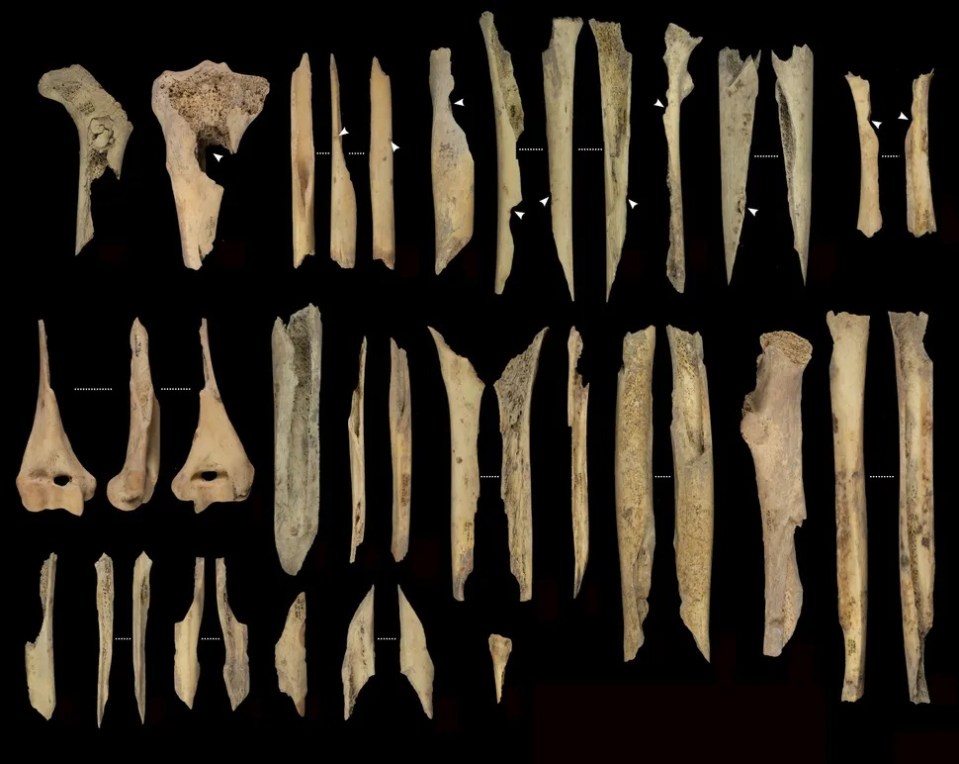
Research on bones found in El Mirador cave indicates signs of cannibalism, evidenced by cut marks, human bite marks, and fractures indicative of marrow extraction.
The bones also showed signs of being boiled, according to a study published on Thursday in the journal Scientific Reports.
The gruesome event is believed to have occurred over a few days during the final phase of the Neolithic – or New Stone Age – occupation of the cave.
Researchers believe the cannibalism was a result of violence between groups – not ritual or famine.
“This behavior cannot be attributed to funeral customs or as a response to dire starvation,” explained Francesc Marginedas, a study co-author and evolutionary anthropologist and quaternary archaeologist at IPHES.
“The findings suggest an instance of intense violence, supported by the rapid sequence of events – potentially stemming from clashes between neighboring agrarian societies,” he further elaborated.
Based on radiocarbon dating, the bones were found to be between 5,573 and 5,709 years old.
A chemical analysis suggested the individuals were local inhabitants and likely constituted a nuclear or extended family, with ages ranging from under seven to over 50.
The analysis also confirmed suspicions they had been killed over a short period of time.
The discovery has captured the attention of historians studying the Neolithic period as it offers rare evidence of conflict-driven cannibalism.
The Neolithic period, which lasted till around 2000 BC, is understood to have been marked by upheaval and conflict.
The transition of humans from nomadic gathering and hunt to permanent farming and livestock domestication led to the formation of new social structures and competition for land and resources.
“The emergence of conflict and the evolution of mechanisms to manage and avert it are intrinsic elements of human nature,” stated study co-author, archaeologist, and IPHES researcher Antonio Rodríguez-Hidalgo.
“Ethnographic and archaeological records show that even in the less stratified and small-scale societies, violent episodes can occur in which the enemies could be consumed as a form of ultimate elimination.”
In the early 2000s, archaeologists found the remains of six people with similar marks at El Mirador cave.
“Taphonomic analysis revealed the existence of cutmarks, human toothmarks, cooking damage, and deliberate breakage in most of the remains recovered, suggesting a clear case of gastronomic cannibalism,” wrote the authors of the study published in the American Journal of Physical Anthropology.
The remains are younger than the recently discovered ones, dating to the early Bronze Age – about 4,600 to 4,100 years old.
Meanwhile, human remains recently found in Maszycka Cave in Poland suggest victims of cannibalism during an act of war.
A study published in Scientific Reports in February analysed 53 bones belonging to at least 10 people, six adults and four children.
The 18,000-year-old bones show signs of butchering and were hard to distinguish from the animal bones they were found alongside.
Cut marks and fractures reveal the attackers cracked open skulls and scooped out brains.
The pattern indicates they targeted the most calorie-rich parts – the brains, bone marrow and muscles – shortly after death.


