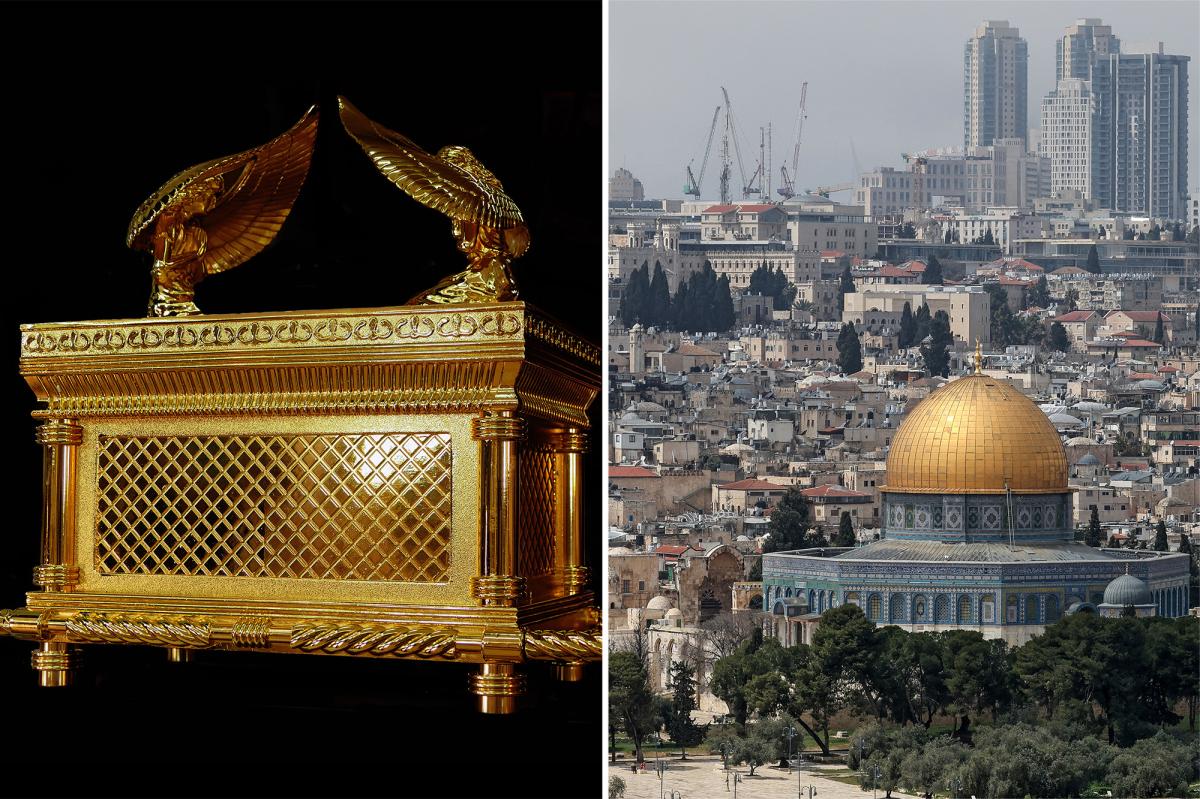

Calling all adventurers and history buffs—there’s a new mystery afoot that might rival the tales of Indiana Jones. An American archaeologist is on the verge of what could be a groundbreaking discovery: the possible location of the long-lost Ark of the Covenant.
Professor Chris McKinny, a scholar with a knack for biblical archaeology at Lipscomb University in Tennessee, believes that this legendary artifact could be resting beneath the City of David. This ancient site, situated just south of the Dome of the Rock, is among the oldest parts of Jerusalem, according to reports by the Daily Mail.
Drawing from a rich tapestry of biblical and historical texts, McKinny has crafted a fascinating hypothesis about the Ark’s whereabouts. His plan to confirm this theory involves the use of cutting-edge technology—a muon detector, which he hopes to deploy to scan the depths stretching from the City of David to the Dome of the Rock.

Muon detectors are remarkable tools that track subatomic particles created when cosmic rays hit the Earth’s atmosphere. These particles can penetrate deep into the earth, enabling researchers to map hidden structures that would otherwise remain out of sight.
Previous scans of the City of David have already uncovered previously unexplored cavities beneath its surface. McKinny suggests that the Ark, famously adorned with gold, would likely stand out in muon scans due to its reflective, gilded surface.
Scans of the City of David have already revealed unexplored openings beneath the area, and the Ark — said to be plated in gold — would likely appear clearly on muon scans because of its gilded composition, according to McKinny.
The Ark has been missing since about 587 BCE when Jerusalem was sacked by the Babylonians, and the Ark’s keepers hid it to prevent it from being destroyed or falling into enemy hands.
Legend says the golden chest carried the tablets of the Ten Commandments given to Moses by God, and was used by the Israelites as both a tool of protection and a powerful weapon that could topple city walls or afflict enemies with deadly plagues.

McKinny has focused on the three primary stories about the Ark’s fate to direct his search — the first being that it was hidden somewhere beneath the City of David and the Temple Mount, where the Dome of the Rock stands.
The supposed Temple Mount hiding place is one of the leading theories in Ark lore, and has been fueled by the relatively minimal archeological digging that has gone on beneath the area because of its religious importance.
Another theory follows biblical accounts that the Ark was hidden in a rocky valley between two mountains near Jerusalem.
The third suggests it was hidden in a cave on Mount Nebo, where Moses is said to have died.
McKinny said he does not know where the Ark is to a certainty, but that he is “excited and hopeful for what will come” from new technologies enabling researchers to peer within the Earth without disturbing holy locations, according to the Daily Mail.
He explored his theories and explorations in a recently released documentary, Legends of the Lost Ark.