Share this @internewscast.com
Over fifty years since NASA’s last Apollo mission, astronauts are gearing up for a return to lunar proximity. However, this time, the mission won’t involve a landing.
Four astronauts on board Artemis II are set to embark on a 10-day journey that will take them past the moon, marking the furthest human venture into space since the Apollo program concluded.
This mission is a pivotal step for NASA, serving as a crewed lunar flyby to rigorously test the agency’s deep-space capabilities ahead of anticipated moon landings in the future.
The Orion spacecraft will be launched atop the Space Launch System rocket, initially entering Earth’s orbit. It will then navigate a meticulously calculated “free-return” trajectory.
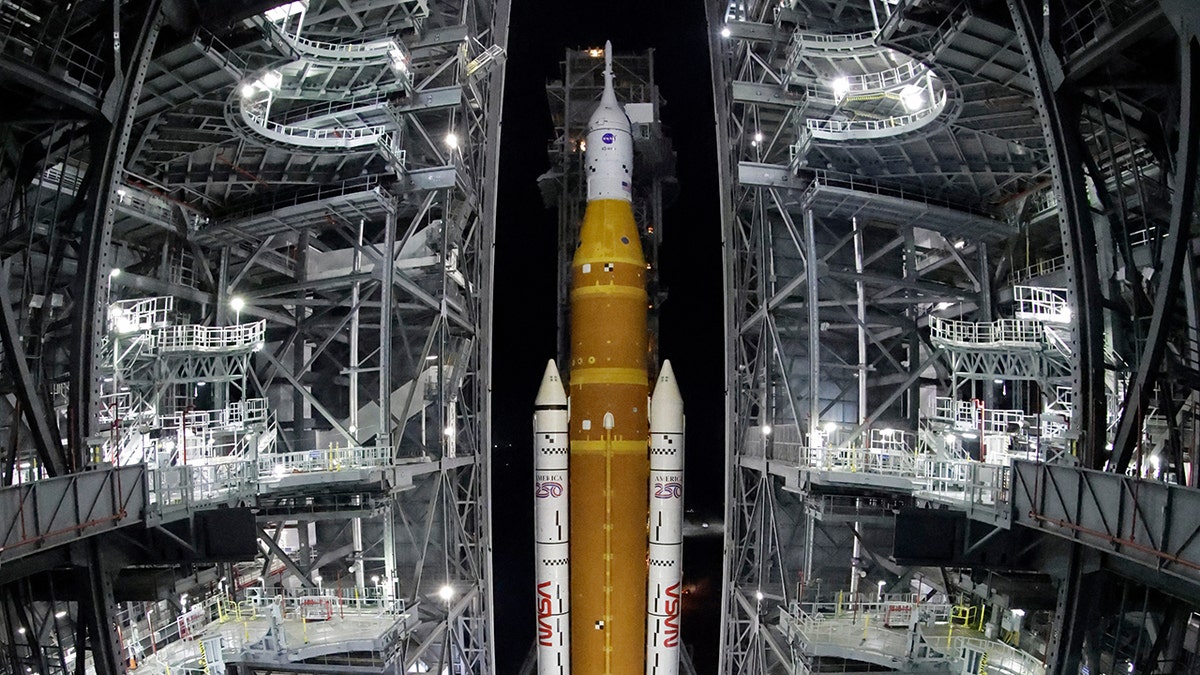
On March 20, 2026, the NASA Artemis II rocket, with the Orion spacecraft onboard, will make its slow journey from the Vehicle Assembly Building to pad 39B at the Kennedy Space Center in Cape Canaveral, Florida. (Terry Renna/AP Photo)
According to scientists, this trajectory ingeniously leverages the gravitational forces of both Earth and the moon, allowing the spacecraft to loop around the moon’s far side and return safely to Earth without needing substantial course corrections.
Artemis II will mark the first time astronauts fly aboard both the Orion spacecraft and the SLS rocket, making it a key demonstration of NASA’s human deep-space capabilities.
The mission will test how well the spacecraft and its systems work with astronauts on board, including navigation, life support and communication far from Earth.
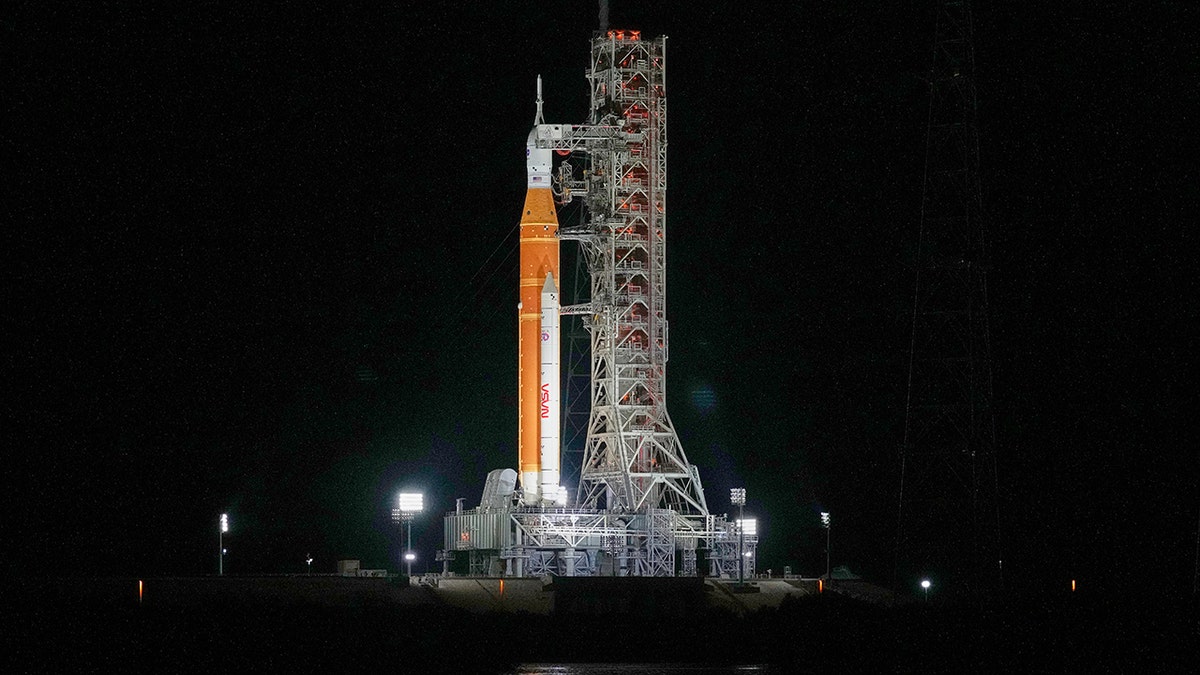
The NASA Artemis II SLS rocket with the Orion spacecraft at Launch Complex 39B at the Kennedy Space Center Feb. 1, 2026, in Cape Canaveral, Fla. (AP/John Raoux)
It also will give NASA a better understanding of how crews operate during deep space travel, officials said.
Astronauts will take part in experiments during the flight, including one called A Virtual Astronaut Tissue Analog Response (AVATAR), which uses “organ-on-a-chip” technology to study how radiation and weightlessness affect the body.
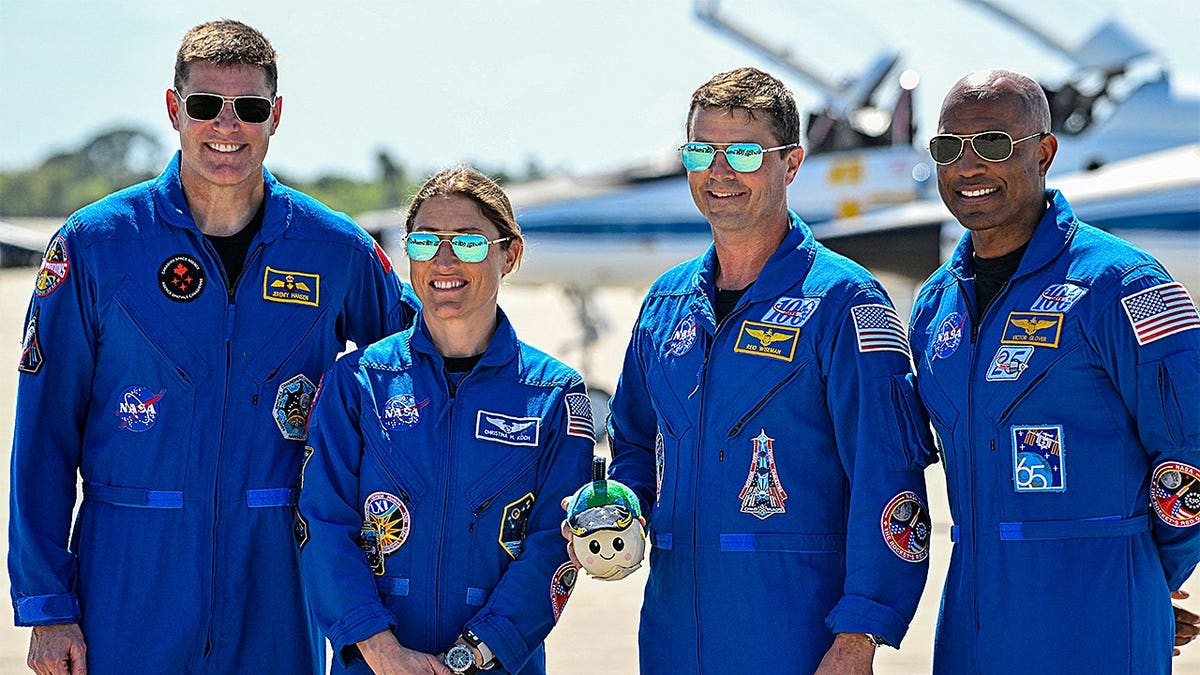
Astronauts Jeremy Hansen, Christina Koch, Reid Wiseman and Victor Glover attend a welcome ceremony at Kennedy Space Center in Florida March 27, 2026, ahead of the Artemis II mission launch scheduled for April 1, 2026. (Miguel J. Rodriguez Carrillo/AFP)
NASA claims Artemis II is a necessary step before attempting a moon landing on a future mission.
By proving the spacecraft and crew can safely travel to deep space and back, the mission moves the agency closer to returning humans to the lunar surface and eventually sending astronauts to Mars.