
Share this @internewscast.com
In a recent statement, President Donald Trump indicated that his administration is contemplating a reduction of military activities in the Middle East. This consideration emerges even as the United States has decided to dispatch additional warships and Marines to the region, amidst escalating tensions with Iran, which has issued threats to target tourist sites globally.
The mixed messages from the U.S. government coincided with a surge in oil prices, which led to a downturn in the U.S. stock market. In response, the Trump administration announced plans to lift sanctions on Iranian oil shipments, a strategic move aimed at controlling the rising fuel prices.
Despite these developments, the conflict shows no signs of de-escalating. Israeli authorities reported that Iran launched missiles at their territory on Saturday morning. Meanwhile, Saudi Arabia’s defense ministry claimed it intercepted 20 drones over a span of a few hours in its eastern region, a vital area for oil production. Fortunately, no casualties or damage were reported.
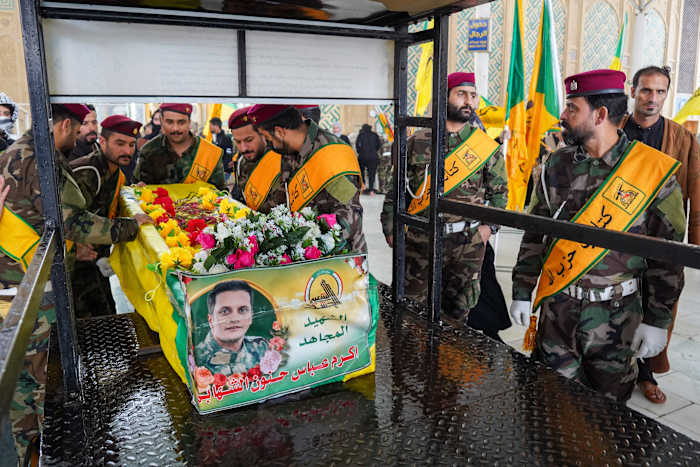
The ongoing violence has resulted in a staggering death toll, with over 1,300 fatalities in Iran, more than 1,000 in Lebanon, and additional casualties including 15 in Israel and 13 U.S. military personnel stationed in the region. The conflict has also displaced millions of people in Lebanon and Iran, exacerbating the humanitarian crisis.
Stay informed as the situation unfolds:
Here is the latest:
Israel strikes targets in Tehran and Beirut
The Israeli military said early Saturday it was striking targets in Tehran.
The announcement came shortly after the military said it had begun a wave of strikes targeting Hezbollah positions across the southern suburbs of Beirut, Lebanon.
Hours earlier, the army renewed evacuation warnings for seven neighborhoods in Beirut’s suburbs, prompting some residents to fire gunshots to alert families who had returned to flee.
No casualties were immediately reported.
United Airlines prepares for oil to reach $175 a barrel
The airline’s CEO said the company is also preparing for oil to not return to $100 a barrel until the end of next year.
Scott Kirby said in a message to United employees on Friday that jet fuel prices that have more than doubled in the last three weeks already would cost the airline $11 billion a year if they remain where they are now.
The price of Brent crude has zigzagged from roughly $70 per barrel before the Iran war began to as high as $119.50 this week.
Of United’s worst-case assumption, Kirby said, “I think there’s a good chance it won’t be that bad, but … there isn’t much downside for us to preparing for that outcome.”
Copyright 2026 The Associated Press. All rights reserved. This material may not be published, broadcast, rewritten or redistributed without permission.