Share this @internewscast.com
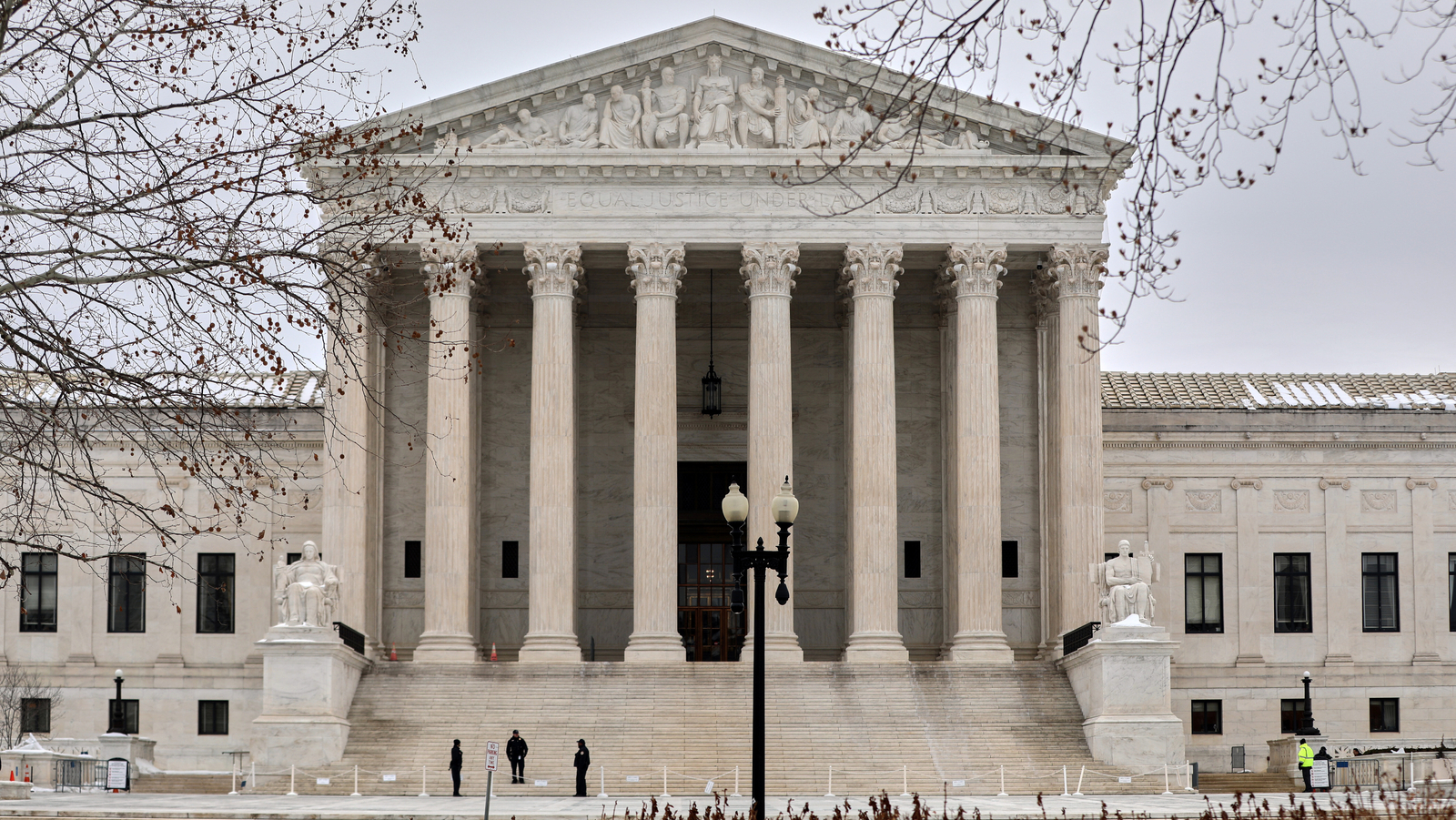
In a significant legal development, the Supreme Court on Friday overturned President Donald Trump’s expansive global tariffs, marking a notable setback for a key aspect of his economic strategy. This ruling represents a major legal challenge to Trump’s economic policies, which have been a cornerstone of his administration.
The ruling specifically targets tariffs enacted under an emergency powers statute, encompassing the extensive “reciprocal” tariffs imposed on nearly all other nations. This was the first substantial component of Trump’s overarching agenda to be directly addressed by the Supreme Court, an institution he influenced considerably by appointing three conservative justices during his tenure.
President Trump has been outspoken about the case, labeling it as one of the most pivotal in the history of the United States. He warned that a decision against his tariffs could severely impact the nation’s economy. Nevertheless, opposition to the tariffs spanned the political spectrum, including libertarian and pro-business groups that generally support the Republican Party. Public opinion surveys have shown that tariffs do not enjoy widespread popularity, amidst broader concerns among voters about economic affordability.
Despite this setback, the Supreme Court’s decision follows a series of temporary victories for Trump on the court’s emergency docket, which previously allowed him to exercise significant executive authority on various issues, including contentious dismissals and substantial federal budget reductions.
Although this ruling restricts Trump’s ability to impose tariffs under the specific emergency law, it does not entirely hinder him from utilizing other legislative avenues to levy duties. These alternative laws present more constraints regarding the rapidity and extremity of such actions. Nonetheless, senior administration officials have indicated their intention to maintain the tariff framework through these other legal channels.
The tariffs decision doesn’t stop Trump from imposing duties under other laws. While those have more limitations on the speed and severity of Trump’s actions, top administration officials have said they expect to keep the tariff framework in place under other authorities.
The Constitution gives Congress the power to levy tariffs. But the Trump administration argued that a 1977 law allowing the president to regulate importation during emergencies also allows him to set tariffs. Other presidents have used the law dozens of times, often to impose sanctions, but Trump was the first president to invoke it for import taxes.
Trump set what he called “reciprocal” tariffs on most countries in April 2025 to address trade deficits that he declared a national emergency. Those came after he imposed duties on Canada, China and Mexico, ostensibly to address a drug trafficking emergency.
A series of lawsuits followed, including a case from a dozen largely Democratic-leaning states and others from small businesses selling everything from plumbing supplies to educational toys to women’s cycling apparel.
The challengers argued the emergency powers law doesn’t even mention tariffs and Trump’s use of it fails several legal tests, including one that doomed then-President Joe Biden’s $500 billion student loan forgiveness program.
The economic impact of Trump’s tariffs has been estimated at some $3 trillion over the next decade, according to the Congressional Budget Office. The Treasury has collected more than $133 billion from the import taxes the president has imposed under the emergency powers law, federal data from December shows. Many companies, including the big-box warehouse chain Costco, have already lined up in court to demand refunds.
Copyright © 2026 by The Associated Press. All Rights Reserved.