
Share this @internewscast.com

A recent federal report has highlighted 34 California airports with issues that may increase the risk of air accidents or near-misses, raising concerns among frequent flyers. The findings, which focus on some of the state’s busiest and most intricate airports, are enough to unsettle even the most seasoned travelers.
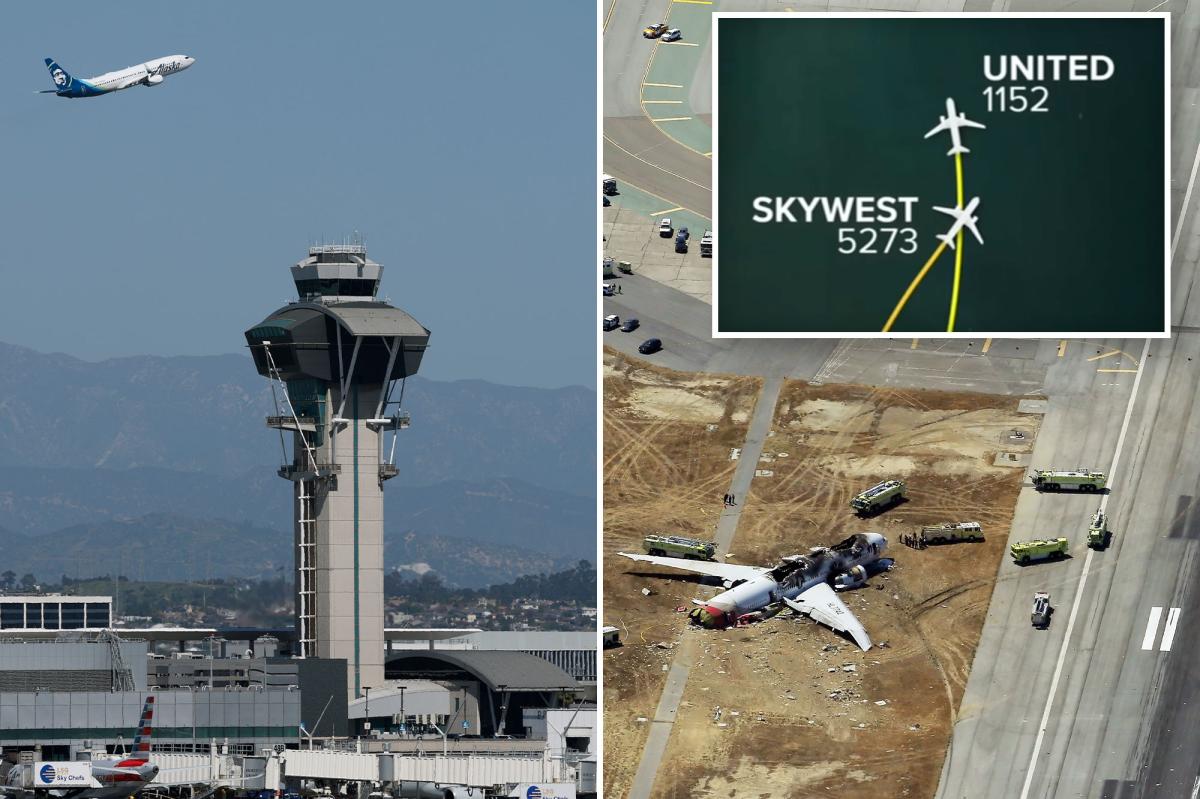
Among the airports flagged by the Federal Aviation Administration (FAA) for heightened concern are Los Angeles International Airport and San Francisco International Airport. The analysis covers data gathered from November 2025 to January 2026, providing a snapshot of ongoing challenges in airfield operations.
The FAA describes a hotspot as “a runway safety related problem area on an airport that presents increased risk during surface operations.” Typically, these are areas characterized by complex or confusing intersections between taxiways and runways, which can pose significant challenges to pilots.
Of particular note are California’s two largest airports. Los Angeles International Airport and San Francisco International Airport have been identified with three and four hotspots, respectively, underscoring the potential for safety incidents. San Francisco, in particular, stands out due to its intricate taxiway and runway layout, which has occasionally led to pilots misnavigating—raising the risk of runway incursions or near-misses.
California’s two most major airports hold three and four hotspots respectively.
San Francisco takes the lead with confusing and complex taxi and runways that occasionally lead to pilots taxiing the wrong way, which can result in runway incursions or near-misses.
“Complex intersections in close proximity of rwys,” one note says. “Pilots taxiing E bound on Twy B sometime turn on Twy F instead of continuing the turn on Twy B.”
Another note says pilots sometimes “miss the turn” on a certain taxiway and cross onto a runway by mistake.
“Pilots taxiing east on Twy C and instructed to turn right onto Twy E sometimes miss the turn onto Twy E and continue across Rwy 01L–19R by mistake,” it says.
The third note cautions pilots to identify the correct hold-short line as to not cross onto another runway. The fourth notes a runway incursion risk at the airport with no painted markings indicating runway intersections on the ground, just signs.
LAX, another busy airport, has different problems. The airport has several runway incursion hotspots where pilots are at risk of crossing into the dangerous territory where other flights could be landing or taking off.
“Rwy 24L at Twys V, W and Y. Short distance between parallel runways. After landing Rwy 24R, manage taxi speed and expect to hold short of Rwy 24L at the appropriate runway holding position markings,” a hotspot note says.
Aircraft at LAX also cross the holding marks “Rwy 25L” without authorization, resulting in a runway incursion.
Three of California’s other major airports — in San Jose, Sacramento and San Diego — also have hotspots. Sacramento leads the pack with three hotspots, while San Jose and San Diego International have one each.
A common issue at Sacramento International Airport is that aircraft pushing back from its Concourse A and B sometimes conflict with inbound and outbound aircraft. Pilots are also advised to exercise caution “in Twy W and Twy Y2” because it “is a high traffic vehicular movement area.”
San Diego International’s one hot spot is that pilots at a specific taxiway occasionally make the wrong turn onto a different taxiway when instructed. San Jose has one runway incursion risk resulting from a “short distance from run-up area” to a specific runway.
Download The California Post App, follow us on social, and subscribe to our newsletters
California Post News: Facebook, Instagram, TikTok, X, YouTube, WhatsApp, LinkedIn
California Post Sports Facebook, Instagram, TikTok, YouTube, X
California Post Opinion
California Post Newsletters: Sign up here!
California Post App: Download here!
Home delivery: Sign up here!
Page Six Hollywood: Sign up here!
Here’s a list of other California airports with hotspots:
- Atwater – Castle (MER)
- Burbank – Bob Hope (BUR)
- Carlsbad – McClellan–Palomar (CRQ)
- Chino – Chino (CNO)
- Concord – Buchanan Field (CCR)
- El Monte – San Gabriel Valley (EMT)
- Fairfield – Travis AFB (SUU)
- Hawthorne – Jack Northrop Field (HHR)
- Hayward – Hayward Executive (HWD)
- La Verne – Brackett Field (POC)
- Livermore – Livermore Municipal (LVK)
- Marysville – Beale AFB (BAB)
- Mojave – Mojave Air & Space Port (MHV)
- Napa – Napa County (APC)
- Oakland – Oakland Intl (OAK)
- Ontario – Ontario Intl (ONT)
- Palm Springs – Palm Springs Intl (PSP)
- Riverside – Riverside (RAL)
- Sacramento – Sacramento Executive (SAC)
- San Diego – Montgomery-Gibbs (MYF)
- San Jose – Reid–Hillview (RHV)
- San Luis Obispo – (SBP)
- Santa Ana – John Wayne (SNA)
- Santa Barbara – (SBA)
- Santa Maria – (SMX)
- Santa Rosa – (STS)
- Stockton – (SCK)
- Torrance – (TOA)
- Truckee – (TRK)
Livermore Municipal Airport near the Bay Area has the most hotspots with six — mostly for hold-short violations, a type of runway incursion.
A NTSB report surrounding the January 2025 Washington D.C. Potomac River crash — in which a military helicopter collided with a civilian flight — blamed “deep, underlying systemic failures” for the incident.
The California Post reached out to the FAA for comment.