Share this @internewscast.com
Iran and the United States have confirmed they will proceed with nuclear discussions in Oman later this week, despite U.S. President Donald Trump’s recent remarks urging Iran’s Supreme Leader to be “very worried.”
Speculation had arisen regarding the future of these talks following reports earlier this week suggesting potential breakdowns due to disagreements over the format and location of the discussions.
This uncertainty has sparked concerns about possible renewed U.S. military action against Iran, especially as tensions have escalated following Iran’s forceful suppression of significant anti-government protests—the most serious since the 1979 Islamic Revolution.
The recent unrest in Iran began over a month ago, initiated by shopkeepers protesting against the country’s enduring economic crisis.
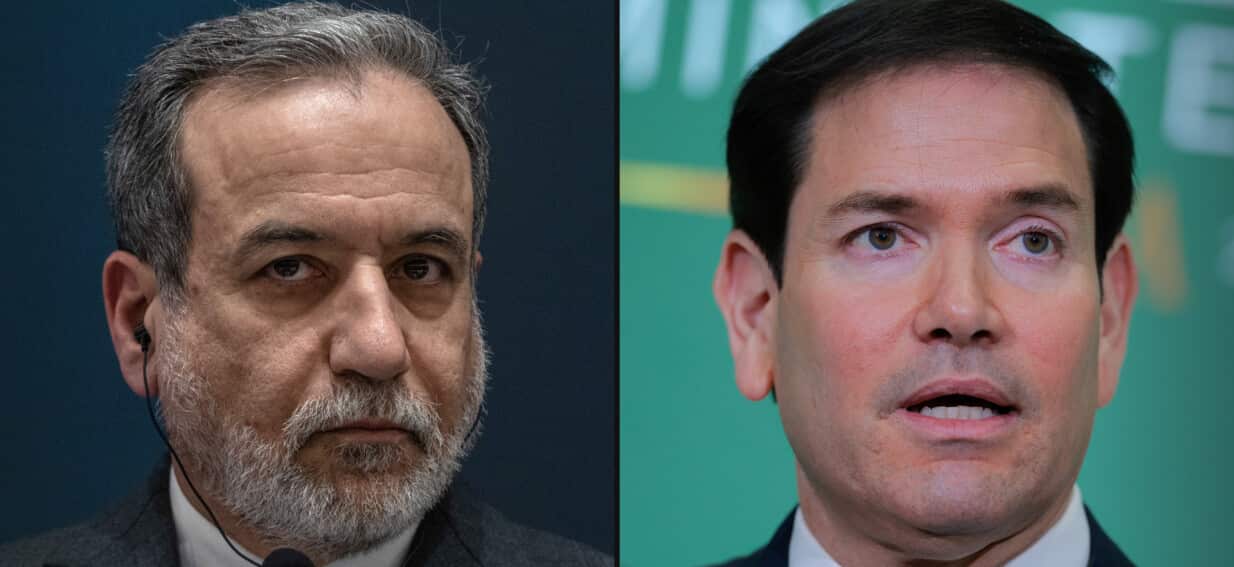
Nevertheless, Iranian Foreign Minister Abbas Araghchi announced that the nuclear talks are “scheduled” for Friday in Oman. He expressed gratitude to “our Omani brothers for making all necessary arrangements” in a post on social media platform X.
A White House official also confirmed that the meeting is set to take place in Oman on Friday, reinforcing the commitment from both sides to continue negotiations.
Diplomats had earlier said the meeting would happen in Türkiye. However, Axios reported that the US was on the verge of pulling out, as Iran disputed both the location and whether its ballistic missile program should be included.
But Trump, who has sharply built up US military presence in the region and refused to rule out new military action, continued to up the pressure on Ayatollah Ali Khamenei.
“I would say he should be very worried,” Trump said on Wednesday in an interview with NBC News.
Trump also said that Iran had eyed a new nuclear facility after US strikes on Iranian nuclear sites during Israel’s June war against the Islamic Republic.
“They were thinking about starting a new site in a different part of the country,” Trump said.
“We found out about it, I said, you do that, we’re going to do very bad things to you.”
Heightening tensions
Trump has sent a US aircraft carrier group — which he calls an “armada” — to the region, and one of its planes shot down an Iranian drone on Tuesday.
Iran has threatened retaliation against US targets in the region if attacked.
US secretary of state Marco Rubio said earlier on Wednesday that the US was “ready” to meet Iran — but insisted that discussions must cover the Islamic Republic’s missile and nuclear programs to be “meaningful”.
“They will have to include certain things, and that includes the range of their ballistic missiles, that includes their sponsorship of terrorist organisations across the region, that includes their nuclear program and that includes the treatment of their own people,” he said.
Rubio said that Trump’s roving envoy Steve Witkoff had been ready to meet with Iran in Türkiye, but then received “conflicting reports” on whether Iran had agreed.
In previous talks on its disputed nuclear program, Iran has ruled out discussions on its missiles, casting the weapons that can hit Israel as a tool of self-defence.
But Iran has been under growing pressure from the protests, and after an Israeli bombing campaign last year.
Iran has also lost key regional allies, with Israel’s severe degradation of Lebanon’s Hezbollah and the fall of veteran Syrian president Bashar al-Assad.
For the latest from SBS News, download our app and subscribe to our newsletter.