
Share this @internewscast.com
In Chicago, tenants living in rent-controlled apartments near a new development honoring former President Barack Obama have reportedly banded together to form a union. This move comes as a reaction to the contentious project.
Long-term residents of an apartment complex in Woodlawn have organized to combat potential eviction and rent hikes, which they attribute to the development pressures sparked by the Obama Presidential Center.
Earlier this month, tenants of the Chaney Braggs Apartments gathered in protest outside their residence at the intersection of 65th Street and Stony Island Avenue. They voiced concerns about a potential sale of the building, which they fear could disrupt the lives of families who have called it home for many years, according to a report by FOX 32 Chicago.
Residents have indicated that a California-based investor is interested in purchasing the property, with plans that might include either renovation or demolition. The tenants have reportedly been offered $2,000 per household to vacate the premises, a sum they argue is insufficient to facilitate relocation in a neighborhood undergoing rapid transformation.
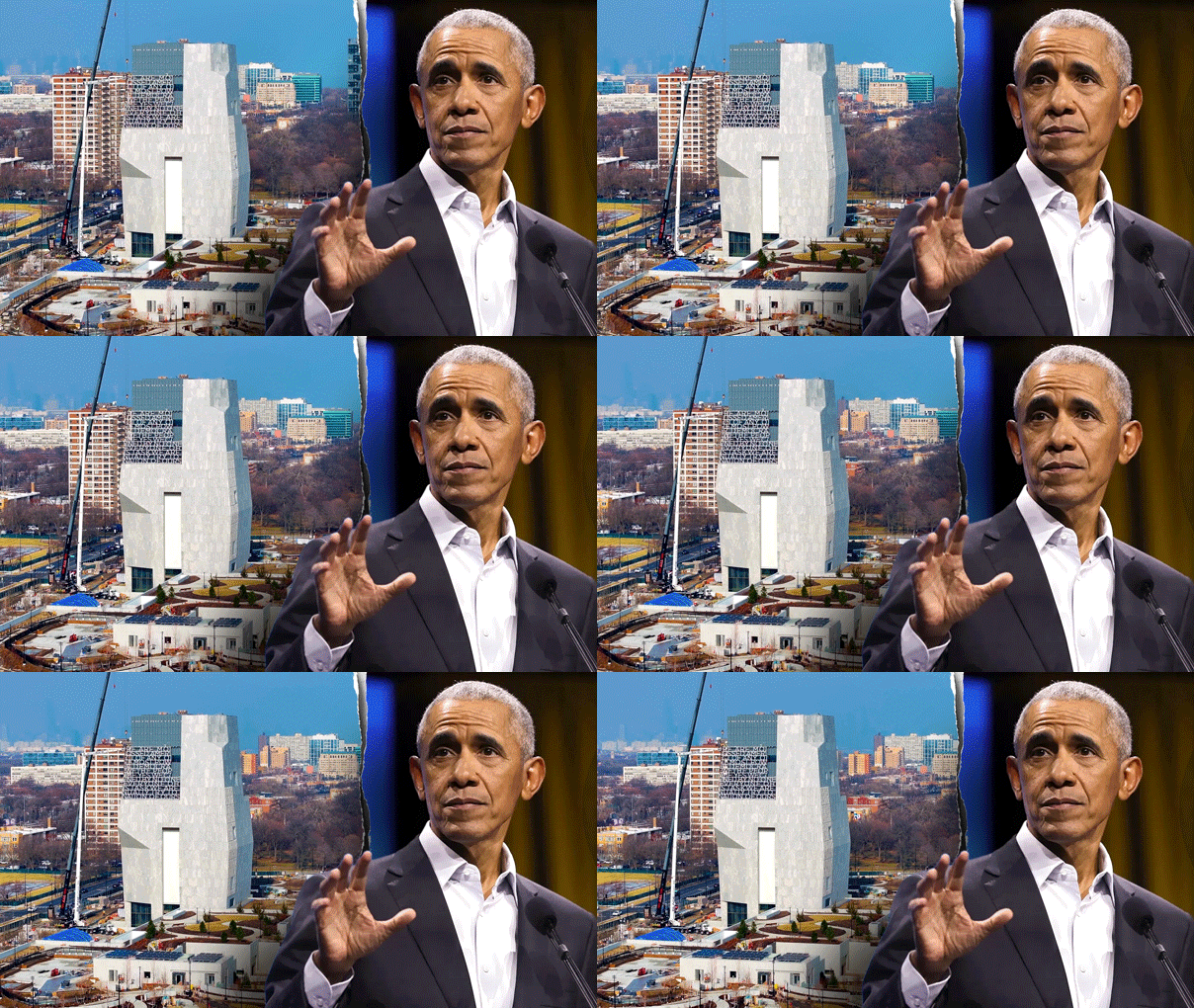
This apprehension over potential displacement and rent increases among low-income residents is the latest criticism aimed at the Obama Presidential Center. (Fox Flight Team; Getty)
Currently, many of the residents pay between $700 and $800 monthly for rent. With some having lived there for three to four decades, they worry about finding affordable housing options in Woodlawn if redevelopment causes rents to rise.
In response, residents have formed a tenant union to push back against the threat of displacement and preserve affordability in the building. They say the union first came together after the previous landlord abandoned the property about two years ago, forcing tenants to organize around maintenance issues and basic services.
Now, residents say that same network is being used to confront a larger challenge: staying in their homes as investment tied to the Obama Presidential Center reshapes the surrounding neighborhood.

A before-and-after aerial graphic shows the footprint of the Obama Presidential Center in Jackson Park, including the removal of Cornell Drive and construction along Stony Island Avenue. (Fox News)
The apartment building, tenants said, was once owned by a nonprofit committed to affordable housing and community stability. But with those protections no longer in place, residents say they are increasingly vulnerable to market pressures that have intensified as construction on the presidential center continues nearby.
No sale has been finalized, and the identity of the prospective buyer had not been publicly confirmed as of Thursday. Residents say they have contacted city and state officials for assistance but have not yet received a response.
The standoff underscores broader anxieties in Woodlawn, where the Obama Presidential Center has brought promises of jobs and investment alongside fears of gentrification and displacement. For tenants at Chaney Braggs Apartments, those concerns have become immediate and personal.
Residents say they plan to continue organizing while awaiting more information about the building’s future, possible rent increases and whether city officials will step in.
The Obama Presidential Center, set to open in Chicago’s South Side on June 18, is a 19.3-acre campus in Jackson Park featuring a 225-foot museum tower, library and community forum.
Obama, the first American Black president, is celebrating the grand opening of the over-budget building — called an eyesore by critics — on the eve of Juneteenth.
Juneteenth marks the day in 1865 when Union troops arrived in Galveston, Texas, and informed enslaved Black Americans there that they were free — more than two years after President Abraham Lincoln issued the Emancipation Proclamation.
The holiday has been observed as a celebration of Black freedom, resilience and community, and in recent years has taken on broader national significance as both a commemoration of liberation and a reminder of the long struggle for racial justice in the United States.
Obama had once described the center as a “gift” to Chicago. It is a gift that keeps on costing.
A Fox News Digital investigation in February found taxpayers are absorbing hundreds of millions of dollars in related public infrastructure costs tied to the project. Those expenses include road redesigns, stormwater systems and utility relocations needed to support the 19.3-acre campus in Jackson Park. No government agency has provided a full accounting of the total public cost despite months of inquiries and Freedom of Information Act requests.
Initial projections put public infrastructure spending at about $350 million to be shared by the city of Chicago and the state of Illinois. Critics now argue those obligations have grown into a major public burden as the project has faced delays and mounting costs.