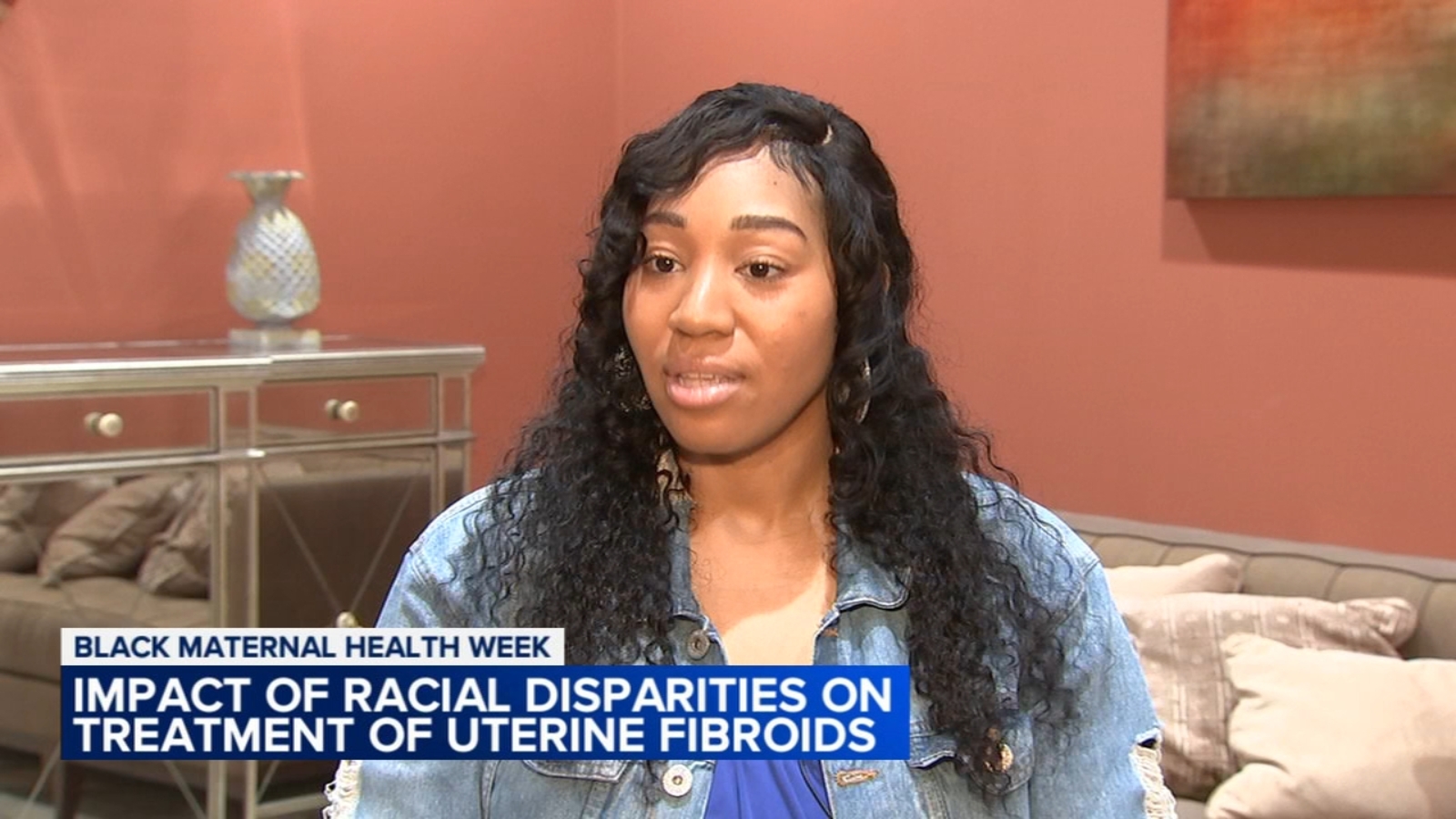

CHICAGO (WLS) — A local woman facing a challenging diagnosis during her pregnancy turned to Loretto Hospital for help when other medical professionals doubted her chances. They had warned Brionna Johnson that her advanced fibroid condition could jeopardize both her pregnancy and her future fertility.
At just 17 weeks pregnant, Johnson was dealing with a significant fibroid growth that was exerting pressure on her uterus and other organs.
ABC7 Chicago is now streaming 24/7. Click here to watch
“That’s alarming; that’s scary,” Johnson expressed when discussing her situation.
Despite the daunting prognosis, Johnson, along with her older son and partner, were thrilled about the impending arrival of their new family member.
However, she faced pressure from several doctors who advised terminating the pregnancy and undergoing a hysterectomy to remove the fibroid and prevent any future occurrences.
“They said a hysterectomy would be my best option, but I was adamant, saying ‘absolutely not,'” Johnson recounted.
According to a 2025 meta-analysis of racial disparities in minimally invasive hysterectomy, published in the NIH PubMed Central, non-white patients were 50% less likely to receive minimally invasive surgery compared to white patients.
“She was in so much agony. Her uterus was this big, and everything else was all fibroid,” said Dr. Pierre Johnson, who specializes in obstetrics and gynecology at Loretto Hospital.
Johnson met Dr. Johnson, who specializes in removing benign masses.
He removed a 27-pound fibroid through a small, low incision, without impacting her pregnancy.
“I’m starting to feel the flutters and the movement; it’s just all surreal that I woke up and got new lease on life and opportunity at motherhood,” Johnson said.
“Her outlook is phenomenal; she’s in her second trimester of pregnancy. Now she can breathe; she can walk. She can move,” Dr. Johnson said.
Dr. Johnson and patient Johnson urge other doctors to make sure they are really listening to their patients. And they urge women to find a doctor who will listen.
“There is such a disparity in how they are treated. There is a need for not only representation but also education amongst professionals to be able to give these women the care that they need,” Dr. Johnson said.
“We are literally just asking for the help that anybody else would want and fairness in that as well,” Johnson said.
She is due in August. And while doctors are monitoring her closely, she is expected to have a healthy rest of her pregnancy.
And her fertility is preserved.
Copyright © 2026 WLS-TV. All Rights Reserved.