
Share this @internewscast.com

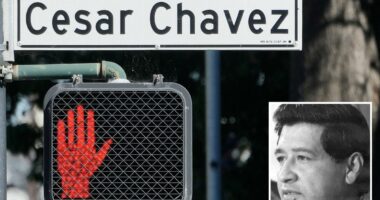
Across California, the presence of Cesar Chavez is quietly fading away.
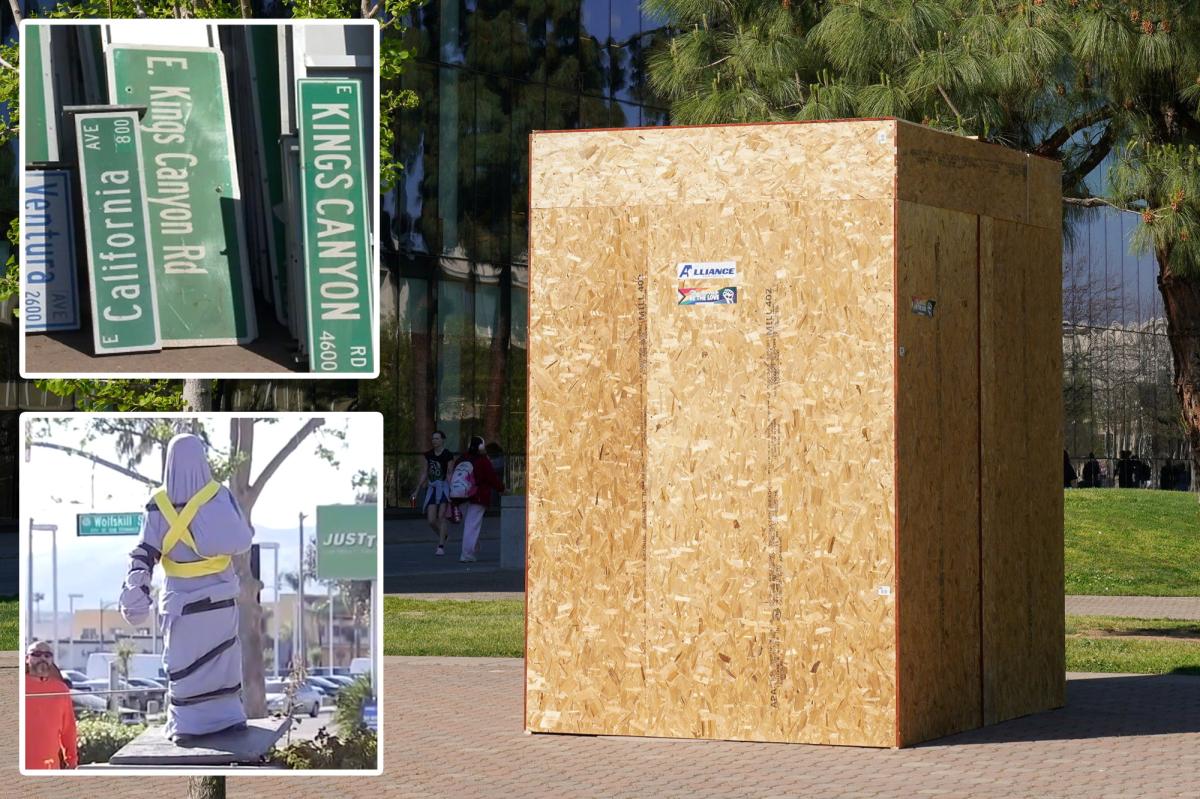
Once a symbol of pride and a revered labor leader, Chavez is now the subject of a swift reassessment. Statues are being dismantled, street names altered, and murals concealed, as officials aim to distance public spaces from his legacy, which is being scrutinized under a contemporary lens.
In a notable move, San Fernando recently saw the removal of a Chavez statue, and at Santa Ana College, murals and other depictions of him have been obscured. Meanwhile, in Fresno, city officials made the unanimous decision to revert a major boulevard’s name back to its original, erasing Chavez’s name—a stark shift from a tribute that once epitomized local respect for the civil rights icon.
What were once enduring symbols of Chavez’s contributions to civil rights are slowly being dismantled across the state.
From municipal buildings to educational institutions, the depictions of Chavez that were once celebrated in bronze, splashed across murals, and emblazoned on street signs are now being reevaluated. It is anticipated that more institutions will follow this emerging trend.
For decades, Cesar Chavez was lauded as a co-founder of the United Farm Workers, a leading figure in the labor movement who fought tirelessly for farmworkers’ rights and became an emblem of Latino political strength.
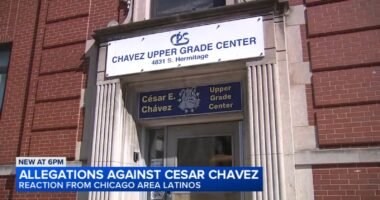
But newly surfaced allegations about his conduct have prompted public officials to reconsider decades of honors tied to his name.
Across the state, officials cite community concerns and public accountability as reasons for removing statues, renaming streets, and covering murals.
Reactions are mixed: some community members argue these actions erase Latino history and the progress Chavez helped inspire, while others insist the steps are necessary to prevent honoring someone whose reputation is now under serious question.
Officials say the removals and renaming are likely to continue as more local governments and school boards review monuments, murals, and street names.
California may be witnessing one of the fastest, most widespread retractions of a public legacy in recent memory, and there’s little sign it will slow down.