
Share this @internewscast.com
If you’re a car owner and driver in Illinois, it’s highly likely that your vehicle has been photographed by one of the numerous license plate readers scattered throughout the state and the nation.
These advanced camera systems are stirring both apprehension and applause as communities and law enforcement navigate the expanding deployment of automated license plate reader (ALPR) technology.
ABC7 Chicago is now streaming 24/7. Click here to watch
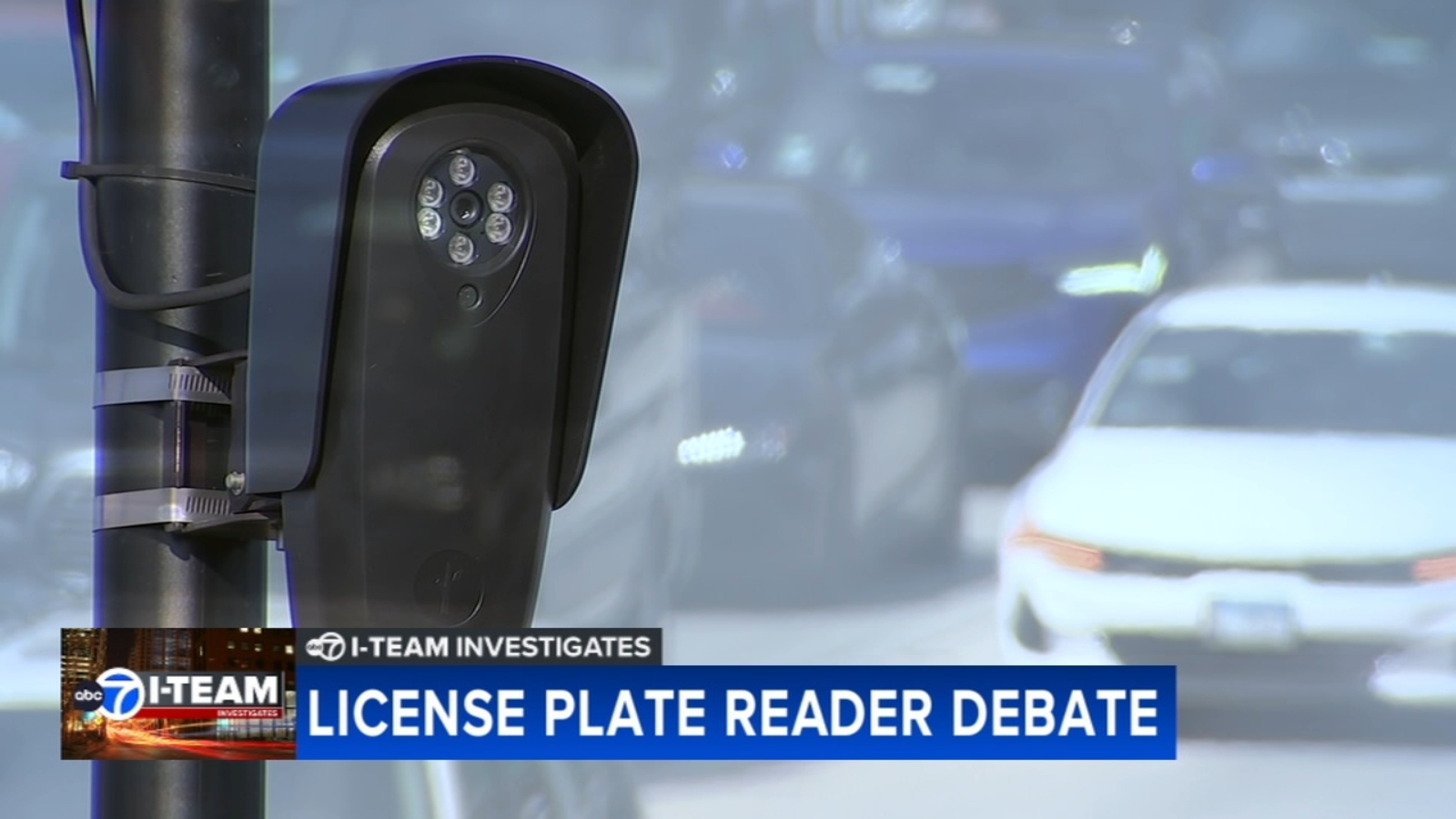
Mounted on poles, stationed along streets, and occasionally attached to police vehicles, these devices capture and identify vehicles in real-time. They log images of license plates, along with the time and location, providing valuable data for law enforcement to combat crime, track stolen vehicles, locate wanted individuals, find missing persons, and identify suspended licenses.
The increasing application and potential misuse of this technology are igniting significant privacy concerns and sparking intense debate: Is this a breakthrough in safety or an overreach into personal privacy?
Flock Safety, a prominent company in the field, is encountering substantial criticism despite promoting positive outcomes from its services.
In a troubling incident last September, the home of Illinois State Senator Meg Loughran Cappel in Shorewood, along with a neighbor’s, was hit by gunfire.
“Oh my God, our house got shot and my son could have been killed. We realized that a gunshot had gone through the top portion of our home into my son Benjamin’s room and was lodged in over his bed. So, that was pretty scary. That shook me up,” she said.
With political violence on the rise, she was relieved to learn her family was not the intended target.
Authorities say the suspected shooter was identified by their license plate with the help of Flock Safety cameras.
Loughran Cappel said, “So, when they were able to help solve this crime in like 12 hours. That was pretty amazing.”
The I-Team sat down with Shorewood Police Chief Phillip Arnold to talk about the technology the village has been using since 2018.
When asked if the shooting in the senator’s neighborhood would have been solved so quickly without the Flock system, he replied, “Absolutely not. No doubt.”
According to the company, there are more than 450 law enforcement agencies in Illinois currently using their product and more than 5,000 across the country.
Arnold said Flock has been a game changer for safety, insisting there are robust guardrails in place to prevent the misuse of data being gathered and stored.
“We actually talked with legal counsel from the secretary of state to make sure that all of our settings were proper and correct,” said Arnold.
In the past several months, some cities around the country cut ties with Flock amidst privacy concerns, data sharing, and federal enforcement.
In August, an audit by Illinois Secretary of State Alexi Giannoulias flagged the sharing of data with federal authorities.
“Company leadership was unaware of a pilot program with the U.S. Customs and Border Patrol Protection agency. This put them in direct violation of Illinois law,” said Giannoulias.
Flock Safety Chief Communications Officer Josh Thomas said the sharing occurred under a pilot program that has since been ended after intense public scrutiny.
“We were trying a program to stop human trafficking with a group called Homeland Security Investigations. And once we frankly acknowledge that this is being used for purposes other than what it could be used for, we stopped that. We ended the program entirely,” he said, adding that Flock has banned federal authorities from being able to ask for people to share their cameras with them.
The state investigation is still underway, and the company said it is now explicitly impossible in Illinois to share data with the feds for the purposes of immigration.
“We’re supportive of working with all of these groups to ensure accountability takes place,” emphasized Thomas.
Some communities are not buying the assurances, calling it a dystopian surveillance network.
Privacy advocates warn that the powerful monitoring tools are capturing too much personal information, tracking without a warrant, and turning lawful citizens into suspects.
The city of Evanston recently terminated its contract with Flock, as did Oak Park.
Derek Eder, an Oak Park village trustee, voted along with the board’s majority to cancel the contract.
“If your car drives by, it will snap a picture, a license plate, and you will be in their system. And so, the potential for danger is just so high when you’re tracking people to that level of granularity,” he said. “The FLOCK technology is effective. The challenge is the data in which that is created by Flock has a lot of potential for harm, and that data has been proven many times over now, unfortunately, to not be protected very well.”
Flock pushed back on the privacy and protection accusations.
“Judges consistently said the same thing: This is factually wrong. This is not a violation of the Fourth Amendment. All this technology is doing is taking pictures of public information in plain view,” said Thomas.
The company also emphasizes its own safety measures, including only a 30-day retention of data and a permanent auto log to keep track of who and what users are searching for.
Thomas added, “It’s actually pretty straightforward for a city council to adopt a policy that says we will use it for violent offenses. And these other reasons keep the data for only this amount of time and, in fact, require auditing and oversight.”
The I-Team discovered dozens of police departments and communities are taking advantage of a grant program through the Illinois Attorney General’s Office that offers tens of thousands of dollars that can be used to help pay for the technology.
“If they had to spend their own money, they might think a little bit more deeply about the downside. I think absolutely, the program needs to be changed,” said Eder.
Arnold offered a different view to those worried about privacy.
“You know, and if you’re worried about being watched or followed, leave your cell phones at home, because our cell phones are collecting much, much more data than these license plate readers,” he said.
While some communities are continuing to debate their affiliation with Flock, the Village of Arlington Heights recently reupped its contract and told the I-Team it is the first community in Illinois to include hefty penalties the company must pay if there is unauthorized sharing of customer data by Flock.
Copyright © 2026 WLS-TV. All Rights Reserved.