
Share this @internewscast.com

In a significant shift, large numbers of Cuban security personnel are making their exit from Caracas, marking the end of nearly two decades of presence in Venezuela. This move comes amidst escalating pressure from Washington aimed at dismantling one of Latin America’s most prominent leftist partnerships.
According to U.S. estimates, around 25,000 Cuban soldiers, bodyguards, and intelligence agents have been stationed in Venezuela for the past 20 years. This was part of a confidential security arrangement that started during the era of the late leader Hugo Chavez. The agreement was designed to safeguard Venezuela’s socialist regime from internal challenges.
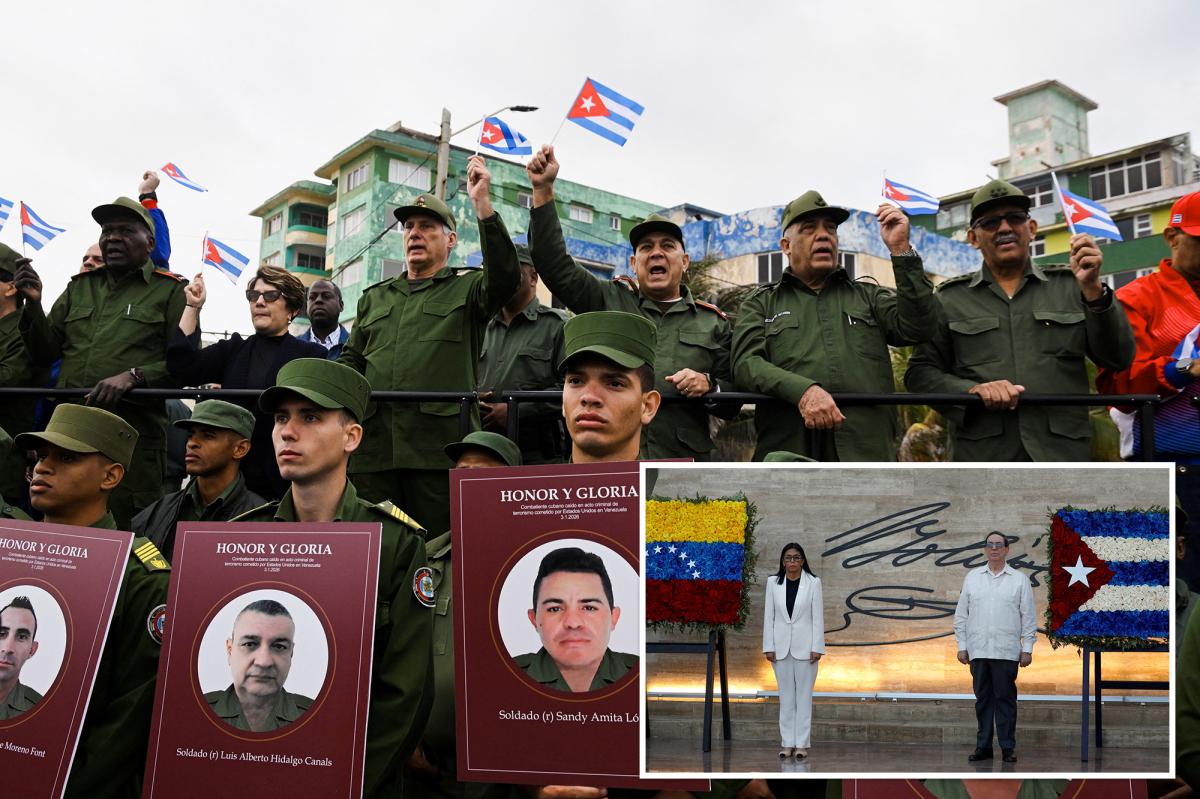
Former President Nicolas Maduro heavily depended on these elite Cuban forces for his protection. Reports indicate that 32 Cuban agents lost their lives when U.S. forces captured Maduro on January 3rd during a clandestine night operation.
Following these events, Interim President Delcy Rodriguez, who was once Maduro’s vice president, has now reportedly enlisted Venezuelan bodyguards for her security, as informed by sources to Reuters.
Havana had long denied the presence of Cuban military personnel in Venezuela, but last month, faced with undeniable evidence, they admitted to the deployment of “Cuban combatants.”
It remains uncertain whether the departure of Cuban security forces from Caracas was due to direct orders from Rodriguez, a unilateral decision by the forces themselves, or a recall from the Cuban government.
The number of Cubans who have left Caracas in recent weeks is unknown.
At least some military advisers are still working in Venezuela, and some undercover intelligence agents are likely to remain in the country to see how the political situation pans out, sources familiar with the matter said.
As part of the informal agreement, thousands of Cuban doctors, nurses and sports coaches also worked in Venezuela.
In exchange, the oil-rich country provided communist Cuba with a much-needed source of black gold.
Ending Venezuela’s alliance with Cuba has been a key goal of the Trump administration since Maduro’s capture, as the US president reportedly eyes a regime change in Cuba before the end of this year.
“It’s a failed nation, and they’re not getting any money from Venezuela, and they’re not getting any money from anyone,” Trump told reporters earlier this month, after he threatened tariffs on countries that sold or provided oil to Havana.
Washington has also blockaded Venezuela from shipping oil to Cuba since December, as it seeks to economically cripple the communist island.
The US government is “talking to Cuba, whose leaders should make a deal,” a White House official said, adding the Trump administration has “a very good relationship with the leaders of Venezuela” and that it believes Rodriguez’s “own self-interest aligns with advancing our key objectives.”
Rodriguez is treading very carefully, observers say.
“She wants to keep the Cubans at a distance until this situation calms down, until her hold on power is clear, but not entirely throw them under the bus, either,” said Frank Mora, who served as US ambassador to the Organization of American States under the Biden administration.
The Cuban government meanwhile said it was willing to talk on equal terms but slammed the oil blockade and pledged to resist US intervention.
With Post Wires