
Share this @internewscast.com

In 1966, the affluent town of San Rafael was rocked by a brutal murder that seemed destined to remain a mystery. Yet, after nearly six decades, the case has finally been cracked, thanks to the advancements in DNA technology that helped solve cold cases.
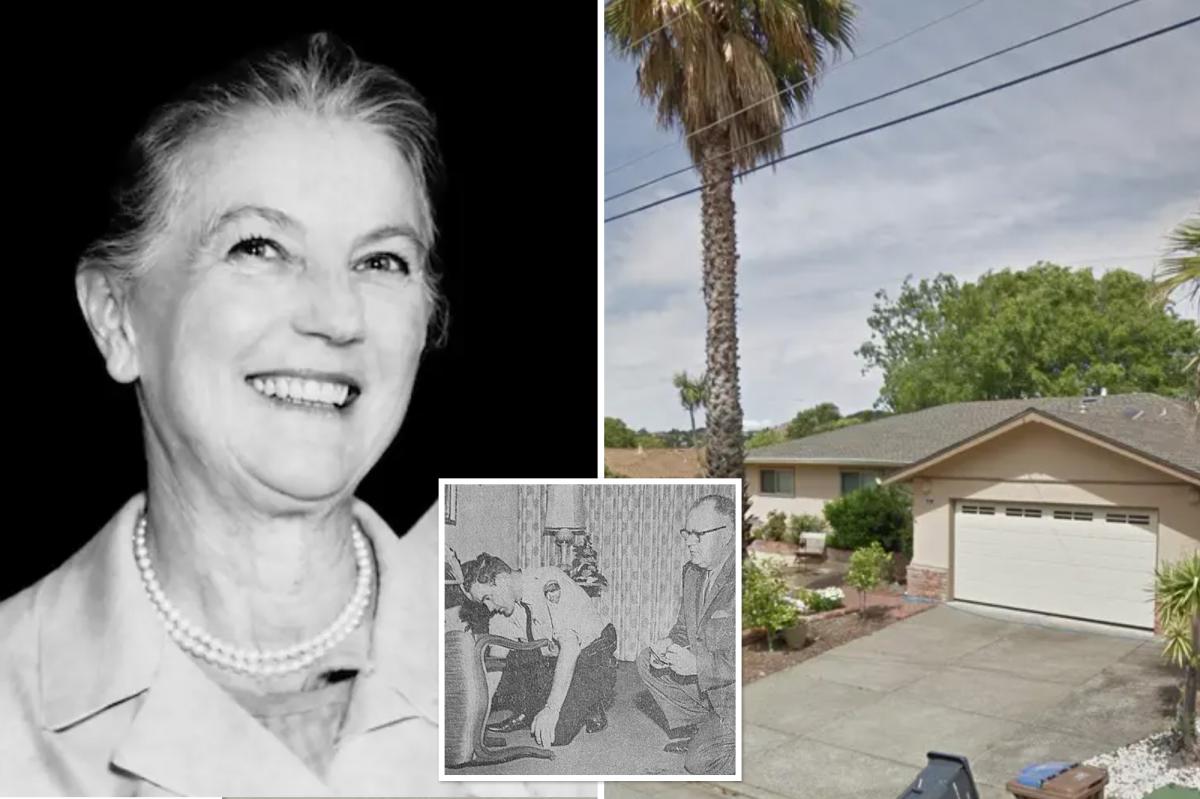
Marjorie Rudolph, a 60-year-old woman from a lineage of wealth and influence, tragically lost her life one evening in her own home. She was a descendant of a notable 19th-century San Francisco dentist and landowner, making her murder all the more shocking to the community.
Decades after Marjorie’s untimely death, two retired detectives took it upon themselves to delve back into the cold case. Their dedication and persistence paid off, as they finally brought closure to a mystery that haunted many, including the victim’s family, as reported by SFGate.
The San Rafael Police Department expressed gratitude for the detectives’ efforts in a news release, highlighting their commitment to cold cases. “Both investigators have generously volunteered their time to support cold case investigations,” the department stated. “As they often note, ‘Cold cases never grow cold in the hearts of the victim’s family.’”
The breakthrough in solving the case came from a critical piece of evidence left at the crime scene: cigarettes that did not belong to Marjorie. This evidence pointed to Laurel James Switzer Jr., who was 41 at the time of the murder, placing him at the scene on that fateful night.
The discovery of these cigarettes, preserved over time, provided the key to unraveling the mystery and bringing a long-awaited sense of justice to the community and Rudolph’s family.
Switzer Jr. was a former police officer and veteran who died by suicide just days after the murder.
On the evening of Feb. 1, 1966, at Carroll Court in San Rafael, Rudolph was home alone while her husband Leroy Rudolph recovered from surgery in a local hospital.
Her final known contact occurred at 5:30 p.m. when she declined a neighbor’s dinner invitation, stating she was already in her robe and settled in for the night, according to detectives in the 1960s.
Because there were no signs of forced entry, investigators concluded she likely opened her door to someone she recognized between the time she took that phone call and 8:00 p.m. When her neighbor discovered Rudolph dead inside her home the next day, the interior was in disarray, with furniture overturned, and blood spatters marking the intensity of the confrontation.
The killer utilized a heavy, pointed object to inflict catastrophic injuries on Rudolph, fracturing her skull and breaking nearly all of her ribs. A county coroner would later remark that her sternum was crushed so badly it was “as if someone had pounced up and down on her.”
After the beating, the killer filled a bathtub and placed Marjorie’s body inside. Her wristwatch, still fastened to her wrist, stopped at 7:55 p.m., providing detectives with a definitive timestamp for the conclusion of the attack.
Although the killer attempted to stage a robbery by ransacking drawers, no valuables were missing from the home. There was also no evidence of sexual assault.
The families of the victim and the killer were said to know each other.
Download The California Post App, follow us on social, and subscribe to our newsletters
California Post News: Facebook, Instagram, TikTok, X, YouTube, WhatsApp, LinkedIn
California Post Sports Facebook, Instagram, TikTok, YouTube, X
California Post Opinion
California Post Newsletters: Sign up here!
California Post App: Download here!
Home delivery: Sign up here!
Page Six Hollywood: Sign up here!