
Share this @internewscast.com
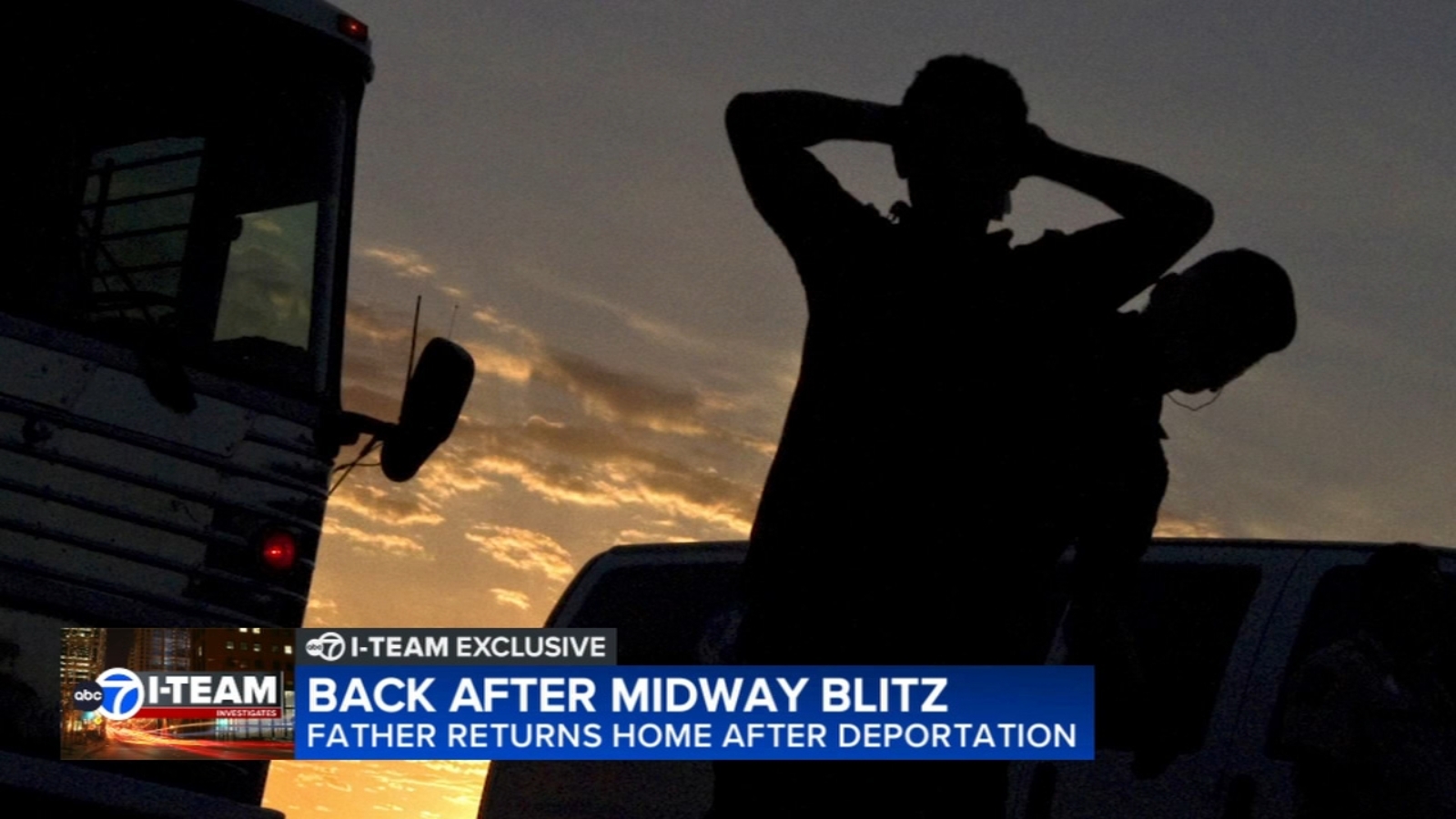
A Chicago man is back home with his family after a distressing ordeal that saw him arrested and deported to Honduras during a federal immigration crackdown last fall.
Now, he’s speaking out about his experience and the legal battle that finally allowed him to return to the United States, sharing his story exclusively with the ABC7 I-Team.
ABC7 Chicago is now streaming 24/7. Click here to watch
According to his attorney, Victor’s situation is not unique. There are potentially hundreds of individuals who experienced similar deportations without due process and are now seeking justice through federal courts to reunite with their loved ones.
Victor, who requested anonymity to protect himself from potential government repercussions, has been a Chicago resident for over two decades. He is the father of three children, all born in the U.S., and has maintained a clean record as a homeowner.
However, his life took a drastic turn on September 16. During an early morning commute to work, he was unexpectedly stopped by federal immigration officers and subsequently detained.
“I had never been detained before,” Victor shared with the I-Team in Spanish. “It was incredibly tough on me mentally and psychologically. Being separated from my kids and family was devastating.”
It was the second week of the enhanced immigration enforcement that the government codenamed “Operation Midway Blitz”, and Victor was brought to the Broadview ICE detention facility.
Department of Homeland Security (DHS) officials say the Broadview facility is only meant to be a processing center, where those who are detained are only kept for hours before they are relocated.
Victor said he was held there for six days.
Court testimony in separate litigation revealed evidence of “deplorable conditions” at the Broadview ICE facility during the period when Victor was held there; evidence he says he witnessed firsthand.
“The facility was full of people,” Victor told the I-Team. “The bathrooms were clogged, there wasn’t water to take a shower, there wasn’t a toothbrush to brush my teeth.”
For days, Victor said he was only given slices of bread to eat and small bottles of water to drink.
On September 22, Victor was moved to a plane and deported to Honduras. His brother eventually flew out to help him, given he had no family, contacts, or money when he landed.
“It was terrible, he was not prepared to be in that position, and it was heartbreaking because he’s my last brother,” said Victor’s brother, Candido.
More than a month after he landed in Honduras on Nov. 11, Victor started the legal fight that would eventually result in his homecoming, arguing his due process rights were violated by filing what’s called a “writ of mandamus” request, or a request for a judge to order federal officials to fulfill their duties.
The U.S. Department of Justice’s website states a mandamus filing is an “extraordinary remedy, which should only be used in exceptional circumstances of peculiar emergency or public importance.”
Since Jan. 20, 2025, the I-Team found more than 200 people have turned to the rare “mandamus” legal mechanism, filing petitions “over immigration actions” in federal court for the Northern District of Illinois, according to federal court data.
In Victor’s case, his attorney argued his removal without due process violated his rights as an undocumented person in the country.
“Due to a paperwork mistake, he was stripped of his due process rights and taken to Honduras without a chance or hearing before an immigration judge,” said Victor’s attorney, Jennifer Peyton.
Peyton is a former Assistant Chief Immigration Judge who previously told the I-Team she was fired for “no reason, no cause” last year.
At the time of his arrest, Victor’s wife had a pending asylum application over credible fears of returning to Honduras, and in court filings, he argued he was never provided an opportunity to consult with counsel, nor did he ever receive a removal order or hearing in immigration court.
After months of hearings, on March 11, Victor boarded an Immigration and Customs Enforcement (ICE) flight from Honduras to the U.S.
But once he landed in Louisiana, ICE agents arrested him again.
Victor said he panicked.
“I was like, ‘Oh my God, I’m going to be sent back to Honduras,” Victor said. “I had a flash of not being able to see my family.”
Victor’s attorney said it’s unclear why he was arrested for a second time, but after hours of phone calls, he was released.
The next day, he reunited with his family; the moment he first saw his young kids recorded by his brother’s cell phone.
Victor’s brother said he remains cautiously optimistic.
“I feel worried because it’s not over yet,” Candido said. “And I’m trusting that it’s going to be fine.”
“Victories always feel good, especially when we’re in this administration because you fight hard for the victories,” Peyton said. “But this one tastes so much sweeter because I felt that we really showed that due process matters.”
On Wednesday morning, Victor checked in with ICE officials to get a future court date to try and stay in the country for good. To his relief, Victor was not taken into custody.
His plans for the rest of the day, he said, “I’m going to stay with my family, and play with my son.”
The Department of Homeland Security did not respond to a request for comment on this story.
Copyright © 2026 WLS-TV. All Rights Reserved.