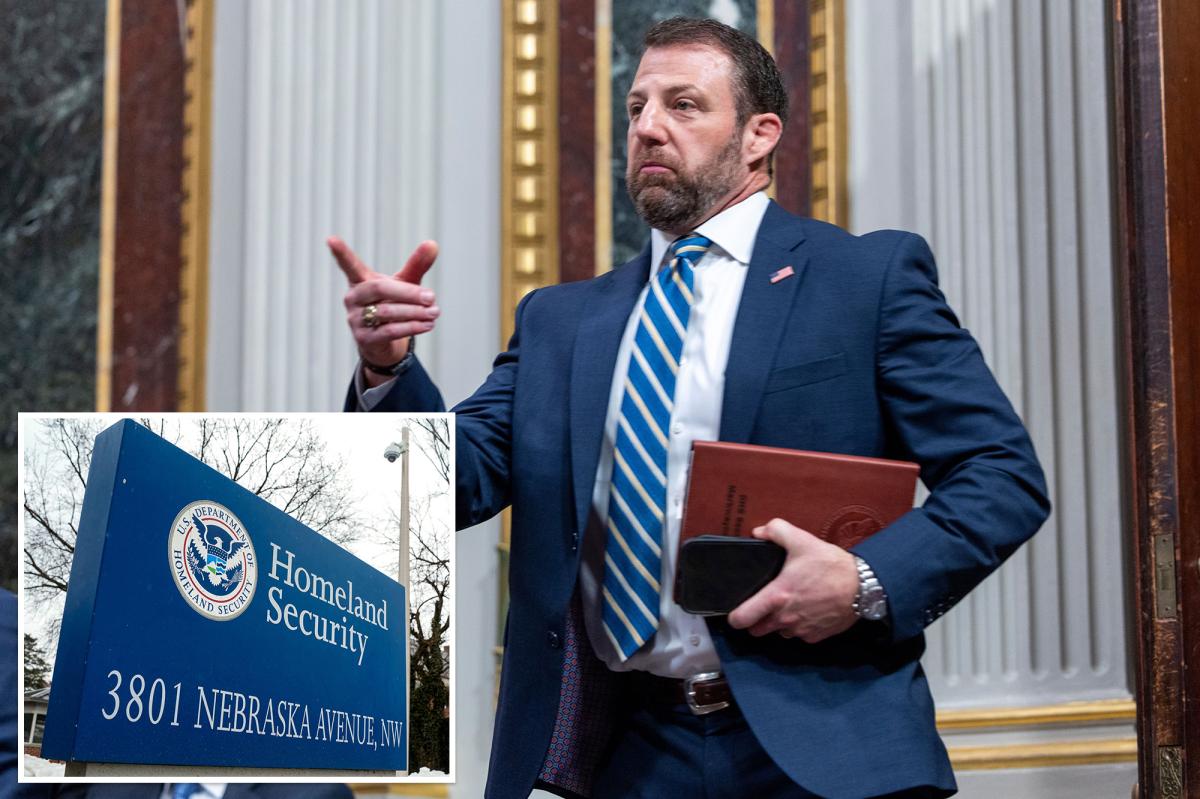


WASHINGTON — The Department of Homeland Security remains on hold for a full reopening anytime soon.
On Tuesday, the leadership of the House GOP reinforced their stance that any proposal to conclude the unprecedented 66-day partial shutdown must ensure complete funding for all DHS agencies.
“The order of operations is crucial. We must ensure that we don’t exclude or make essential agencies within the department feel abandoned,” House Speaker Mike Johnson (R-La.) expressed to reporters.
“There’s concern within our ranks that if we fund the majority of the department before addressing this, those agencies might be neglected. We can’t let that happen. So, we’re carefully navigating this issue,” he added.
Last month, the Senate approved a measure to finance the entire department, leaving out US Customs and Border Protection (CBP) and Immigration and Customs Enforcement (ICE).
However, Johnson dismissed the proposal, stating, “I find it unacceptable that Democrats would push for a negotiation in the early hours, attempt to impose this on the American people, and then leave for the holidays, assuming we’ll simply comply.”
Senate Republicans are currently crafting a measure to fund CBP and ICE via a party-line reconciliation vote, a cumbersome process that will likely take weeks to complete.
On Tuesday, Senate Budget Committee Chairman Lindsey Graham (R-SC) took the first major step by unveiling a resolution laying out a blueprint for the measure and instructions on how to proceed.
It calls on key committees to submit their recommendations for the reconciliation bill by May 15. Senate GOP leadership has been adamant that Republicans keep the bill as “skinny” — meaning narrowly tailored to fund ICE and CBP — as possible to avoid further delay.
Graham is aiming to spend $70 billion on the immigration enforcement agencies, but the blueprint technically allows for up to $140 billion in outlays.
While there are aspects of ICE and CBP that the Senate likely can’t fund via reconciliation, the Office of Management and Budget has teased plans for President Trump to use executive power to shift money around and make up for any shortfall.
Trump has given Republicans a June 1 deadline to complete the reconciliation process.
In the meantime, Trump has also used his executive power to pay key workers in DHS, including screeners at the Transportation Security Administration, for the time being.
But DHS Secretary Markwayne Mullin warned Tuesday that those temporary measures will have been exhausted by May.
“My payroll through DHS is just over $1.6 billion every two weeks, so the money is going extremely fast and once that happens, there is no emergency funds after that,” Mullin told “Fox & Friends.”
“I’ve got one payroll left and there is no more emergency funds, so the president can’t do another executive order because there’s no more money there.”
OMB Director Russ Vought has issued similar warnings about the state of DHS amid the temporary measures Trump has taken to keep it afloat.
“As of right now, the Department of Homeland Security is disintegrating because the secretary and I are having to figure out ways to temporarily fund people’s paychecks so we don’t have people quit and embark on new careers,” Vought testified to the Senate Budget Committee last week.
When pressed about those concerns, Johnson insisted he was in no mood to rush any bill through.
“We’ve got to make sure that the homeland is protected, and there’s been lots of consternation amongst lots of members about how this devolved,” the speaker argued. “It’s not the fault of the Republican Party, it’s the fault of the Democrats.”