
Share this @internewscast.com
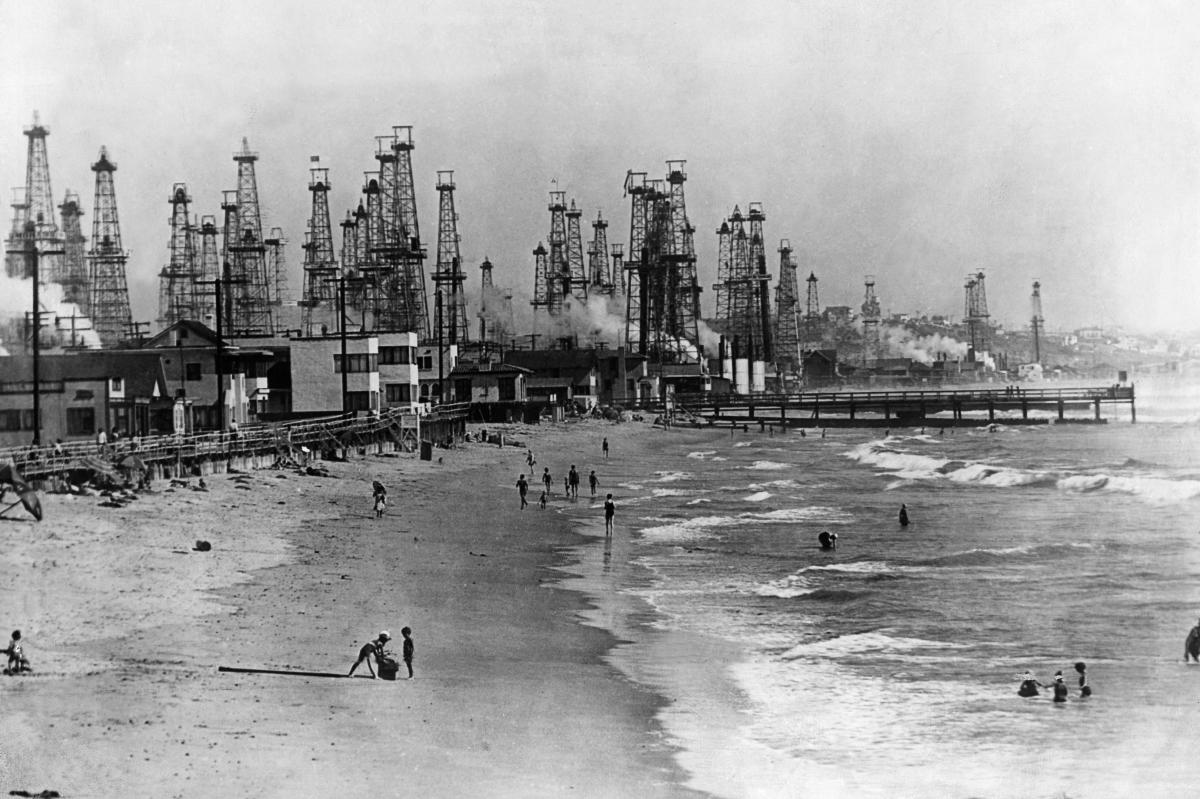
Nearly a century ago, Venice Beach in West Los Angeles bore a strikingly different appearance, one that was more industrial than the iconic, picturesque locale we know today.
Back then, the beach was dotted with oil derricks that dominated the shoreline, operating tirelessly as beachgoers relaxed and swam just as they do now. The air was thick with smoke and steam, a stark contrast to the clear skies that hover above the beach today.

California has a longstanding history with the oil industry, once holding the title of the nation’s leading oil producer, eclipsing even the glitz of modern Hollywood. In the early 20th century, oil was king in the state, shaping much of its economy and landscape.
Michael Mische, a management professor at the University of Southern California and an experienced industry consultant, shared insights with KTLA, emphasizing that oil’s impact extends far beyond altering the scenic views of Venice Beach.
“California is a state blessed with abundant natural resources, great weather, sunshine, terrific people, but the petroleum itself is millions of years old,” Mische explained to KTLA. “We know from historical documentation that Indigenous peoples used the tar for their vessels, for waterproofing, for commerce. Later, Spanish explorers used it to repair their ships.”
Today’s Venice Beach is a testament to transformation. The towering palm trees and vibrant boardwalk now frame the area, offering a hub of restaurants, bars, and shops that are a far cry from its industrial past.

âIt was surreal. There were sites in mid Los Angeles, Fairfax, Beverly Hills and South-Central L.A.,â Mische told KTLA. âOriginally, the oil ports were in Ventura and Santa Monica Bay between modern-day Santa Monica and Malibu. Eventually everything shifted to Long Beach because thatâs where the big fields were.â
Los Angeles, a historically blue city, has been known for its green policies no longer favoring oil. But the derricks, oil rigs and other oil and gas producers still contributes more than $300 billion annually to Californiaâs economy and supports more than 500,000 jobs, according to the Western States Petroleum Association.
But nowadays, the sites are well-hidden. Including in Venice Beach, where they aren’t as visible as they once were.
âIn Beverly Hills, for years people drove past Beverly Hills High School and saw what looked like a decorative clock tower. It was a concealed oil derrick,â he said. âWeâve made them more visually appealing, but theyâre still operating.â