
Share this @internewscast.com
Amid the blare of sirens and flashing lights, a composed voice diligently manages emergencies, directing officers through tumult and ensuring assistance arrives precisely where it’s needed.
NASSAU COUNTY, FLORIDA — The moment you dial 911, every second counts for dispatchers working tirelessly to save lives.
Within the heart of the chaos, a steady voice coordinates in real-time, guiding officers through disorder and dispatching the appropriate help with pinpoint accuracy.
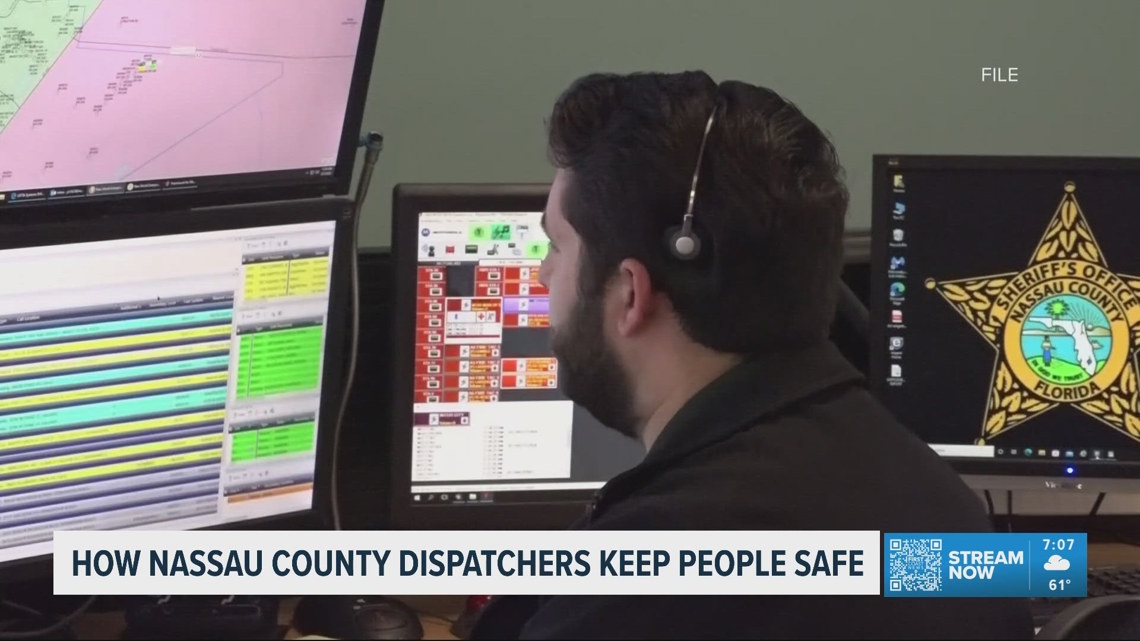
At Nassau County’s 911 call center, dispatchers are immersed in live maps, officer positions, and the status of calls, all while making rapid decisions crucial to life-saving efforts.
From accidents and medical crises to suspicious behavior and reckless driving, operators must swiftly evaluate each situation and determine the right response.
Occasionally, the threat is immediate and demands urgent attention.
“We get road rage calls where people say someone brandished a gun while driving and we try to locate those people by putting notes and staying on line with the caller,” Peyton Jones said.
For a dispatcher, like Jones, the job became a calling after she became a mother. Serving the community she grew up in felt like the right fit, but the emotional weight of the role is real.
“Any calls with children are the hardest,” Jones emphasized. “I had a nine-year-old call saying her parents were fighting upstairs… she was crying and scared. It’s really hard to hear kids like that.”
To manage moments like that, Jones, who’s a mother of three, says training and focus are everything.
“You really have to stay zoned in on the call and separate it from your personal life,” Jones said. “You cannot let it get to you emotionally you just deal with it how you were trained.”
While callers hear a steady voice, dispatchers are working behind the scenes: pinpointing locations, tracking officers, and updating call information in real time.
Calls are quickly classified, whether it’s a medical emergency, a crash, reckless driving, or suspicious activity.
When calls come in from drivers traveling between counties, Jones explained, dispatchers first determine where the caller is—or where help is needed. That location decides which agency responds. Then, dispatchers determine the type of emergency and relay critical details to police, fire, or EMS in the field.
Jones also says dispatch can be a launching point for those interested in law enforcement. Learning police codes, communication, and real-time decision-making behind the scenes can make the transition to the field smoother.
If you ever need to call 911, Jones says what you say and how you say it matter.
“Pertinent information—we need the location first before we do anything,” Jones said. “Less stress is better. I know situations arise where it’s hard to keep your cool, but we try to keep cool on our end so that you guys feel like you can think calmly and collectively.”
They may be unseen, but they’re always on the line.