
Share this @internewscast.com

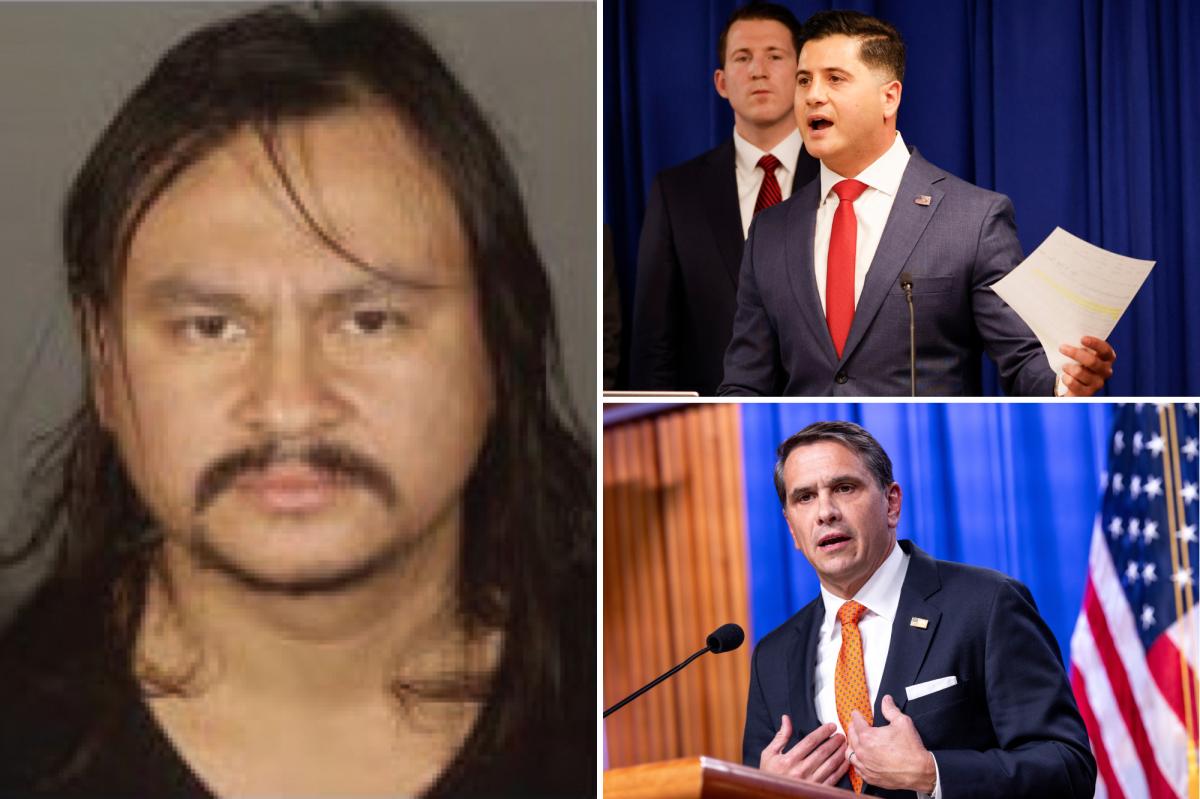
In a significant legal move, Acting Attorney General Todd Blanche has given federal prosecutors in Los Angeles the green light to pursue the death penalty against three members of the notorious MS-13 gang. This decision, revealed in a letter dated April 8 and obtained by The Post, targets Dennis Anaya Urias, Grevil Zelaya Santiago, and Roberto Carlos Aguilar, who face charges linked to the murder of an FBI informant.
Following this authorization, First Assistant US Attorney Bill Essayli announced on Thursday that his office intends to seek capital punishment for the three accused. Last year, each of them was charged with murder in aid of racketeering, a crime that carries severe penalties under federal law.
In addition to the murder charges, Urias, Santiago, and Aguilar are also facing multiple counts of conspiracy to retaliate against a witness. They have been in federal custody since their arrests in May 2025, which were part of a broader investigation into racketeering and methamphetamine trafficking activities.
“The death penalty is reserved for the most egregious and shocking crimes,” Essayli explained to The Post. “These defendants have committed acts that unquestionably fall into that category.”
Highlighting their immigration statuses, Essayli pointed out that Urias and Aguilar hail from El Salvador, with Urias holding a green card and Aguilar residing illegally in the U.S. Santiago, on the other hand, is an undocumented immigrant from Honduras. Essayli emphasized the administration’s tough stance on crime, stating, “Thugs and terrorists will find no refuge here. If you take a life, you risk losing your own.”
The case against Urias and Santiago is particularly severe, with prosecutors alleging that the two men fatally shot the federal informant, known in court documents as “H.B.,” at a grocery store in south Los Angeles on February 18 of the previous year. This act of violence underscores the gravity of the charges they face and the potential consequences of their actions.
One hour earlier, the victim also encountered Aguilar, 30, inside the store, prompting “a series of events that led to Urias and Santiago shooting and killing the victim,” Essayli noted.
H.B. called 911 after what appeared to be a “chance encounter” with Aguilar turned into a first attempt on his life — but one of the gang member’s guns didn’t fire.
The attempted shooter was “dressed in all black, with a handkerchief covering his face,” while his companion was a “Latino, had long hair, and was wearing a black top and blue jeans,” court filings show.
The FBI agent later identified the long-haired Latino as Aguilar, and the failed shooting led to H.B. retreating inside the Superior Grocers at Figueroa Avenue and 92nd Street.
Two other men within minutes climbed out of a Honda CR-V that pulled up outside the grocery store, and H.B. put in a call to his FBI handler.
Security camera footage showed two men — alleged to be Urias and Santiago — chasing H.B. into the store.
The agent then “heard through the telephone several gunshots and H.B. stopped responding,” according to an affidavit filed with the court.
MS-13 members had been aware of H.B.’s status as a cooperating witness for the feds. A leader of the gang’s “Bagos” clique gave the “green light” to target him.
The FBI special agent listened in on a phone call three days after the murder between another cooperating witness and the Bagos clique “shotcaller,” identified as A.R. in the affidavit, who told him he “had to clean out my garbage, you understand, and well that work you cannot say no to.”
Prosecutors noted in a criminal complaint that MS-13 members have often assaulted, robbed, murdered or “promoted a climate of fear in the community through threats of harm and violence” to “enhance” their status in the gang.
The case, brought in the Central District of California, is scheduled to head to trial on July 21 and is part of Operation Take Back America, which is cracking down on drug cartels and other transnational criminal organizations.