
Share this @internewscast.com

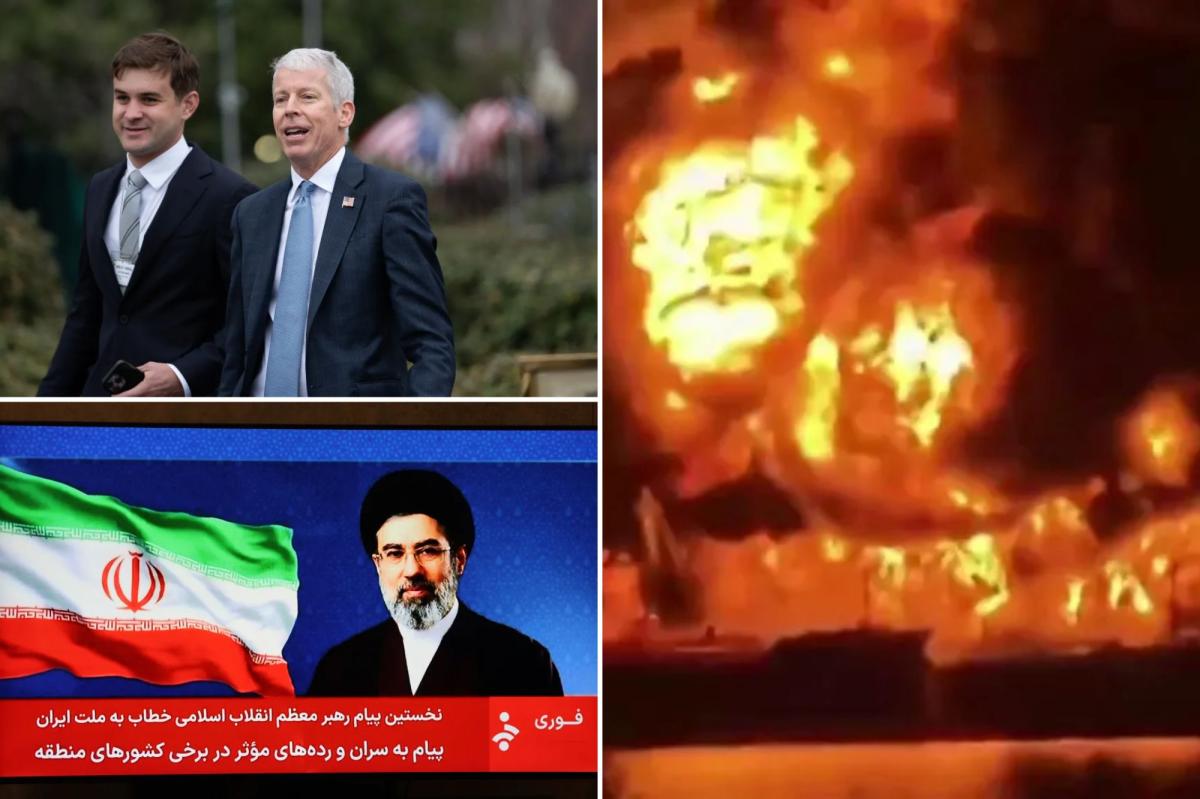
WASHINGTON — On Thursday, Energy Secretary Chris Wright indicated that while US military escorts for oil tankers in the vital Strait of Hormuz are currently not feasible, they are “quite likely” to commence by April. This announcement comes as Iran’s new supreme leader, Mojtaba Khamenei, declared his intent to keep the passage closed, leveraging it as a means to exert pressure on adversaries through elevated energy prices.
Oil prices saw a significant spike on Thursday, with Brent crude nearing $100 per barrel by midday. This surge followed a series of attacks by Iran on at least seven ships navigating the Strait of Hormuz and the Persian Gulf since Wednesday.
Wright, speaking to CNBC, remarked on the current unavailability of military escorts, stating, “It can’t happen now.” He explained, “Our military resources are currently dedicated to dismantling Iran’s offensive capabilities and the manufacturing sectors supporting them.”
When questioned about the likelihood of US Navy escorts by month’s end, Wright responded confidently, “Yes, I think that is quite likely the case.”
The Strait of Hormuz is a critical channel for about 20% of the world’s oil shipments, primarily destined for Asian markets. The current tensions have led to increased global price volatility.
About 20% of global oil shipments transit the Strait of Hormuz â most of it going to Asian countries, though the bottleneck has put upward pressure on prices globally.
Shipping in the waterway mostly has stopped since the war began on Feb. 28.
According to MarketWatch, just eight commercial transits through the strait were recorded Tuesday, most with links to Iran or China â down dramatically from an average of 153 ships per day ahead of the attack.
In addition to oil, the strait is an important passageway for natural gas and helium, which is used for cooling in semiconductor manufacturing.
Earlier this week, Trump promised that “when the time comes, the US Navy and its partners will escort tankers through the strait, if needed.
“I hope it’s not going to be needed, but if it’s needed, we’ll escort them right through.”
Meanwhile, the President has attempted to coax ships to make the risky voyage by offering a new $20 billion US government-backed reinsurance program, but has found few takers.
‘Get ready for oil to be $200 a barrel’
Khamenei vowed Thursday in the first public statement attributed to him as supreme leader to keep the crucial passage closed as a âtool to pressure the enemy.”
Iranian military spokesperson Ebrahim Zolfaqari taunted the US Wednesday, saying: “Get ready for oil to be $200 a barrel, because the oil price depends on regional security, which you have destabilized.”
Trump has sought to blunt the impact of the war â which he says is proceeding ahead of his original four-week timeframe.
On Wednesday, the president authorized the release of 172 million barrels of oil from the US Strategic Petroleum Reserve over the next 120 days â an amount equivalent to nearly nine days of domestic consumption.
Other major countries committed to a cumulative release of a further 228 million barrels to tamp down global costs.
Trump also is considering issuing temporary waivers of the Jones Act of 1920 to allow foreign ships to transport fuel between US ports.
Energy prices have a significant pass-through effect on the cost of other goods, and the war threatens to reverse substantial progress on lowering inflation, which remained at an annual rate of 2.4% in February.
Gasoline prices have surged due to the conflict, with the cost of regular fuel averaging $3.60 per nationwide on Thursday, up from $2.94 one month ago, according to AAA data.
Rising prices threaten to undermine Trump’s political messaging on affordability issues ahead of the November midterm elections.