
In the wake of the Trump administration’s successful operation to detain Venezuelan leader Nicolás Maduro, there has been a surge of discussion regarding his collaboration with China. This partnership has spanned intelligence sharing, military access, and technology transfers within the Western Hemisphere, prompting many to justify the U.S. government’s decisive action against him.
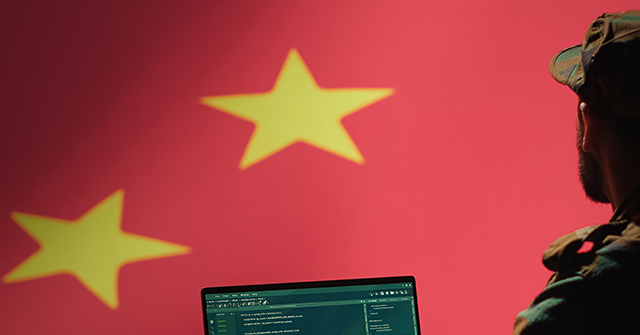
While much attention is given to China’s expanding influence globally, there has been less focus on how the Chinese Communist Party can easily obtain sensitive information domestically. A significant factor contributing to this vulnerability is the lack of stringent enforcement of regulations governing the use of electronic devices within secure U.S. facilities.
Ken Calvert, who chairs the House Appropriations Subcommittee on Defense, highlights that at the end of the Cold War, the United States possessed unparalleled military strength, with no apparent rival in sight.
Yet, in the span of just three decades, China has almost achieved parity. The nation has developed the world’s second-largest economy, leveraging this economic might to fuel an unprecedented and rapid military expansion.
China’s meteoric rise is not solely due to its own innovations. The country has systematically acquired U.S. commercial and defense secrets, bolstering both its economic and military sectors.
Creating new designs, compiling data, developing production systems, and generating intellectual property are processes that require substantial investment and time. By appropriating these advancements from others, China has accelerated its progress, focusing primarily on production. This strategy has been particularly effective over the past decade, facilitated by advancements in digital technology, notably through the use of cell phones.
Twenty years ago, espionage centered on stealing a handful of documents. Today it involves the theft and transmission of massive files, complete weapons manuals, and thousands of photographs of U.S. military equipment in use on American bases and ships, making it far easier for China to jump directly to production.
In 2025 alone, there were at least ten public cases of individuals charged or convicted of spying for China using their cell phones. Those cases are only the tip of the iceberg. Many more are resolved quietly when classified material is involved, to avoid exposing sensitive information in open court.
As cell phones become more powerful and ubiquitous, enforcement against their presence in sensitive facilities has not kept pace. Many government locations display signs stating, “No unauthorized electronic devices allowed.”
Unfortunately, those policies are often treated the same way speed limits are treated on America’s highways: respected only when enforcement is visible. In facilities without real enforcement mechanisms, people bring in phones with impunity, assuming it is acceptable because they lack malicious intent. Few consider that their devices could be compromised or that widespread noncompliance provides cover for someone who does have hostile intent.
According to retired CIA executive Rodney Alto, fewer than 10 percent of intelligence community facilities that prohibit electronic devices have any mechanism to detect them. Where detection systems do exist, experience shows that people still attempt to bring in unauthorized devices, proving that facilities without protection are likely admitting thousands of compromising devices without ever knowing it.
This helps explain how China has been able to catch up so quickly. As the United States develops new weapons and defense systems, China learns from stolen copies of our work and races to keep pace.
This must be corrected — and now.
China’s military modernization is accelerating as its claims against Taiwan intensify. Taiwan produces nearly all of the world’s most advanced semiconductor chips, supplying companies such as NVIDIA, Intel, IBM, and others, placing the center of advanced computing just 115 miles from mainland China.
At the same time, the United States is preparing the largest buildup of military intellectual property in history. Programs such as Golden Dome, the Columbia-class submarine, the B-21 Raider, nuclear triad modernization, and hypersonic weapons rely on technologies that do not yet exist. That gives us a rare opportunity to protect these secrets before they are created, and before they can be stolen.
We know extraordinary technologies are coming. Now is the time to enforce a government-wide ban on unauthorized electronic devices in sensitive facilities, backed by mandatory detection systems, real penalties for violations, and sustained oversight by Congress. It’s the only way to make sure we don’t continue to build China’s blueprints for them.
Fred Fleitz is a former Chief of Staff to the Trump National Security Council and a former CIA analyst. He is currently Vice Chair of the America First Policy Institute Center for American Security.