
Share this @internewscast.com
In my November testimony before the Senate Agriculture Committee, I vowed to work diligently as the Chairman of the Commodity Futures Trading Commission (CFTC) to uphold the agency’s status as a premier financial markets regulator. My commitments included safeguarding the interests of farmers and ranchers, revising outdated regulations, and advancing President Trump’s vision of establishing America as the crypto capital of the world.
I’m delighted to share that, in the first 100 days of my tenure, we’ve made notable strides towards these objectives. The CFTC is swiftly paving the way for a new era in America’s financial markets.
While many Americans might not be familiar with the CFTC, it stands as one of the globe’s key financial regulatory bodies. The agency supervises futures, options, and swaps, managing over $500 trillion in notional value of financial transactions in the U.S. annually. These financial instruments are vital for farmers hedging against risks like drought and rising costs, as well as for airlines seeking stable jet fuel prices. On a day-to-day level, the CFTC plays a crucial role in ensuring consistent pricing for essentials such as groceries and fuel. Lately, the agency has seen heightened interest in prediction markets and products related to crypto assets and AI data center computation.
Since assuming leadership, my strategy has been straightforward: how can we continue to foster robust markets for all Americans as we venture into new financial territories? I’ve begun by revising some of the policies from the Biden administration. The Climate Risk Unit has been disbanded, and I’ve rolled back several climate-related initiatives that didn’t align with our agency’s mission or the needs of market participants. The CFTC is a dedicated financial regulator, not a platform for political agendas.
The previous approach of enforcing regulations through litigation has been abandoned. The Biden administration’s tendency to pursue legal action against innovators and job creators, without establishing clear regulatory frameworks, drove leading tech companies overseas, resulting in job losses and business closures in America. Fortunately, federal courts have often dismissed these claims, but we are still working to rectify the situation.
Apart from addressing the previous administration’s missteps, the agency is advancing rapidly to fulfill the current president’s priorities. I have established an Innovation Advisory Committee, bringing together academics, established financial players, and newcomers, and have rejuvenated the Agricultural Advisory Committee to ensure that farmers, credit providers, and agricultural market participants have a voice. The origins of our markets trace back to the trading of agricultural commodities.
The CFTC was created to enable these markets to be deep, liquid, and fair, because our nation’s farmers and ranchers need access to strong risk management tools. Importantly, the agency is looking to implement changes to the Commitment of Traders (COT) report and publish it on a more frequent basis, a long-time request from agricultural businesses. Under my leadership, we’re returning confidence back to our growers and producers.
Another key priority is to lower the compliance burdens and energy costs for small businesses. To help, the agency is working to finalize de minimis threshold exemptions to provide regulatory relief to energy, agriculture, and critical mineral producers that have been blocked from fully accessing commodity swaps markets. This action will provide access to more market participants, which will work to stabilize and contribute to lower commodity prices in the long term.
As new asset classes emerge and with the possibility of Congress passing crypto asset market structure legislation soon, the CFTC is ready to take responsibility for a $3 trillion crypto asset market that is growing larger by the day.
In January, we partnered with the Securities and Exchange Commission (SEC) on Project Crypto, creating a joint effort between the SEC and the CFTC to harmonize federal oversight of crypto asset markets.
In March, the agency took several steps to improve the regulatory environment: providing no-action relief to a digital wallet software developer, publishing the first crypto asset classification system, referred to as a taxonomy, that makes clear the differences between digital securities and digital commodities, delivering further clarity concerning tokenized collateral, and launching an Innovation Task Force—dedicated to advancing clear rules of the road for American innovators building novel products within U.S. derivatives markets.
The same regulatory clarity being delivered to the crypto industry is being developed for prediction markets, which can serve as powerful tools for information discovery and are regulated by the CFTC under the Commodity Exchange Act. Not only did Commission staff issue a Prediction Markets Advisory, but the agency recently published a notice soliciting early public input before considering new regulations for prediction markets.
I have been humbled to be a part of the Trump administration’s effort to break from the restrictive regulatory practices of the past and create a derivatives market that works for everyone.
Our derivatives markets are among the most sophisticated and liquid in the world, and as the financial markets continue to fully digitize and move onchain, regulators must be disciplined enough to administer the minimum effective dose of regulation, otherwise innovation moves elsewhere, and our nation suffers the consequences.
If the past is prologue, the next 100 days—and the years beyond—will build on this transformative foundation as the CFTC remains the gold standard for smart, effective oversight of financial markets.
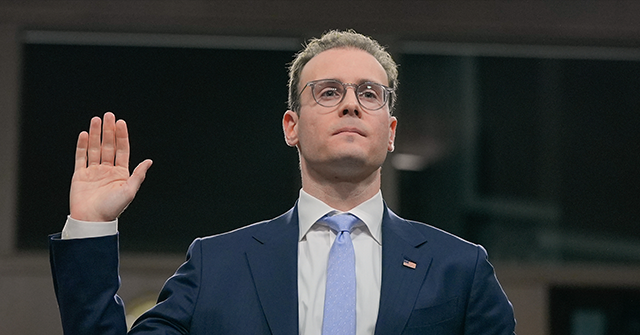
Michael S. Selig was sworn into office as the 16th Chairman of the Commodity Futures Trading Commission on December 22, 2025, after being nominated by President Donald J. Trump.