
Share this @internewscast.com
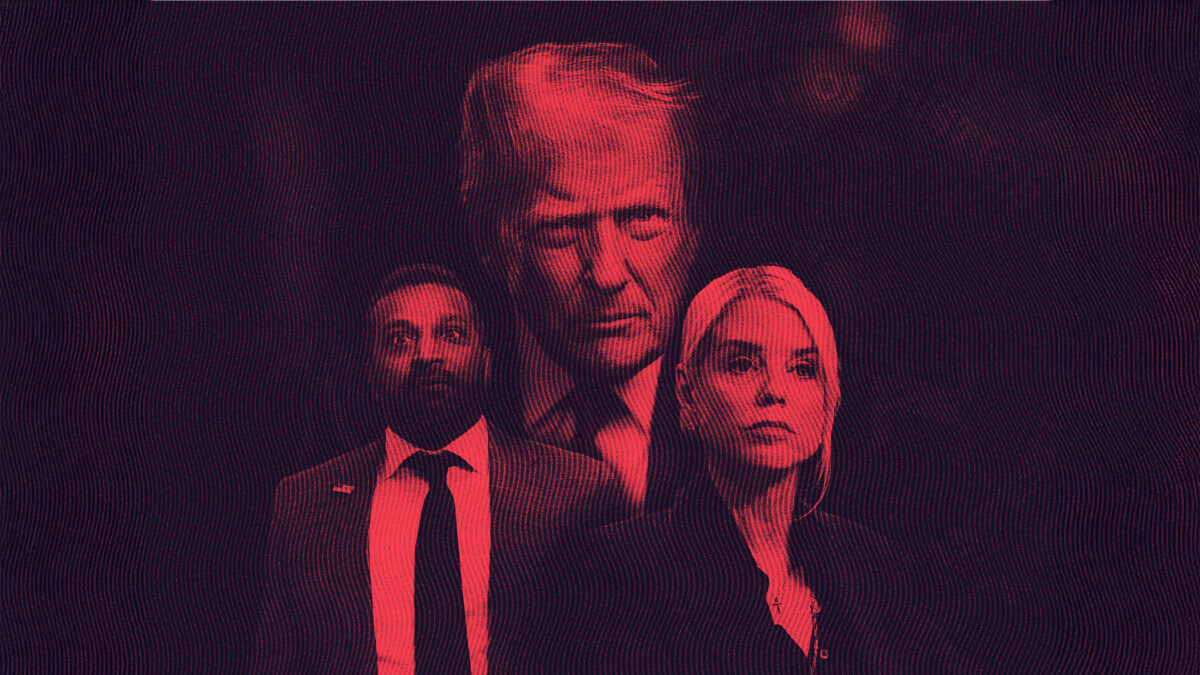
Federal authorities under President Donald Trump are quietly building a domestic “extremist” list that targets protected political and religious beliefs, according to an FBI leaked memo obtained and published by reporter Ken Klippenstein.
Attorney General Pam Bondi has signed a directive that instructs the FBI to implement President Trump’s National Security Presidential Memorandum‑7 (NSPM‑7). This memorandum is seen by critics as initiating a new domestic-focused War on Terror, targeting American citizens rather than foreign adversaries.
Bondi orders FBI to list domestic “extremists”
According to Klippenstein, Bondi’s memo directs the FBI to create a list of groups or entities involved in activities that might be considered domestic terrorism. The focus is specifically on Americans expressing opposition to law and immigration enforcement, advocating for mass migration and open borders, supporting radical gender ideologies, and exhibiting anti-American, anti-capitalist, or anti-Christian sentiments. These viewpoints are categorized as potential indicators of terrorism, with federal Joint Terrorism Task Forces instructed to employ all investigative tools to “map the full network of culpable actors” both within the United States and abroad.
The leaked memo from the FBI additionally mandates agents to revisit and retroactively examine incidents from the past five years. This gives the government the authority to scrutinize past speech and actions for potential new terrorism cases. Klippenstein highlights that the document uses NSPM‑7 as its legal and policy basis, turning Trump’s earlier proclamation on “Countering Domestic Terrorism and Organized Political Violence” into a concrete operational strategy.
Bounty system and surveillance incentives
Beyond labeling and rhetoric, Bondi’s directive has tangible implications. The memo advises the FBI to broaden and aggressively promote its tip line while instituting a “cash reward system” for information leading to the arrest of “leadership figures” within these newly identified extremist groups. It also instructs agents to recruit “cooperators” willing to provide information and testify against other members, thus encouraging informants within political and religious communities impacted by the new definitions.
Furthermore, the document reallocates Justice Department grant funding to support state and local “domestic terrorism” initiatives, effectively compensating local law enforcement to contribute to the federal database. Klippenstein describes the initiative as essentially a bounty system, incentivizing Americans to report on fellow citizens suspected of harboring such views and potentially engaging in terrorism.
“War on Terror” turned inward after Charlie Kirk assassination
The development of NSPM‑7 and Bondi’s memo was spurred by the political upheaval following the assassination of Turning Point USA founder Charlie Kirk. According to Klippenstein, the Trump administration regarded this incident as a “9/11‑type event” for the MAGA movement. In earlier reports on NSPM‑7, Klippenstein depicted the directive as a sweeping “declaration of war” against nearly anyone opposing MAGA ideologies, cautioning that the administration planned to repurpose post‑9/11 counterterrorism powers against domestic ideological opponents.
On the Redacted podcast with Clayton and Natalie Morris, Klippenstein warned that Bondi’s memo “is basically creating, in essence, a bounty system for reporting on fellow Americans” and that the criteria sweep in views that are not only legal but explicitly protected. He pointed to language targeting people who “do not have traditional views of family,” non‑Christians, and those who express anti‑capitalist or anti‑ICE sentiments. “Maybe if the focus seems left now, it’s being defined very broadly,” he said, adding that a future administration could easily flip the same machinery against different enemies.
🔥 The DOJ just unveiled a plan to hunt “domestic terrorists” even though the Constitution does not recognize that crime. It is a political label that can be used on anyone with the wrong ideas. @Kenklippenstein is with us. pic.twitter.com/IsWLBPp5In
— Redacted (@RedactedNews) December 18, 2025
Chilling effect and bipartisan danger
Klippenstein said a major Washington law firm, Covington & Burling, recently warned corporate clients that the directive will “have a chilling effect on speech,” signaling alarm even in establishment circles with no activist agenda. He argued that the memo’s power lies less in immediate mass arrests and more in scaring Americans into silence. “The effect we’re already seeing … is it’s going to scare people and make them not want to express things,” he told Redacted, calling that “a big loss” for a country that claims to protect free expression.
The reporter also stressed that both parties have already shown a willingness to stretch “terrorism” labels for domestic political purposes. He pointed to the Biden administration’s handling of January 6, saying it “treated” the riot “essentially as terrorism,” and warned that Trump’s framework will give future administrations a ready‑made apparatus to target their own opponents. Klippenstein said the Justice Department confirmed the authenticity of the FBI leaked memo, yet he noted that corporate media outlets beyond Reuters and The Guardian have largely ignored the story.
While Klippenstein questions whether the courts will meaningfully restrain the new program, given the post‑9/11 legal architecture built for global counterterror operations, he argues that only broad, principled opposition across the political spectrum can check a surveillance regime that now explicitly treats common political, religious and cultural positions as potential terrorism indicators.
bondi_asked_the_fbi_to_identify_extremists_in_leaked_memo