Share this @internewscast.com
In Denver, Donald Trump has been persistently asserting that his 2020 election defeat was fraudulent, despite lacking evidence of widespread voter fraud. This narrative, now over five years old, has been a cornerstone of his attempts to sway public perception.
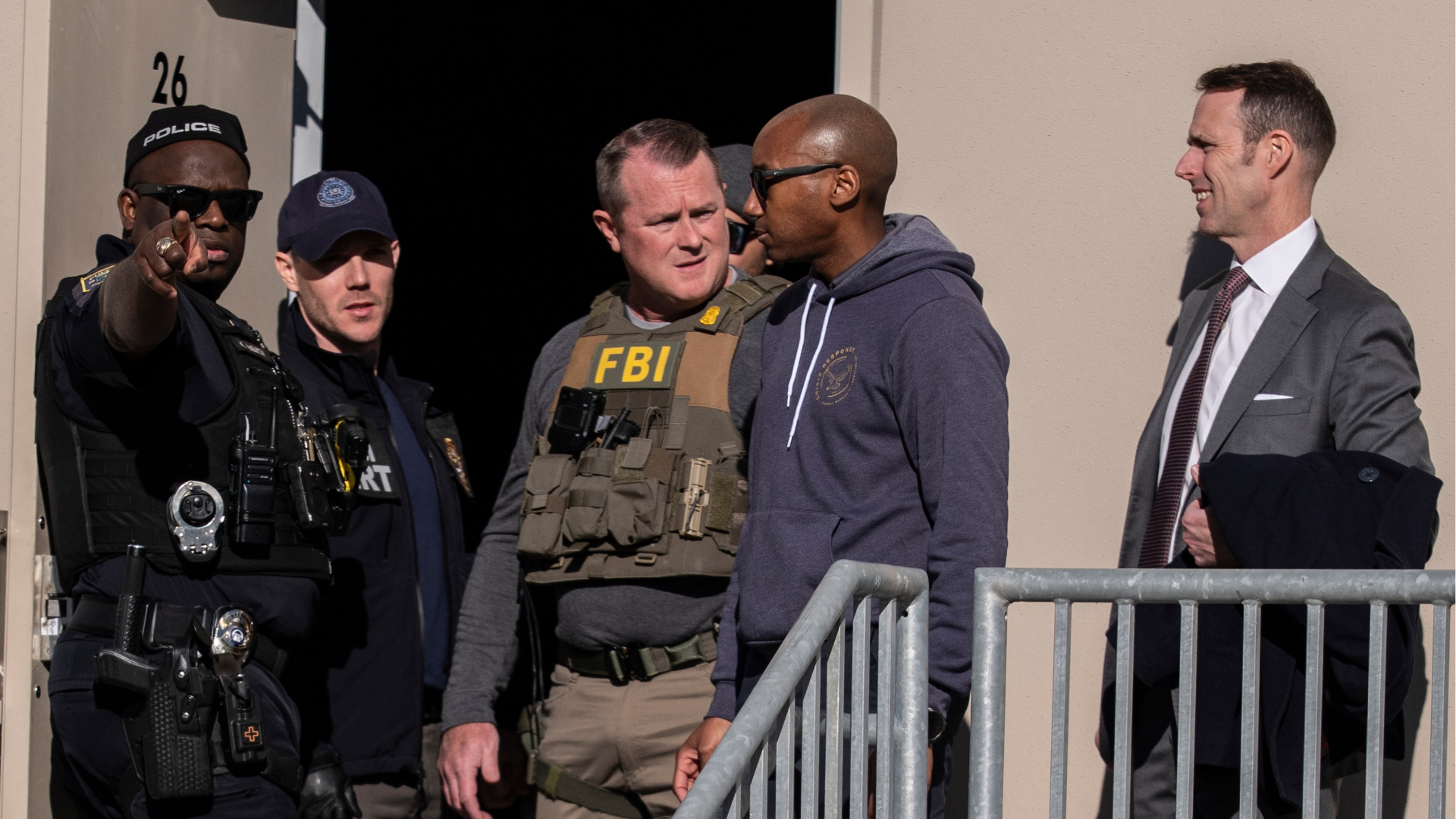
With his return to the presidency, Trump is doubling down on these assertions, urging federal authorities to validate his claims. Recently, the FBI executed a search warrant at the election headquarters in Fulton County, Georgia, encompassing much of Atlanta, to inspect ballots from the 2020 election. This action follows Trump’s remarks at the World Economic Forum in Davos, Switzerland, where he hinted that election-related charges were forthcoming.
“Trump is uniquely positioned to act on his fixations, wielding the full might of the U.S. government,” commented Rick Hasen, a UCLA law professor. His statement reflects a broader concern that Trump is leveraging federal resources to pursue personal vendettas.
Observers, including Hasen, see Trump’s directive to the FBI as part of a broader strategy to convert federal agencies into instruments of retribution. This approach has been increasingly evident throughout his administration.
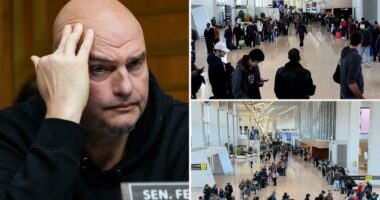
Adding to the controversy, Senator Jon Ossoff, a Democrat from Georgia, likened the FBI’s recent actions to another aggressive move by Trump—a Minnesota immigration crackdown that tragically resulted in the deaths of two U.S. citizen protesters. This was seen as a retaliatory strike against the state’s governor, who had previously challenged Trump as Kamala Harris’ vice-presidential candidate in the 2024 election.
Sen. Jon Ossoff, a Georgia Democrat, compared the search to the Minnesota immigration crackdown that has killed two U.S. citizen protesters, launched by Trump as his latest blow against the state’s governor, who ran against him as Vice President Kamala Harris’ running mate in 2024.
“From Minnesota to Georgia, on display to the whole world, is a President spiraling out of control, wielding federal law enforcement as an unaccountable instrument of personal power and revenge,” Ossoff said in a statement.
It also comes as election officials across the country are starting to rev up for the 2026 midterms, where Trump is struggling to help his party maintain its control of Congress. Noting that, in 2020, Trump contemplated using the military to seize voting machines after his loss, some worry he’s laying the groundwork for a similar maneuver in the fall.
“Georgia’s a blueprint,” said Kristin Nabers of the left-leaning group All Voting Is Local. “If they can get away with taking election materials here, what’s to stop them from taking election materials or machines from some other state after they lose?”
Georgia has been at the heart of Trump’s 2020 obsession. He infamously called Republican Secretary of State Brad Raffensperger on Jan. 2, 2021, asking that Raffensperger “find” 11,780 more votes for Trump so he could be declared the winner of the state. Raffensperger refused, noting that repeated reviews confirmed Democrat Joe Biden had narrowly won Georgia.
Those were part of a series of reviews in battleground states, often led by Republicans, that affirmed Biden’s win, including in Michigan, Wisconsin and Nevada. Trump also lost dozens of court cases challenging the election results and his own attorney general at the time said there was no evidence of widespread fraud.
His allies who repeated his lies have been successfully sued for defamation. That includes former New York Mayor Rudolph Giuliani, who settled with two Georgia election workers after a court ruled he owed them $148 million for defaming them after the 2020 election.
Voting machine companies also have brought defamation cases against some conservative-leaning news sites that aired unsubstantiated claims about their equipment being linked to fraud in 2020. Fox News settled one such case by agreeing to pay $787 million after the judge ruled it was “CRYSTAL clear” that none of the allegations were true.
Trump’s campaign to move Georgia into his column also sparked an ill-fated attempt to prosecute him and some of his allies by Fulton County District Attorney Fani Willis, a Democrat. The case collapsed after Willis was removed over conflict-of-interest concerns, and Trump has since sought damages from the office.
On his first day in office, Trump rewarded some of those who helped him try to overturn the 2020 election results by pardoning, commuting or vowing to dismiss the cases of about 1,500 people charged in the Jan. 6, 2021, attack on the U.S. Capitol. He later signed an executive order trying to set new rules for state election systems and voting procedures, although that has been repeatedly blocked by judges who have ruled that the Constitution gives states, and in some instances Congress, control of elections rather than the president.
As part of his campaign of retribution, Trump also has spoken about wanting to criminally charge lawmakers who sat on the House committee investigating the Jan. 6 attack, suggesting protective pardons of them from Biden are legally invalid. He’s targeted a former cybersecurity appointee who assured the public in 2020 that the election was secure.
During a year of presidential duties, from dealing with wars in Gaza and Ukraine to shepherding sweeping tax and spending legislation through Congress, Trump has reliably found time to turn the subject to 2020. He has falsely called the election rigged, said Democrats cheated and even installed a White House plaque claiming Biden took office after “the most corrupt election ever.”
David Becker, a former Department of Justice voting rights attorney and executive director of The Center for Election Innovation & Research, said he was skeptical the FBI search in Georgia would lead to any successful prosecutions. Trump has demanded charges against several enemies such as former FBI Director James Comey and New York’s Democratic Attorney General, Letitia James, that have stalled in court.
“So much this administration has done is to make claims in social media rather than go to court,” Becker said. “I suspect this is more about poisoning the well for 2026.”
Copyright © 2026 by The Associated Press. All Rights Reserved.