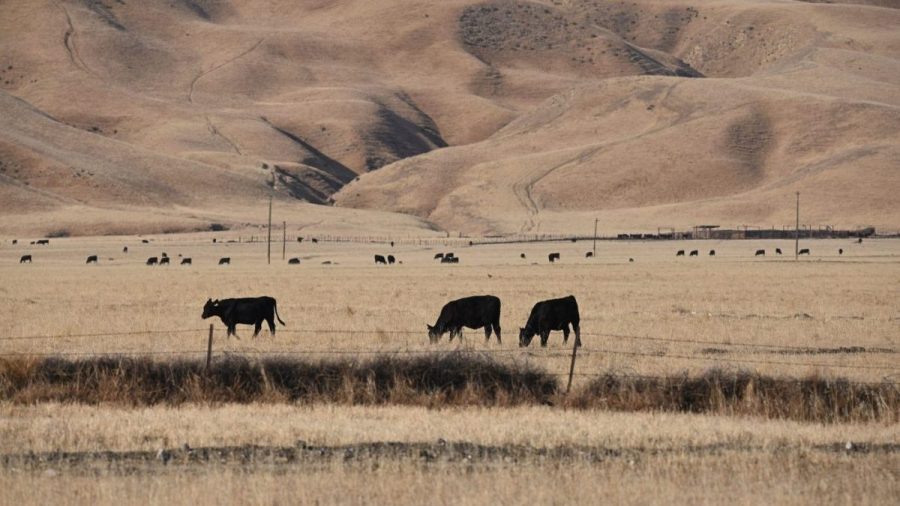


(The Hill) – The combined effects of climate change and air pollution have led to direct declines in precipitation in the U.S. Southwest, making drought inevitable, a new study has shown.
These circumstances, which began taking hold in about 1980, are likely here to stay as the planet warms, according to the study, published on Wednesday in Nature Geoscience.
Its authors attributed this decades-long trend toward less precipitation to La Niña-like conditions, weather patterns that lead to cooler surface temperatures in the tropical Pacific Ocean.
Even if El Niño-like conditions had prevailed instead, the Southwest would not have experienced a corresponding surge in rainfall, the researchers found.
“There’s a uniform warming trend because of historical climate change, as well as emissions from anthropogenic aerosols, that both create a certain circulation pattern over the North Pacific,” lead author Yan-Ning Kuo, a doctoral student at Cornell University, said in a statement.
“Those two factors prevent the precipitation for the Southwestern U.S. from increasing, even under El Niño-like trends,” Kuo added.
The researchers drew their conclusions by abandoning popular climate models that they said in recent years have not accurately reflected sea surface temperatures as observed in real-time.
Instead, they designed their own simulations in which they could insert data from satellites and statistical models, and thereby isolate the impact of each contributing factor.
The post-1980 period in the U.S. Southwest exhibited the fastest soil-drying among past and future periods of similar lengths a result that the authors attributed to human-induced warming and a decline in precipitation.
Even in a simulation of El Niño-like trends, the authors identified a tendency toward precipitation decline, counter to what they described as a “canonical El Niño teleconnection,” or the relationship among weather patterns spanning the Pacific.
That “unintuitive yet robust circulation change” is rooted not only in warming, but also in the radiative effects of manmade aerosol pollution, according to the study.
Co-author Flavio Lehner, an assistant professor in Earth and atmospheric sciences at Cornell, said in a statement that this change points to a bigger shift in the so-called teleconnection that spans the Pacific Ocean.
“These external influences really modulate that relationship, so it doesn’t behave exactly how we expect it to behave,” Lehner added.
While emission from vehicles and industry will likely decrease as countries in East Asia make air quality improvements, Lehner noted that warming temperatures could offset this positive momentum.
These gains, in other words, are “unlikely to substantially alleviate the currently projected future drought risk,” according to the study.
“The warming is going to continue as far as we can tell,” Lehner said.
“That will gradually outweigh those benefits, as a warmer atmosphere tends to be thirstier, gradually drying out the Southwest,” he added.