
Share this @internewscast.com
Chicago Mayor Brandon Johnson announced on Tuesday his intention to comply with a federal mandate aimed at enhancing safety on the city’s transit system, the CTA, to prevent the potential loss of federal funding.
Mayor Johnson emphasized his ongoing collaboration with the CTA to tackle safety concerns, asserting that securing the necessary investments in the transit system is a top priority.
ABC7 Chicago is now streaming 24/7. Click here to watch
“We need to evaluate the security framework surrounding public transportation,” Johnson remarked. “The Chicago Police Department has a role, the Department of Public Health has a role, and collectively, we all contribute to ensuring that CTA riders feel safe.”
On Tuesday morning, Mayor Johnson addressed a letter from the Federal Transit Administration, which urged both him and Governor JB Pritzker to enact safety enhancements on the CTA by the following week.
The extent of the FTA’s commitment to enforcing this directive remains uncertain.
“I don’t need a letter from the Trump administration to define my priorities, as we have already clearly outlined them,” Johnson stated. “We certainly don’t need an administration that politicizes issues that could be addressed through collective efforts. The impact of crime on our public transportation system negatively affects our entire city.”
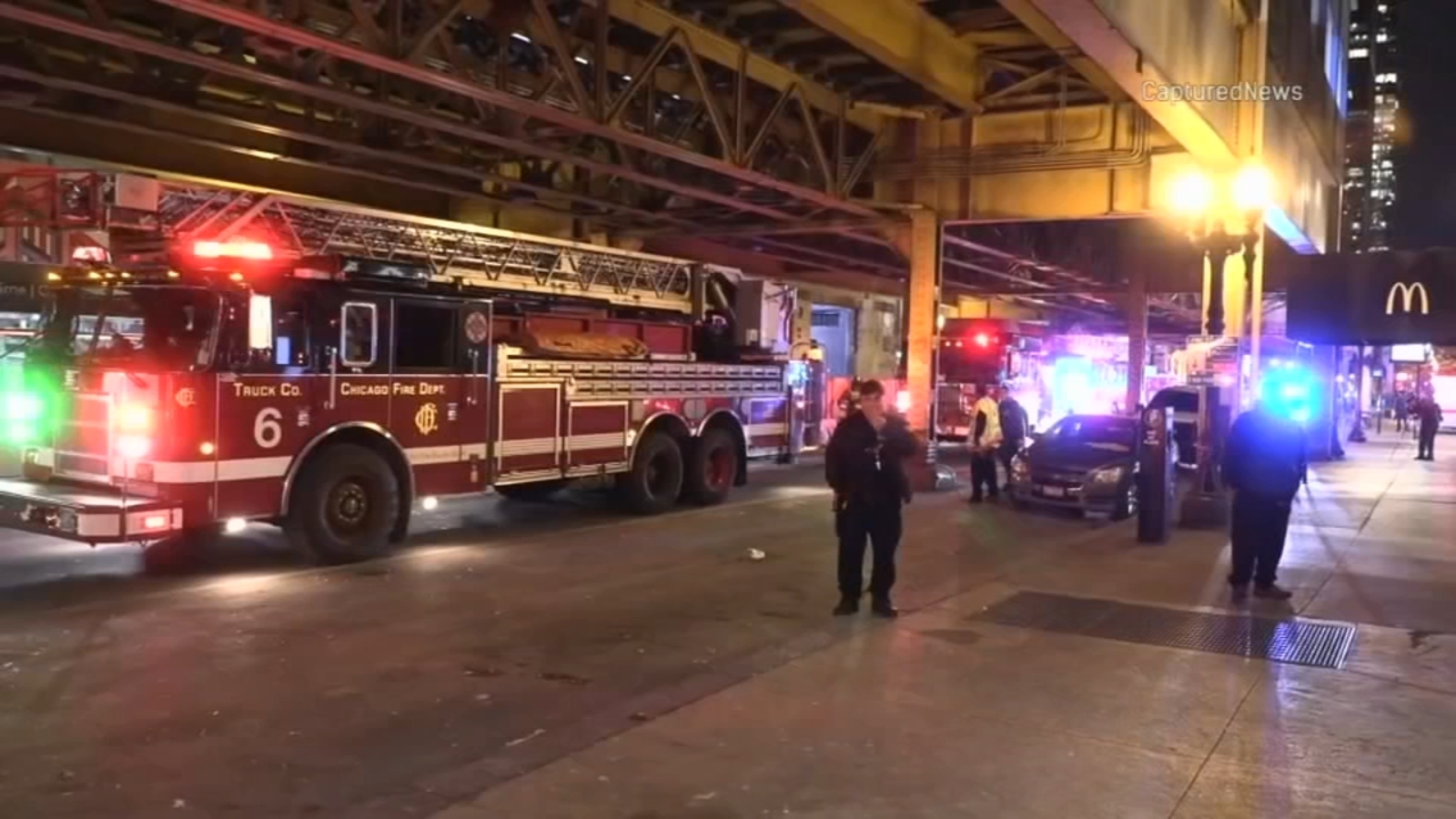
The FTA is pointing to the fiery attack on a woman on a Blue Line train last month as part of the reason for their demand. The woman is still recovering from severe burns.
This comes just over a year after four sleeping passengers were killed on the Blue Line in a mass shooting Labor Day morning.
The man charged in that incident had a lengthy criminal history, and the FTA blames local laws for the attack.
“We need our safety,” rider Olivia Perez said. “If we’re trying to go somewhere, we deserve to have safety and be safe in an environment that is supposed to be safe for us.”
Some riders said they feel more safety measures are needed on public transportation, while others said this may be an overstep by the federal government.
“Absolutely, they’re overstepping, yes,” rider Elizabeth Ortiz said. “Chicago police has been doing their job as best they can. But with budget cuts, that also restricts what we can do for what can be done.”
Pritzker also believes it’s an overreach.
“There’s no reason why the president the United States or the the Department of Transportation should be sending a threatening letter to the state when they know full well, if they read anything and read the newspapers, they would know that that action has been taken,” he said.
Other leaders say the letter from the FTA is necessary action.
“I believe this letter is necessary; they have to hold their feet to the fire, and I think it’s about time,” 45th Ward Alderman Jim Gardiner said. “They have about 300 officers and some K-9 dogs that you see on there. It’s obviously not enough.”
November crime numbers reviewed by the ABC7 Chicago data team show crime on the CTA is up, but so is CTA ridership.
Violent crimes on buses, platforms, stations and trains is up 6.6% from the yearly average over the three prior years.
Overall crime is also up 7.7%.
Over the past year and a half, there have been bullet holes in CTA bus windows, people standing with long guns on public transportation and weapons recovered.
Those were all submitted to lawmakers in Springfield as they looked into safety and security concerns on the CTA earlier this year.
“They jumped the gun because as you know for the last year we’ve been working around the clock to address the safety concerns,” state Rep. Marty Moylan said.
Moylan told the I-Team lawmakers made tackling crime on public transportation like the CTA a central piece of the transit funding bill passed earlier this year.
The law created a “Sworn law enforcement officer crime prevention program” within a year of it taking effect with the Cook County Sheriff’s Office, Chicago police and local municipalities involved.
“Right now there’s concern about when you ride a bus or a train about safety and not only for the people, the residents, but also for the people that work on these trains and systems,” Moylan said.
Director of the University of Illinois Chicago Urban Transportation Center, P. S. Sriraj, also says the letter from the FTA may actually move the needle in the right direction.
“They’ll have to show what they are willing to do to improve the optics of how their system is being perceived. And at some level, this might be a good thing,” Sriraj said.
Sriraj says he believes the solution is a combination of action from law enforcement, city and county stakeholders and messaging.
“That’s the only way transit can hope to get its ridership back. The more such incidents keep happening, the more it becomes a vicious cycle, then we don’t have a very compelling argument to make the decision makers that they should fund the system,” Sriraj said.
Sriraj says cutting off funding to the third-largest transit system in the country would be a difficult task for the federal government with the mobility of millions of people at stake.
The Cook County Sheriff’s Office told the I-Team they look forward to accepting the challenge of creating recommendations for this future security plan.
That will start June 1 of next year.
The mayor said he is considering things like a unified security system, altering CPD’s involvement on the CTA and more services for those experiencing homelessness.
Chicago police say they do have armed officers who are assigned to the public transportation section.
Meanwhile, the CTA said it will respond to the FTA within the requested timeline.
The FTA said the CTA needs to send their security plan by Monday, and implement it by Dec. 19.