Share this @internewscast.com

In the unveiling of his preliminary budget, Mayor Mamdani boldly highlighted the stark choices facing New York City amidst a looming $5.5 billion deficit. He posited that the options are either to increase property taxes or to urge Governor Hochul to impose higher taxes on the ultra-wealthy. The mayor’s stance is that targeting the affluent for additional revenue is not just practical but equitable. This strategy, however, should not solely serve to plug budgetary gaps. Instead, it should be a stepping stone to address systemic issues, beginning with the comprehensive funding of universal child care.
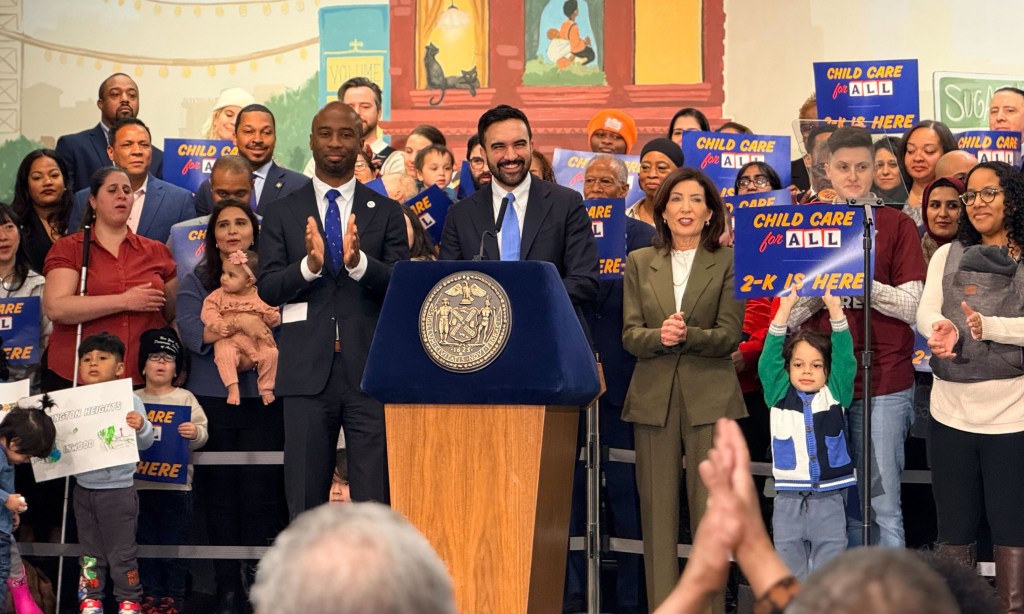
Universal child care emerges as a pivotal promise within this year’s state budget. This initiative, long advocated by parents and caregivers, aims to guarantee high-quality care for every child from infancy to age 13. For the first time, both the city’s mayor and the state’s governor have aligned in support of this vision. For this promise to materialize, sustained and reliable funding is essential, necessitating contributions from those who have reaped the most from New York’s economic success.
Currently, families cobble together child care solutions from available resources, relying on relatives, neighbors, and any accessible programs. Many are left on waiting lists, burdened by exorbitant costs due to insufficient subsidy reach. Parents who earn marginally above the eligibility threshold find themselves without support. Moreover, options for school-age children vanish once the school day ends or during breaks, leading many parents, predominantly mothers, to reduce work hours, forgo career opportunities, or exit the workforce entirely.
Establishing universal child care could revolutionize this scenario, but it requires a foundation of consistent funding, not ephemeral grants or fleeting pilot projects. Families cannot organize their futures around programs that might disappear from one year to the next.
The very essence of a robust child care system lies in the workforce. Ensuring fair wages for caregivers and educators is crucial. These professionals, who open their doors at dawn, witness children’s first steps, aid in their learning journeys, and keep them safe after school, are often compensated at near-poverty levels. Genuine universality in child care cannot exist if the workforce remains undervalued and unstable.
The onus is on the governor and the Legislature to establish a stable funding mechanism by taxing the wealthiest citizens, rather than continuing with temporary solutions that leave families and providers in a perpetual state of uncertainty. New York’s affluent residents, who have profited from booming corporate earnings and soaring real estate markets, can afford to contribute more. They reside in a city that thrives because of the essential services provided by others, from public transport to healthcare, education, and, importantly, child care.
A modest tax increase on the richest New Yorkers could seed a lasting statewide fund to expand and stabilize the child care system for good. Our tax code should reflect the basic idea that caring for children and supporting those who do that work are priorities.
We know schools, subways, and roads are non‑negotiable public infrastructure. Child care is also a public good. When parents can work full shifts without constantly juggling who’s watching their child, they earn more and businesses benefit. When caregivers earn fair pay, turnover drops and children get the stability they need.
Mamdani’s call for a fairer tax structure is about more than a balanced budget. It’s about deciding who this city and state are built for. Families have been doing everything they can to make things work. Now, the state must step up.
Taxing the ultra‑wealthy is the only way to keep the promise of universal child care and move toward the more equitable New York we say we want to be.
Shaakir-Ansari and Marcou-O’Malley are the co-executive directors of the Alliance for Quality Education.