Share this @internewscast.com
World leaders reacted promptly on Saturday following the United States and Israel’s military strikes against Iran, highlighting a significant divide among global governments. Some voiced support for the actions, while others cautioned that the attacks could escalate into a broader regional conflict.
Canada’s Prime Minister Mark Carney and Foreign Minister Anita Anand issued a joint statement expressing strong support for the U.S. actions. They stated, “Canada stands with the United States in its efforts to prevent Iran from acquiring a nuclear weapon and to curb its regime’s threats to international peace and security.” The statement labeled Iran as “a primary source of instability and terror in the Middle East” and emphasized that Iran must be prevented from developing nuclear weapons.
Similarly, Australian Prime Minister Anthony Albanese backed the strikes. He took to social media platform X to express solidarity with “the courageous people of Iran in their fight against oppression.” Albanese confirmed Australia’s support for the U.S. in preventing Iran from obtaining nuclear capabilities. Additionally, he announced the activation of emergency consular measures and advised Australians to leave Iran if it is safe to do so.
The United Kingdom echoed the sentiment, stating that Iran “must never be allowed to develop a nuclear weapon.” Prime Minister Keir Starmer’s office revealed that he was in discussions with leaders of France and Germany, engaging in a series of calls with allied nations.
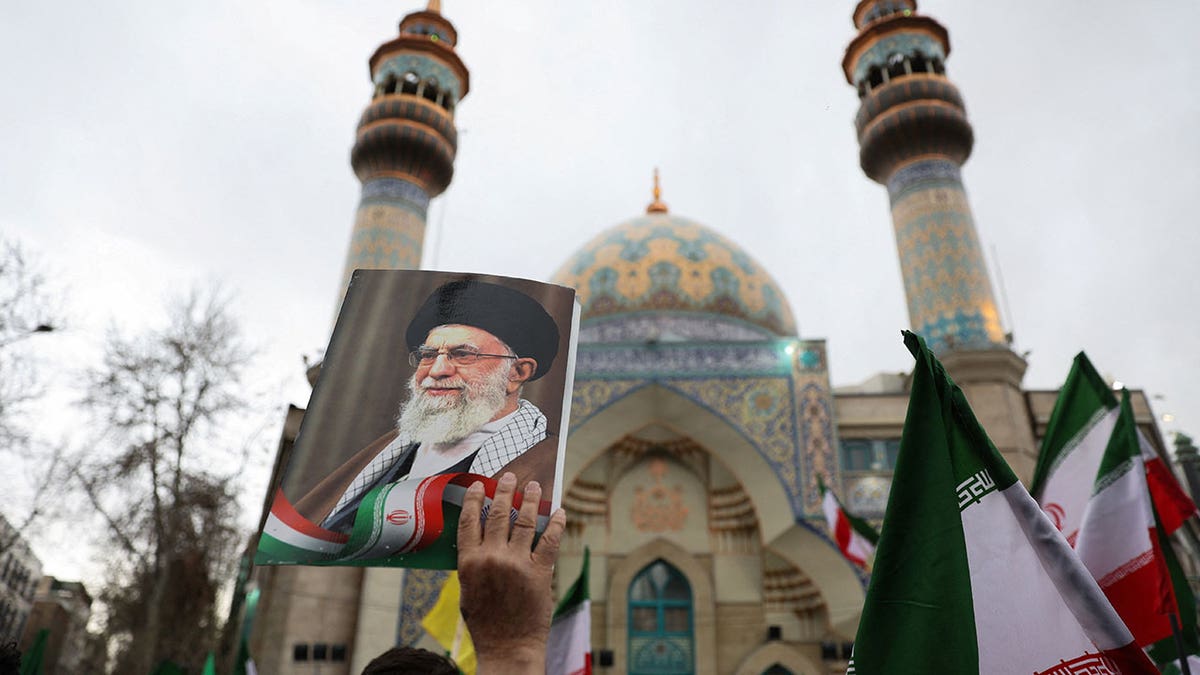
In Tehran, Iranian demonstrators opposed to the U.S.-Israeli strikes held images of Iran’s Supreme Leader Ayatollah Ali Khamenei, as part of their protest against the military actions on February 28, 2026. (Majid Asgaripour/WANA (West Asia News Agency))
French President Emmanuel Macron expressed concern about the potential repercussions of the conflict. He warned, “The onset of war involving the United States, Israel, and Iran poses severe threats to global peace and security.” Macron called for the de-escalation of tensions, declaring, “The current escalation is perilous for all and must cease,” while urging an urgent session of the United Nations Security Council to address the situation.
European Union foreign policy chief Kaja Kallas described developments as “perilous,” saying Iran’s “ballistic missile and nuclear programmes… pose a serious threat to global security,” while emphasizing that “Protection of civilians and international humanitarian law is a priority.”
Spain openly rejected the strikes. Socialist Prime Minister Pedro Sánchez said, “We reject the unilateral military action by the United States and Israel, which represents an escalation and contributes to a more uncertain and hostile international order.”
Meanwhile, Gulf states responded to reported Iranian missile activity.
Saudi Arabia’s Foreign Ministry said, “The Kingdom of Saudi Arabia condemns and denounces in strongest terms the blatant Iranian aggression and the flagrant violation of the sovereignty of the UAE, Bahrain, Qatar, Kuwait, and Jordan.” It affirmed “its full solidarity with and unwavering support for the brotherly countries” and warned of “grave consequences resulting from the continued violation of states’ sovereignty and the principles of international law.”
The United Arab Emirates’ Ministry of Defense said the country “was subjected to a blatant attack involving Iranian ballistic missiles,” adding that air defense systems “successfully intercepted a number of missiles.” Authorities said falling debris in a residential area caused “one civilian death of an asian nationality” and material damage.
The ministry called the attack “a dangerous escalation and a cowardly act that threatens the safety of civilians and undermines stability,” and stated the UAE “reserves its full right to respond.”
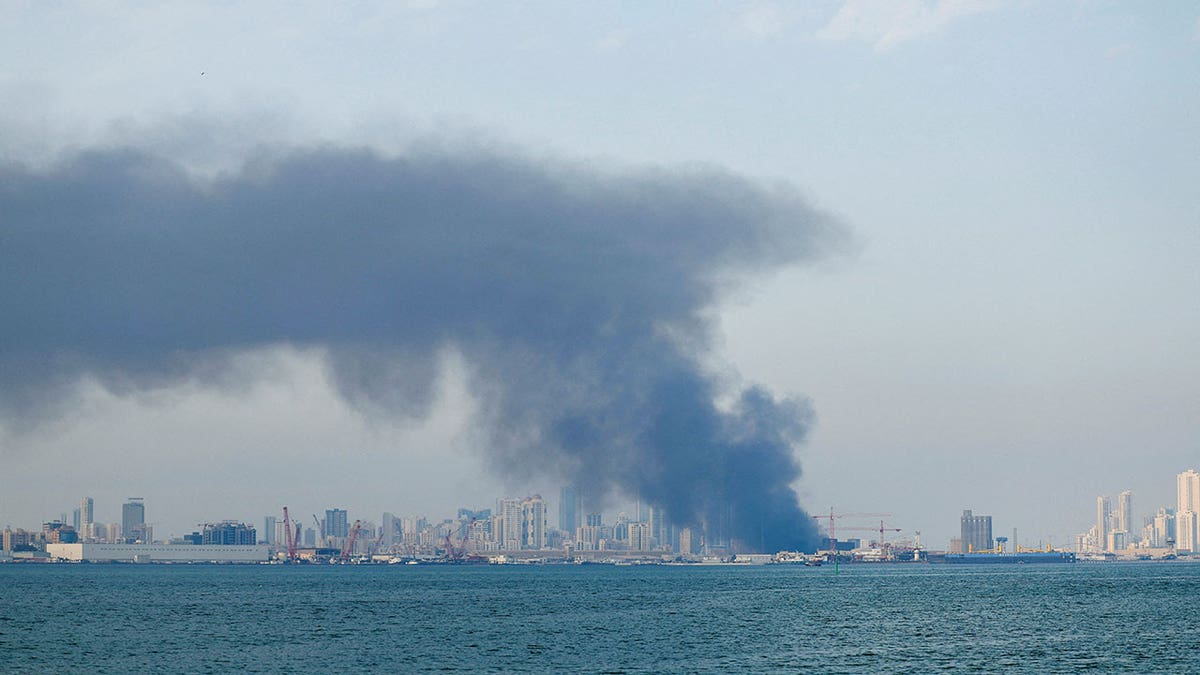
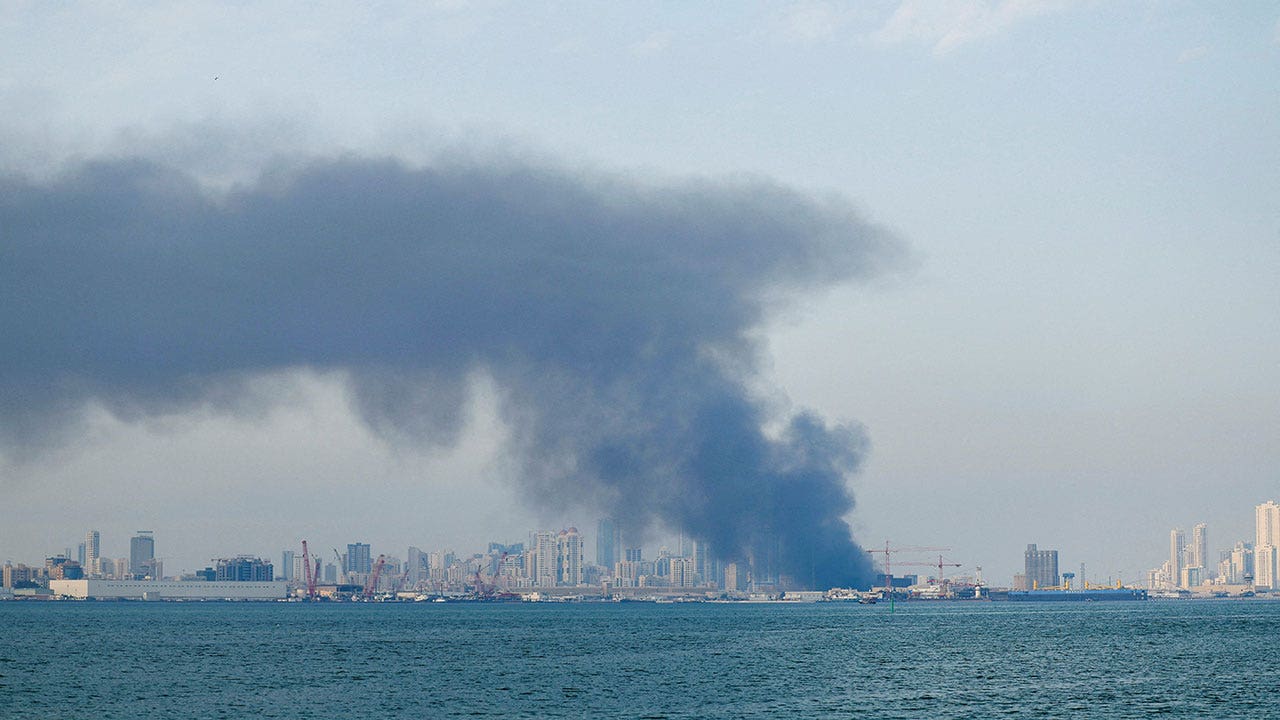
Smoke rises after reported Iranian missile attacks, following strikes by the United States and Israel against Iran, in Manama, Bahrain, Feb. 28, 2026. (Reuters)
Pakistan’s Foreign Ministry said Deputy Prime Minister and Foreign Minister Mohammad Ishaq Dar “strongly condemned the unwarranted attacks against Iran” and called for “urgent resumption of diplomacy.”
Turkey’s Foreign Minister Hakan Fidan held calls with counterparts across the region, a Turkish Foreign Ministry source told Reuters. The discussions focused on “possible steps to be taken to help bring an end to the attacks.”
Ukraine’s President Volodymyr Zelenskyy directly linked the developments to Russia’s war against his country.
“Although Ukrainians never threatened Iran, the Iranian regime chose to become Putin’s accomplice and supplied him with ‘shahed’ drones,” Zelenskyy wrote, adding that Russia has used “more than 57,000 shahed-type attack drones against the Ukrainian people.”
“It is important that the United States is acting decisively,” he said. “Whenever there is American resolve, global criminals weaken.”
Russia sharply criticized the operation. Dmitry Medvedev, deputy chairman of Russia’s Security Council, said, “All negotiations with Iran are a cover operation.”
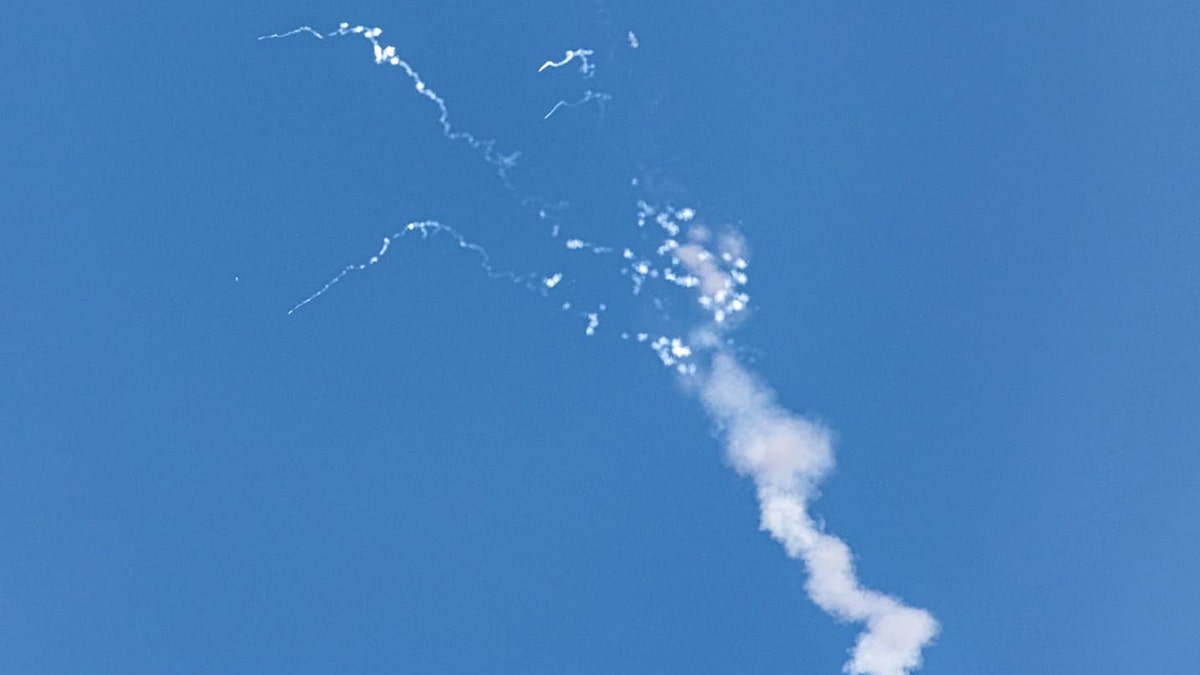
An interception is visible in the sky over Haifa during the latest barrage. (Anthony Hershko/TPS-IL)
Lebanese Prime Minister Nawaf Salam warned, “We will not accept anyone dragging the country into adventures that threaten its security and unity.”
Norwegian Foreign Minister Espen Barth Eide said the strike “is not in line with international law.”
Related Article