
Share this @internewscast.com
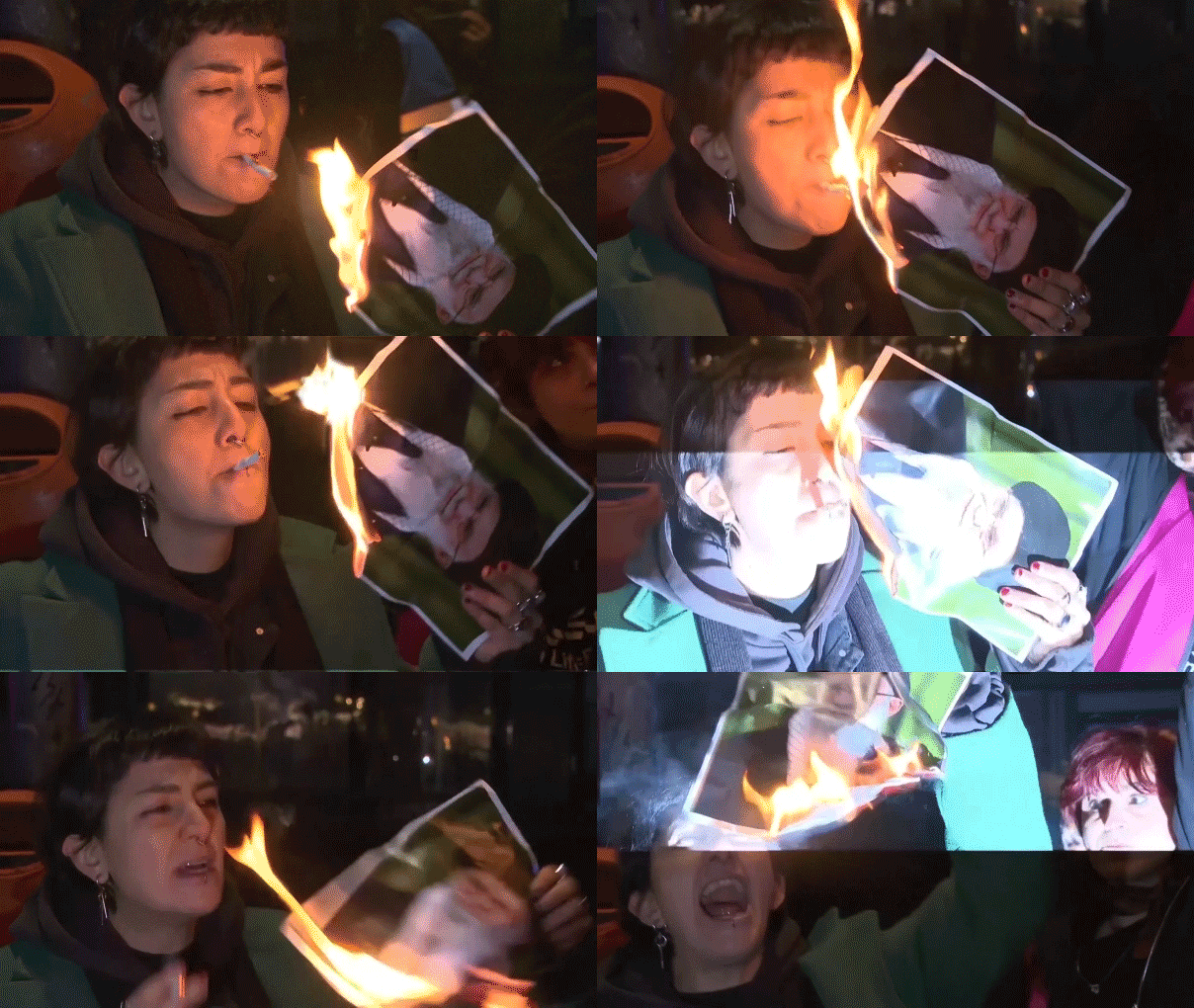
An evocative video featuring an Iranian refugee using a burning photo of Iran’s supreme leader to light a cigarette has captured global attention amidst ongoing protests within the Islamic Republic. As President Donald Trump considers military options against the regime, this video has become a symbol of resistance.
According to the Associated Press, the 34-second clip shows a woman, presumably residing in Canada, setting a picture of Ayatollah Ali Khamenei on fire—an act punishable by death in Iran. She then uses the flames to light her cigarette before allowing the image to drop to the ground.
While the accompanying photos depict protesters imitating this act at international rallies, they do not feature the woman from the original viral clip.
This footage has rapidly gained traction on social media platforms as the Iranian government enforces a brutal crackdown on dissent, which activists claim has resulted in thousands of deaths.
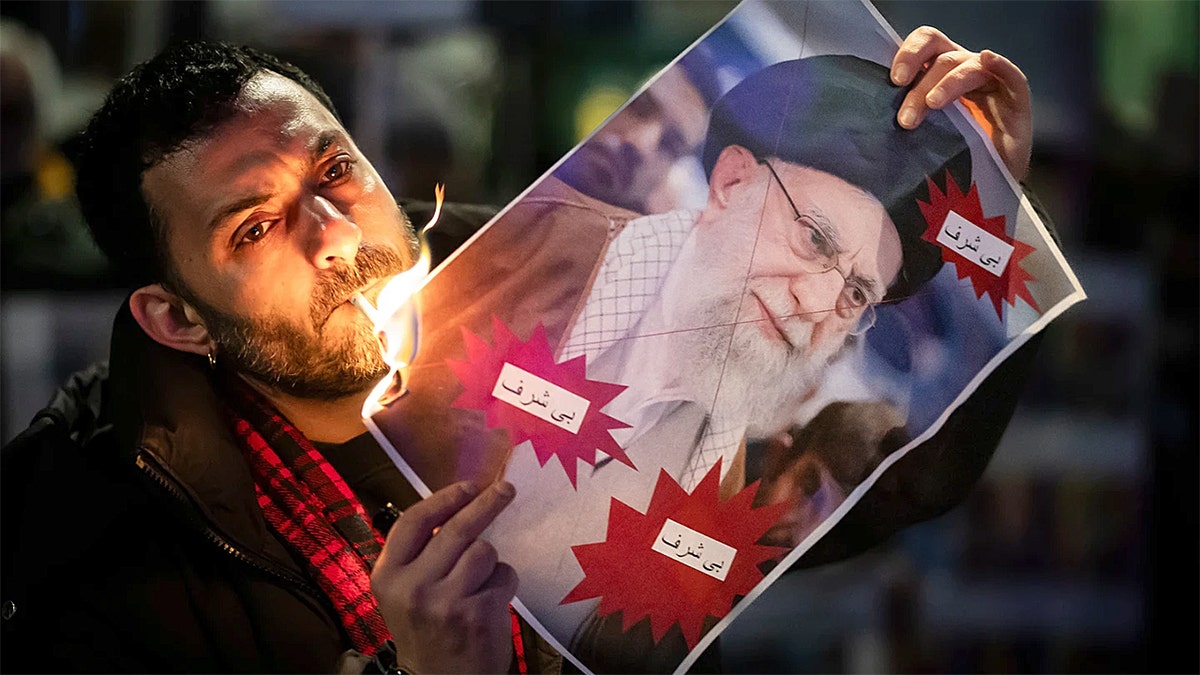
In Zurich, Switzerland, on January 13, 2026, a protester was photographed setting an image of Ayatollah Ali Khamenei alight with a cigarette during a demonstration supporting the widespread anti-government protests in Iran. (Photo by Michael Buholzer / Keystone via AP)
Shared millions of times across networks like X, Instagram, and Reddit, the video is viewed by many as a bold challenge to Iran’s clerical authority.
Others have questioned whether the moment was spontaneous or staged, highlighting the growing skepticism that surrounds viral images in an age of artificial intelligence and information warfare.
What is undisputed is the symbolism of the act. In Iran, burning an image of Supreme Leader Ayatollah Ali Khamenei can be punishable by death.
Smoking in public is considered immodest, and women are legally required to wear hijabs. In the brief clip, the woman defies all three norms at once, appearing without a headscarf as her hair hangs close to the flame.
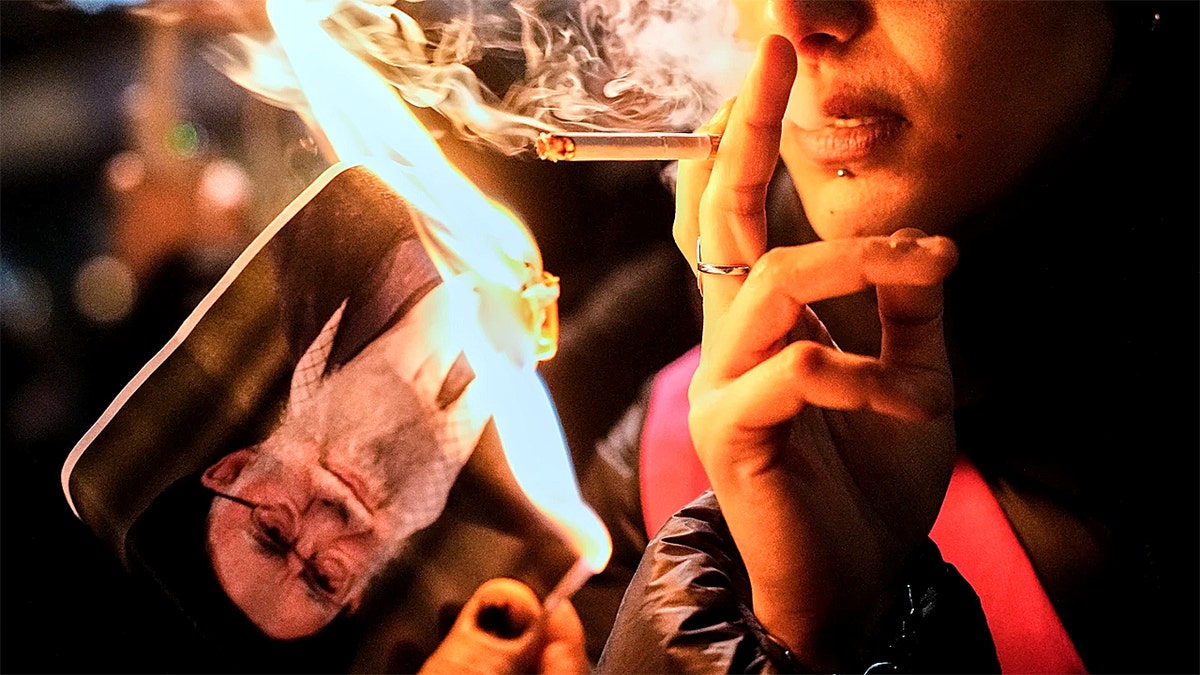
A protester smokes a cigarette after lighting it off a burning poster of Iran’s Supreme Leader Ayatollah Ali Khamenei during a demonstration in Berlin, Germany, in support of the nationwide mass protests in Iran against the government, on Jan. 14, 2026. The image does not show the woman featured in the original viral video, which was filmed in Canada. (Ebrahim Noroozi/ AP Photo)
The gesture has leapt from the digital world into the real one. Photos and videos have surfaced from protests in Europe, Israel and the U.S. showing demonstrators lighting cigarettes using images of Khamenei, mimicking what has become known online as the “cigarette girl” moment.
Iranian state media has announced wave after wave of arrests, targeting those it labels “terrorists” and seizing Starlink satellite internet equipment – often the only way videos can escape the country during government-imposed internet blackouts.
Activists say the regime has intensified repression in recent weeks as unrest spreads amid economic collapse and political instability.
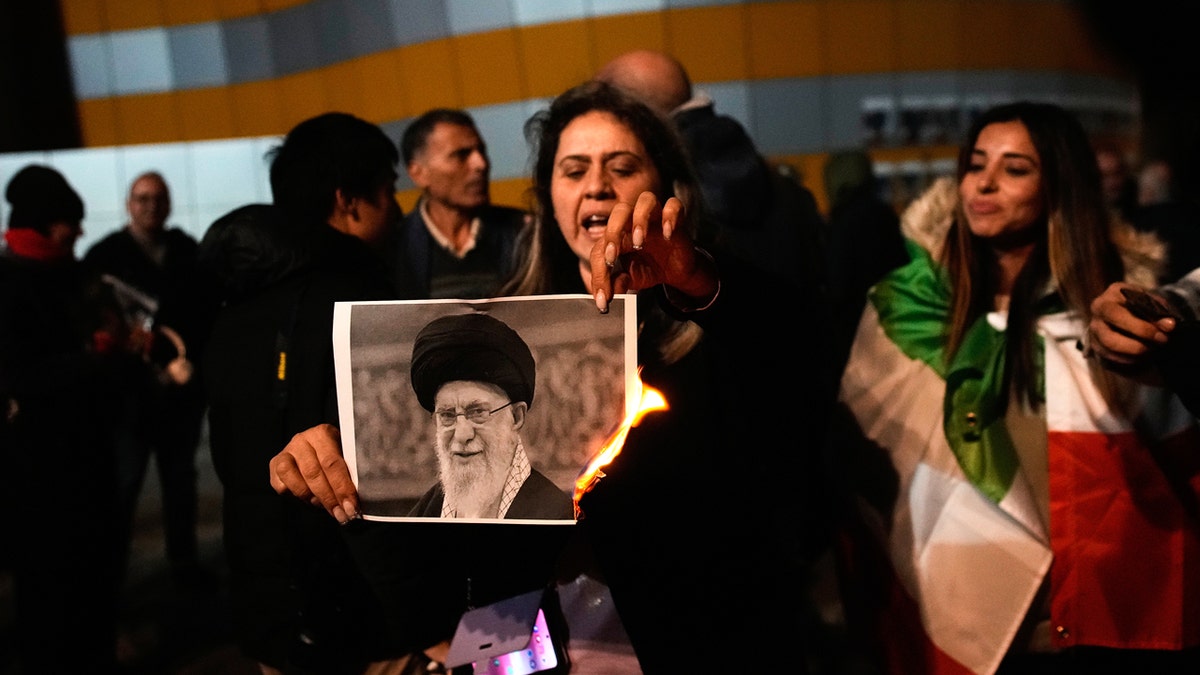
Demonstrators burn a poster depicting Iran’s Supreme Leader Ayatollah Ali Khamenei during a rally in support of anti-government protests in Iran, in Holon, Israel, on Jan. 14, 2026. (Ohad Zwigenberg/AP Photo)
The AP reported the woman has described herself in interviews with other outlets as an Iranian refugee living in Toronto, and said she fled Iran after repeated arrests and abuse by security forces.
She filmed the video on Jan. 7, according to The AP – one day before Iran imposed a near-total internet blackout. She did so to show solidarity with “friends” inside the country, she said. She has asked that her real name not be published, citing fears for her safety and for family members who remain in Iran.
The video’s explosive reach underscores how social media has become a central battleground in modern conflicts, with images shaping global perception faster than governments can control them.
As Trump weighs next steps toward Tehran, the clip has become more than a viral moment – it has become a symbol of resistance, scrutiny and the high stakes of dissent under authoritarian rule.