
Share this @internewscast.com

Intense rainfall is becoming more common across various regions of the U.S., including states like Texas and North Carolina. Yet, experts note that the locations and potential for devastating floods are often a matter of chance.
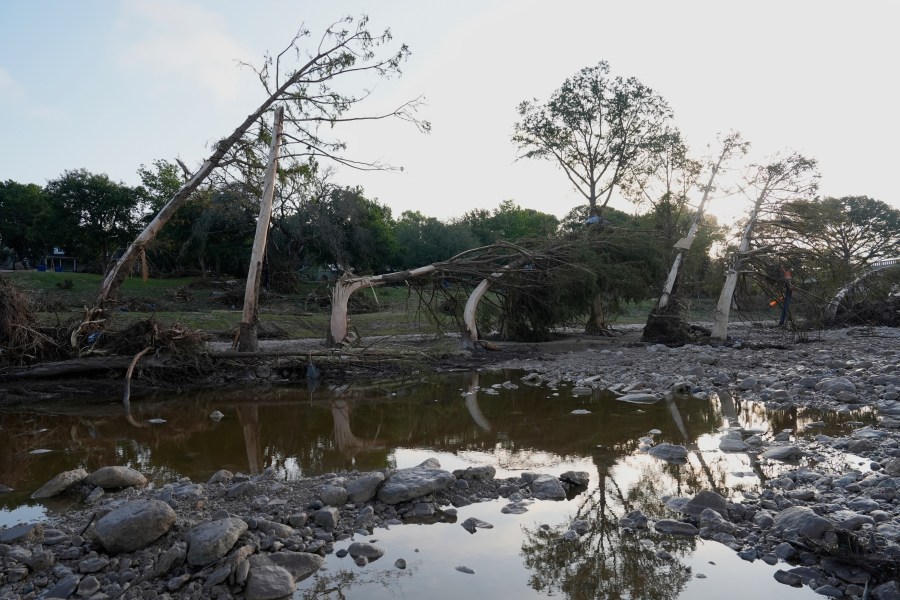
Recently, in Texas Hill Country, over 100 lives were lost when 12 inches (30 centimeters) of rain fell within a few hours. This intense weather event resulted from the damp, warm air following Tropical Storm Barry and Hurricane Flossie, creating ideal conditions for persistent thunderstorms in the same area, explained Texas Climatologist John Nielsen-Gammon.
The previous year, Hurricane Helene unleashed more than 30 inches (76 centimeters) of rain on western North Carolina, resulting in catastrophic floods that demolished roads and homes, also claiming over 100 lives in the state. This week, aftereffects of Tropical Storm Chantal caused widespread flooding and required numerous water rescues elsewhere in North Carolina. Similarly, in Kentucky, this spring’s record rainfall led to severe and fatal flooding.
Although it can be difficult to attribute a single weather event to climate change — and hilly or mountainous terrain worsen flooding — experts say a warming atmosphere and oceans due to the burning of fossil fuels make catastrophic storms more likely.
That’s because the atmosphere can hold 7% more water for every degree Celsius (1.8 degrees Fahrenheit), creating a giant sponge of sorts that sucks up moisture from bodies of water and vegetation. The moisture later falls back to earth in increasingly intense, unpredictable and destructive downpours.
“It’s just loading the dice toward heavy rainfall when the situation is right,” said Kenneth Kunkel, a climate scientist at North Carolina State University.
Intensifying rain storms
Going back through U.S. weather station records dating to 1955, Kunkel found that rain over the past 20 years has become more intense in the eastern two-thirds of the country, including the southern Great Plains, where Texas is located. Intensities have remained the same or declined in the West and southwest.
At the 700 stations that began collecting data in the late 19th and early 20th centuries, the highest proportion of two-day rainfall records have been set in just the past 10 years, Kunkel said, though that doesn’t fully reflect most Western stations, which were established later.
Nielsen-Gammon said the overall intensity of extreme rainfall in Texas has increased by 15% over the past 40-50 years.
Still, it’s almost impossible to predict where the most catastrophic rain will fall in any given year, Kunkel said.
“This month was the Texas Hill Country’s turn to get hit. Last fall … in western North Carolina, it was our turn,” Kunkel said, adding that just because an area was spared over the past 20 or 30 years, it “doesn’t mean that they aren’t vulnerable. … They got lucky.”
A ‘perfect storm’ in Texas
The worst flooding and greatest loss of life in Texas occurred in Kerr County, in an area known as “flash flood alley” because of its steep terrain that funnels water to the Guadalupe River, a popular recreational area.
Though the county did not get the most rain from the storms, the “distribution of rainfall was one of the worst possible patterns” because the most intense downpours were over the headwaters of the south fork of the Guadalupe River, causing water to rush into areas where hundreds of people, including children, were camping, said Nielsen-Gammon.
If the epicenter had been 10 miles (16 kilometers) north or south, the rain would have been divided among different river basins, he said. If it had been farther downstream, larger floodplains would have absorbed and slowed much of the water.
Years of drought also likely exacerbated the flooding.
Kerr County, for example, had been in extreme or exceptional drought for more than three years, aside from one four-week period last fall. That likely left the soil compacted, which caused water to run off instead of soaking into the ground, said Brad Rippey, a U.S. Department of Agriculture meteorologist.
Then, air from the warmer-than-normal Gulf of Mexico — a reflection of global warming — blew into the state with a higher water content than it would have had decades ago.
It all added up to “just a perfect storm of events” that caused a catastrophe, said Rippey. “There are things that had to come together to make this happen.”
____
The Associated Press’ climate and environmental coverage receives financial support from multiple private foundations. AP is solely responsible for all content. Find AP’s standards for working with philanthropies, a list of supporters and funded coverage areas at AP.org.