
Share this @internewscast.com
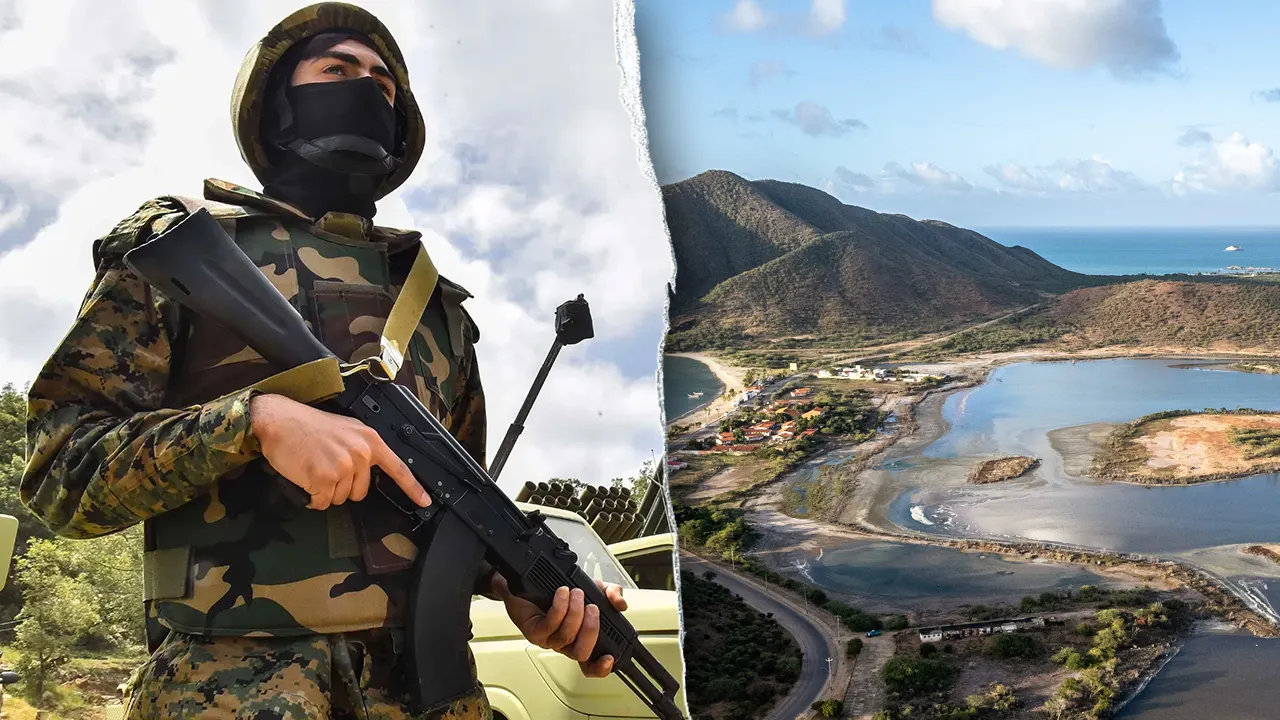
From afar, Margarita Island appears to be the quintessential Caribbean paradise, with its palm-fringed beaches, bustling duty-free shops, and inviting resort towns. Situated just off Venezuela’s northeastern coast, it seems to promise a tropical getaway. However, according to U.S. officials, this picturesque location has been transformed into Hezbollah’s most significant base in the Western Hemisphere, bolstered by Iran’s expanding influence and the protective embrace of the Maduro regime.
The implications of this transformation pose a considerable security challenge for the region, warn U.S. authorities. In a recent press briefing at the State Department, Secretary of State Marco Rubio highlighted the gravity of the situation. “The most significant threat to the United States from the Western Hemisphere stems from transnational terrorist criminal organizations primarily engaged in narcotrafficking,” he emphasized.
Melissa Ford Maldonado, director of the Western Hemisphere Initiative at the America First Policy Institute, elaborated on the strategic importance of Margarita Island in an interview with Fox News Digital. “The island’s location and security dynamics are of particular interest to the U.S.,” she explained. “Its proximity to Trinidad and Tobago and Grenada, coupled with its presence in an oil-rich Caribbean region along vital maritime routes, has long led to its reputation as a significant hub for drug trafficking. Its separation from the mainland and sparse law enforcement only add to its appeal.”
This isolation, she noted, has rendered the island a magnet for “irregular armed groups, foreign intelligence operatives, and criminal networks,” using it as a launch point for vessels transporting illicit goods from Venezuela.
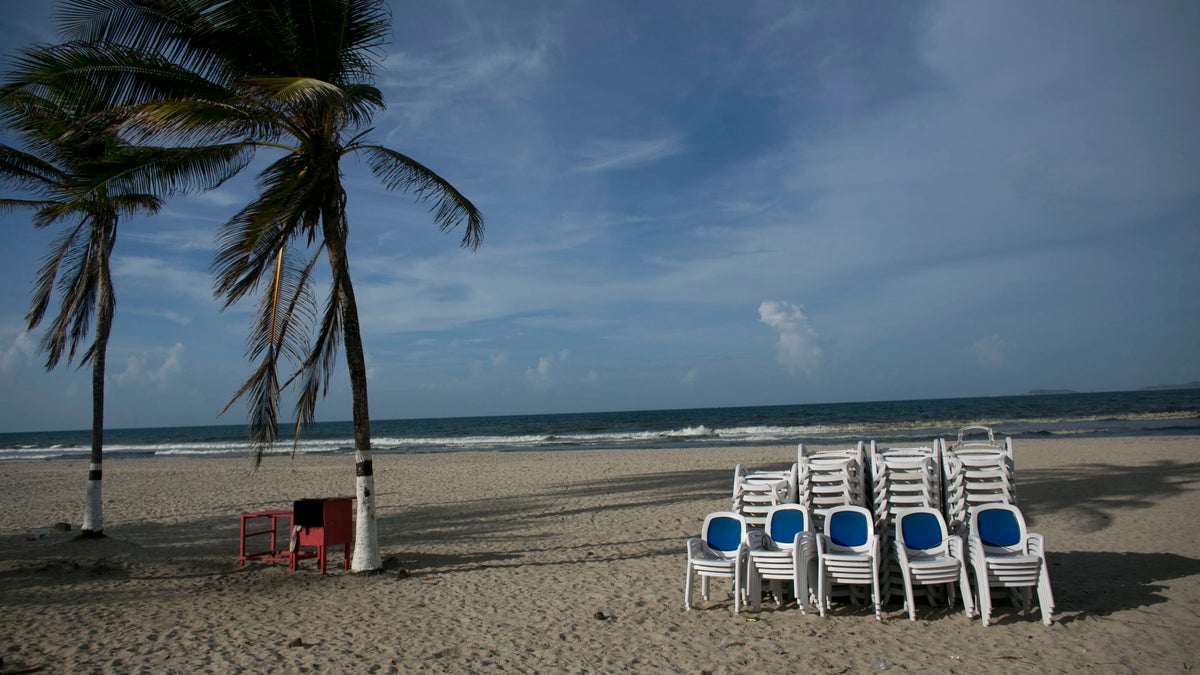
In a photograph dated September 13, 2016, empty beach chairs are stacked on the deserted Playa El Agua beach on Margarita Island, underscoring the island’s dwindling tourist appeal as flights into the region have halved. (Photo by Ariana Cubillos/AP Photo, Copyright 2016 The Associated Press. All rights reserved.)
Marshall Billingslea, who formerly served as the assistant secretary for Terrorist Financing and Financial Crimes in the U.S. Treasury Department, confirmed Margarita Island’s role as a crucial stronghold for Hezbollah in the Western Hemisphere.
“From what I have seen and what I have been told, there is a wide range of activities that Hezbollah and to some extent Hamas are engaged in,” Billingslea told Fox News Digital. “Margarita Island is really the center of gravity for their activities.”
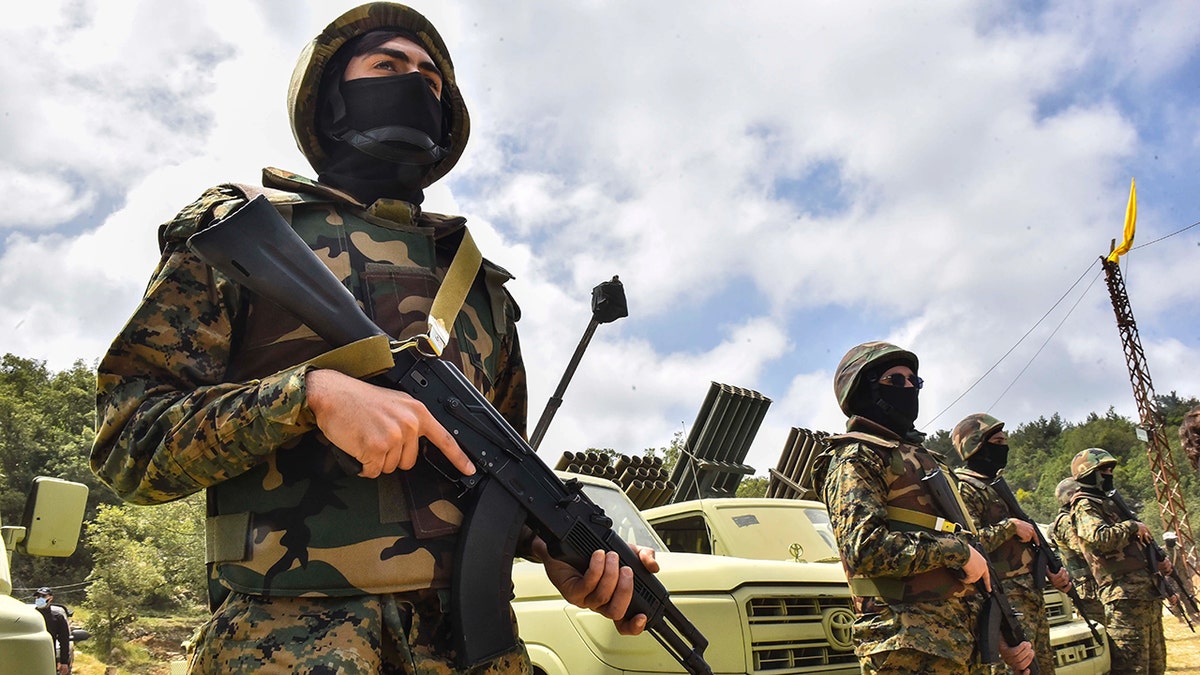
Hezbollah terrorists are taking part in cross-border raids, part of a large-scale military exercise, in Aaramta, bordering Israel, on May 21, 2023. (Fadel Itani/NurPhoto via Getty Images)
In written testimony submitted to the Senate Caucus on International Narcotics Control for an Oct. 21 hearing, Billingslea traced the island’s transformation back more than two decades. Under Hugo Chávez, he wrote, Venezuela “opened its doors to Hezbollah, allowing the group to establish a major footprint, including a paramilitary training site, on Margarita Island.”
“When Nicolás Maduro seized power,” Billingslea added, “the breadth and depth of Hezbollah’s presence in Venezuela dramatically expanded, as did their ties to the narco-terrorist regime and the Cartel de los Soles.”
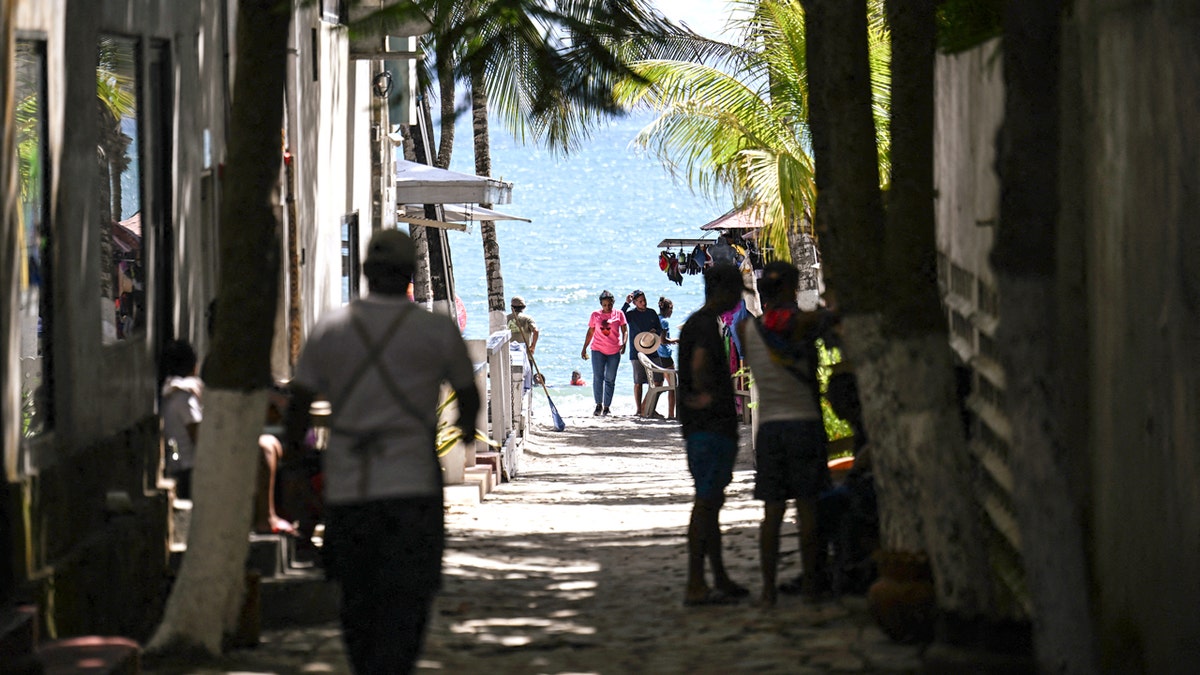
People walk on main island at El Yaque Beach in Margarita Island, Nueva Esparta State, Venezuela (Juan Barreto/AFP via Getty Images)
“The relationship is very close with the Cartel de los Soles, and it has been so for many, many years,” Billingslea said, referring to the network of senior Venezuelan officials accused by the United States of drug trafficking.
Billingslea said Hezbollah has embedded itself into Margarita Island’s economy, exploiting the island’s duty-free status and cross-border access to Colombia to generate revenue through smuggling and drug importation. He said the group operates a wide range of companies on the island and also maintains several training camps there.
His testimony also detailed how Venezuela’s state apparatus helped embed Hezbollah inside the country. He wrote that former senior official Tareck El Aissami, while overseeing Venezuela’s passport and naturalization agency, “was instrumental in furnishing passports and citizenship documents to Hezbollah operatives as well as a large number of people from Lebanon, Syria, and Iran.” Between 2010 and 2019, Venezuelan authorities issued more than 10,400 passports to individuals from those countries, according to the testimony.
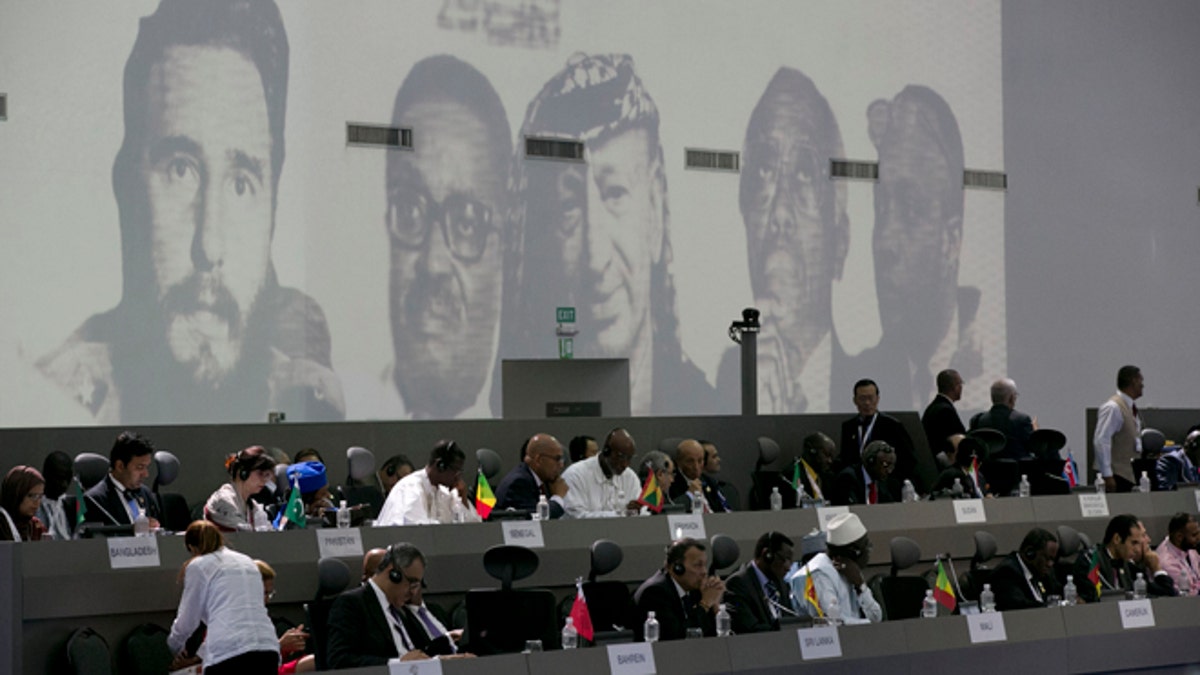
Attendees take part in the 17th Non-Aligned Movement Summit in Porlamar, Venezuela’s Margarita Island, Saturday, Sept. 17, 2016. President Nicolas Maduro had touted the Non-Aligned Movement’s 17th summit as an opportunity to increase international solidarity for his government as the oil-dependent economy reels from widespread food shortages and triple digit inflation. (AP Photo/Ariana Cubillos) (Ariana Cubillos/AP Photo)
A May 27, 2020, Justice Department announcement alleged that Diosdado Cabello directed Venezuelan lawmaker Adel El Zabayar to travel to the Middle East to obtain weapons and recruit members of Hezbollah and Hamas for training at clandestine camps inside Venezuela. The filing also describes a subsequent weapons delivery at a hangar controlled by Maduro at the country’s main international airport.
Recent developments in the Middle East have only increased Margarita Island’s importance, Billingslea said. Israel’s campaign against Hezbollah in Lebanon has damaged the group’s military leadership and financial infrastructure, forcing it to rely more heavily on overseas networks.
“Israeli successes against Hezbollah in Lebanon in particular, including their strikes on the financial infrastructure Al-Qard al-Hassan that operates in Lebanon, are going to have two effects,” he said. “The first is that it is making the fundraising and the revenue generation that comes out of Latin America even more important to the terrorist group. Secondly, we have seen indications that Hezbollah actually has been relocating fighters from Lebanon, several hundred from Lebanon to Venezuela in particular.”
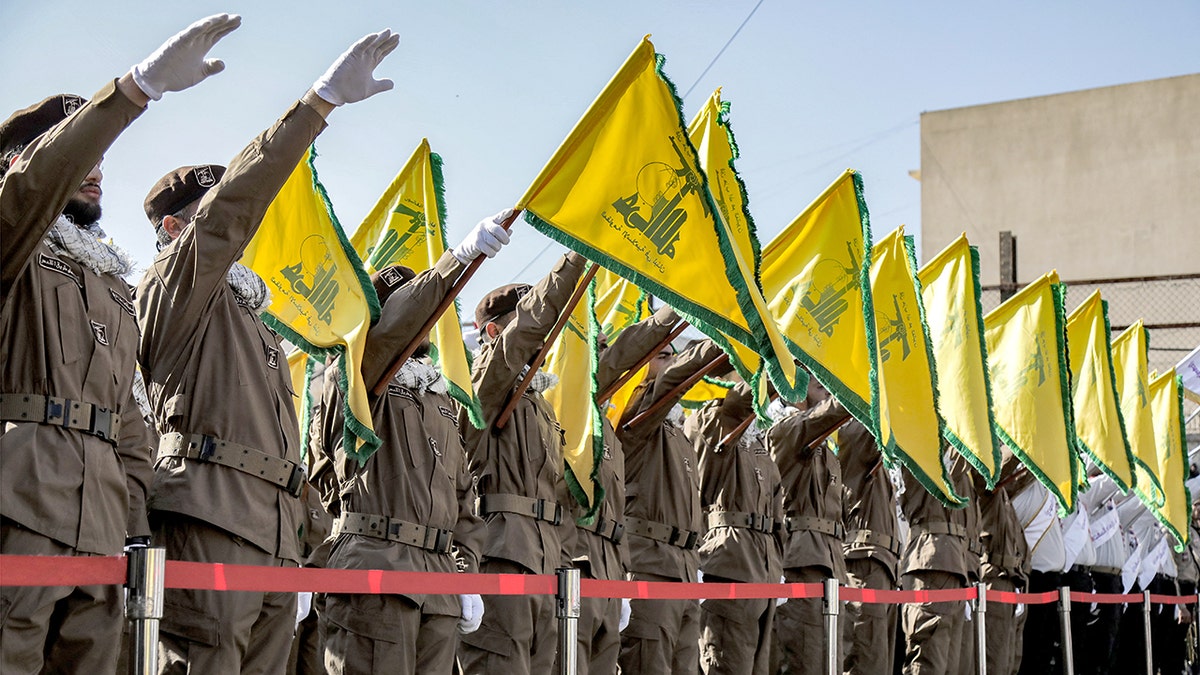
Hezbollah members salute and raise the group’s yellow flags during the funeral of their fallen comrades Ismail Baz and Mohamad Hussein Shohury, who were killed in an Israeli strike on their vehicles, in Shehabiya in south Lebanon on April 17, 2024. (AFP via Getty Images)
Asked whether that shift moves the threat closer to the United States, Billingslea said Hezbollah is now operating “close to the U.S. and further away from the Israelis.”
He said Iran’s role in Venezuela has deepened alongside Hezbollah’s. “There is a substantial Iranian footprint in Venezuela related to the trade of weapons and drones, in particular, for gold,” he said. After suffering losses in the Middle East, he added, “the Iranians find themselves even more dependent on that supply of gold in exchange for drones and weapons.”
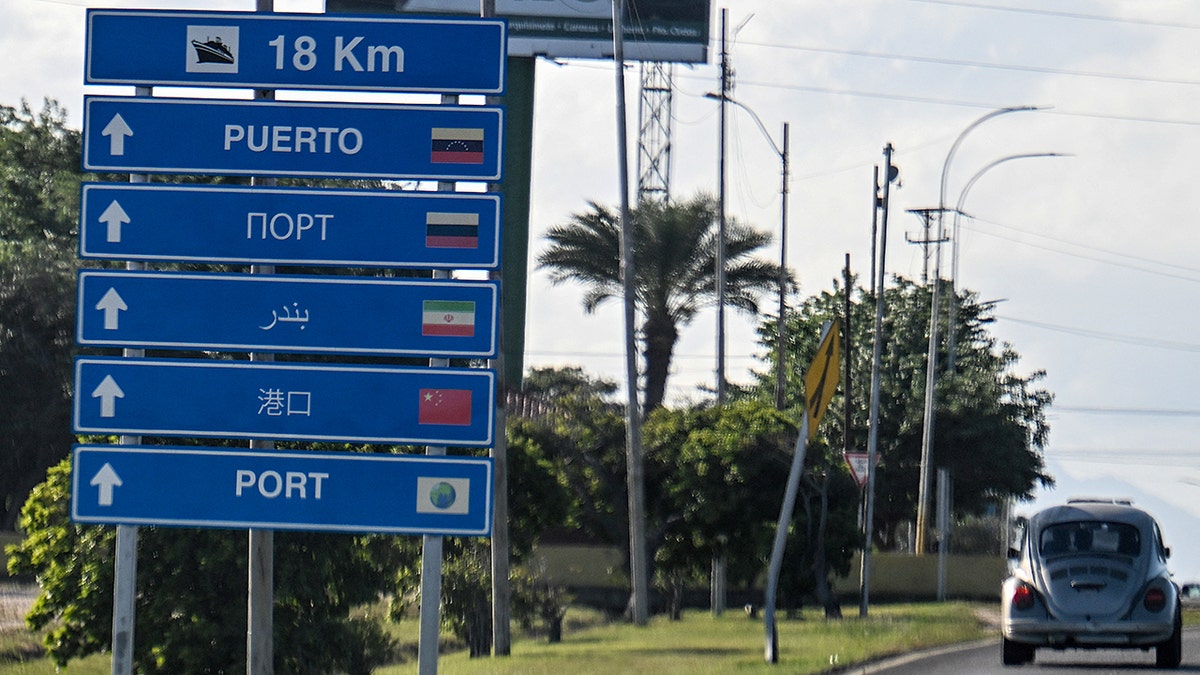
A multilingual road sign is pictured in Margarita Island, Nueva Esparta State, Venezuela, on Nov. 26, 2024. Margarita, Venezuela’s main island, is a Caribbean paradise in decline after years of devaluations, inflation, a pandemic, and the collapse of public services. (Juan Barreto/AFP via Getty Images)
He said Washington faces a strategic choice. “I think the United States has positioned sufficient forces in the Caribbean at this time to take care of the Hezbollah threat,” he said. “But obviously, when you have a terrorist group that has merged into the local population, highly precise intelligence is needed. I believe the Venezuelan opposition possesses a great deal of that intelligence, though it is not clear to me that the United States government is making the best use of that access.”
For Billingslea, the conclusion is cleaner — eliminating Venezuela’s narco-terrorist regime would significantly strengthen U.S. national security.