
Share this @internewscast.com
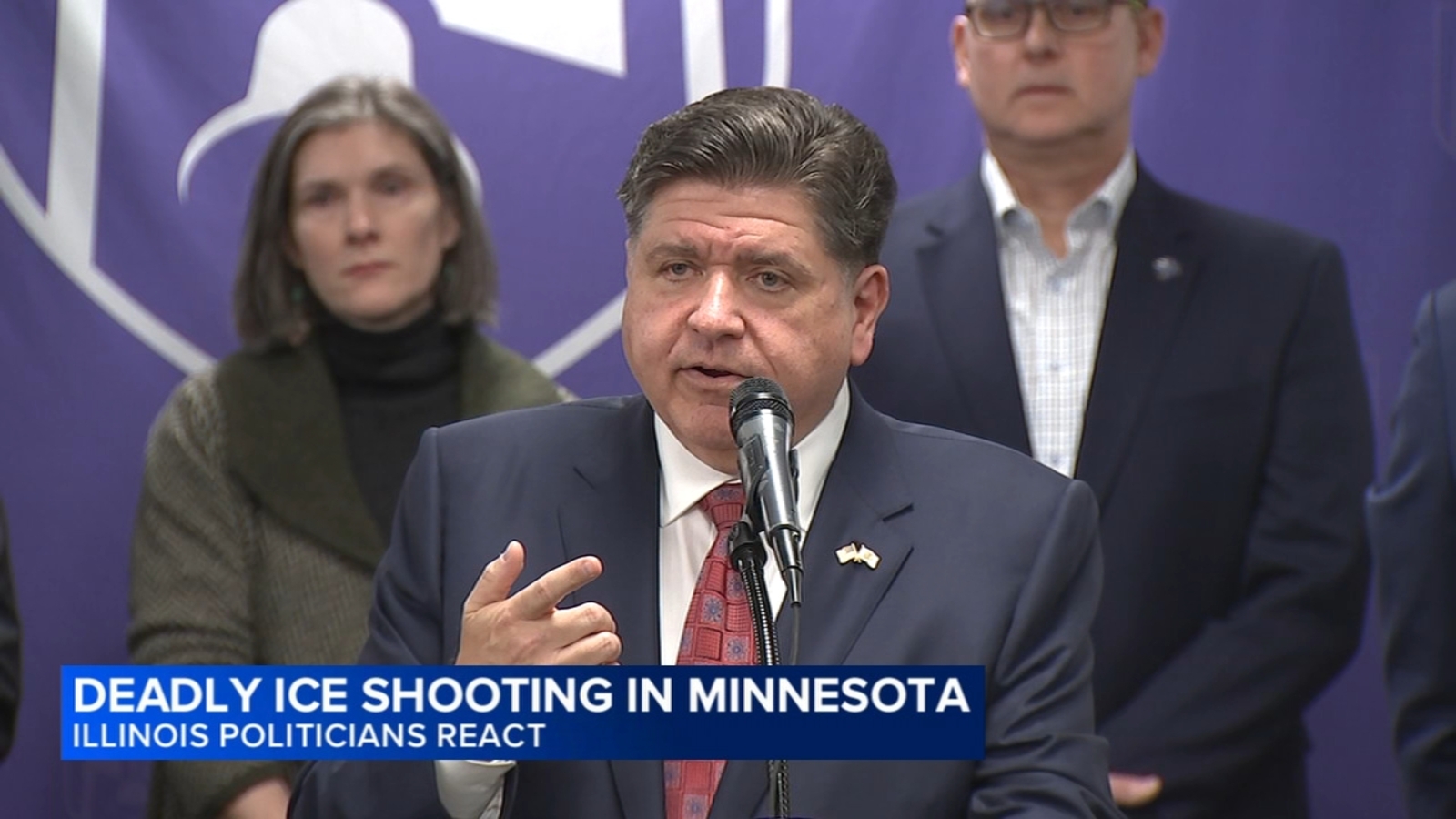
CHICAGO (WLS) — Illinois Governor JB Pritzker has joined the growing number of Chicago-area voices condemning the recent ICE-involved shooting in Minneapolis, which resulted in the death of a woman. In a bold move, he has urged Homeland Security Secretary Kristi Noem to resign from her position.
The incident took a tragic turn when an ICE agent was injured by an SUV, leading to the fatal shooting of the woman behind the wheel. This event has become a flashpoint, intensifying debates and concerns in the community.
ABC7 Chicago is now streaming 24/7. Click here to watch
Multiple perspectives have emerged regarding the lead-up to Wednesday’s shooting in Minneapolis, with interpretations often reflecting differing political stances on ICE operations. These varied views have been captured from numerous angles.
Governor Pritzker has criticized the Trump administration, accusing them of distorting the narrative surrounding the actions of the ICE agent and the response of the victim, Renee Good.
“It’s evident that the woman who was killed, a mother, was moving slowly and posed no threat,” Pritzker stated.
In light of these events, Governor Pritzker has called for the resignation of DHS Secretary Noem.
Meanwhile, one of his Republican challengers, Darren Bailey, is saying states that don’t work with the federal government bear some responsibility when tragedies like this happen.
“None of this should be happening,” Bailey said. “If state government would be upholding the law, if we were doing this in Illinois, if we were they were doing it in Minnesota , federal government would have no need to be there.”
A similar incident happened in Franklin Park back in September when a man allegedly fleeing a traffic stop was shot and killed by federal immigration agents.
Illinois U.S. Rep. Robin Kelly announced on Wednesday she is planning to impeach Noem.
Local rapid response groups have been tracking ICE activity in Chicago for the last several months, and some of that has led to tense clashes with federal agents.
In Chicago’s Little Village neighborhood, activists have been honoring the 37-year-old woman who was shot and killed by federal agents in Minneapolis. They are now reinforcing some of their own training in hopes of avoiding a similar tragedy.
A memorial now sits under the Little Village arch in remembrance of Good. The woman was a rapid response leader in the Minneapolis community, similar to the groups that have formed in Chicago, in an effort to alert others about ICE activity in the area.
“It definitely does change our approach,” Little Village Community Council Ella Bueno said. “I myself am very scared.”
Bueno is one of nearly 200 people who have volunteered with the Little Village Community Council to patrol ICE activity in Chicago. They say the goal is never to interfere with federal immigration operations. Many of them patrol on foot or bike, and even when using their vehicles, they say it’s critical to stay back to avoid the type of scene that unfolded in Minneapolis.
“We wanted to make sure people were educated about what their rights were,” Little Village Community Council head organizer Chela Garcia said. “That is part of what community political education is.”
Still, that has led to some tense moments in Chicago, with the deployment of tear gas while some bystanders were detained.
Some of the volunteers say there is often a lot of confusion when federal agents are making commands, as seen Wednesday in Minneapolis, right before shots were fired.
“From what I’ve seen while patrolling, ICE agents can be really confusing, because there can be one telling you please back up and another trying to grab someone,” Little Village Community Council volunteer Alex Garduno said.
The Department of Homeland Security has often called these groups agitators, saying they are interfering with operations. DHS also accused Good of using her vehicle as a deadly weapon, as they say the officer shot her in self defense.
“They are ill trained for this job,” Garcia said. “They are not supposed to be on the street.”
According to the ICE use of force policy, “Deadly force is not authorized solely to prevent the escape of a fleeing suspect,” unless “there is probable cause to believe that the escape of the subject would pose an imminent danger of death or serious bodily injury to the officer or another person.”
Retired Chicago Police Chief of Detectives Eugene Roy also weighed on what law enforcement training should look like in that situation.
“The preferable option is to deescalate the situation,” Roy said. “One person standing in front of a car you are not going to stop the car. You have the option of stepping aside… the dynamics of each situation are unique and you need to tailor your tactics to that individual situation… what works on the southwest border is not going to work in downtown Chicago or downtown Minneapolis and vice versa.”
As DHS is expected to continue federal operations here in Chicago, the local groups say they’ll continue their efforts peacefully. They plan to continue training volunteers while making sure all residents know their rights.
Copyright © 2026 WLS-TV. All Rights Reserved.